BLINDSPOT interview with Martin Gak (November 28, 2024)
More and more voices are denouncing forms of complicity of the major Western media with the policies of governments that are accused of having provided cover for Israel’s military operations in Gaza. And there are those who wonder whether the time has come to bring to trial those responsible for media strategies that have resulted in the systematic concealment of information from the public.
In this interview with Blindspot, journalist and philosopher Martin Gak reflects on possible similarities with the case dubbed “Radio Rwanda”, the International Criminal Tribunal for Rwanda’s (ICTR) action against the radio station RTLM (Radio Télévision des Mille Collines) and the newspaper Kangura for their role in inciting the Rwandan genocide that took place from April to July 1994.
On March 12, 2003, the ICTR, established by the United Nations Security Council, convicted three media leaders for incitement to the genocide against the Tutsi, that caused the death of thousands of innocent civilians.
“We do not have, to be clear, in major media direct calls for the destruction and the killing of Palestinians in Gaza. But most certainly there are forms of complicity that shows very clearly when you look at American and European media,” says Gak. “In democracies, these media operations have essentially pushed the population to support government policies that have actually gone to underpin Israeli operations in Gaza.”
Gak points out that in history there have always been violations of journalistic principles, but the problem we face now is that “we cannot point to violations of journalistic principles because journalistic principles have been abandoned.”
“The confidence that the public had on the media has completely collapsed. If you’re watching children being dismembered in Gaza, every single night, and the media are telling you something else, this is essentially a complete collapse of confidence because obviously you will trust your eyes. And this destroys democracy,” warns the senior journalist.
Ferdinand Nahimana and Jean-Bosco Barayagwiza, from The Radio Télévision des Mille Collines (RTLM), and Hassan Ngeze, Chief editor of Kangura newspaper, were convicted by the ICTR for genocide, incitement to genocide, conspiracy, crimes against humanity, extermination and persecution. Nahimana, and Ngeze were sentenced to life imprisonment and Barayagwiza was sentenced to 35 years imprisonment.
“The power of the media to create and destroy fundamental human values comes with great responsibility. Those who control such media are accountable for its consequences,” the Court said in the sentencing.
In a radio interview broadcast at the height of the genocide on 25 April 1994, Ferdinand Nahimana talked of the “war of media, words, newspapers and radio stations”, which he described as a complement to bullets. In sentencing him, Judge Navanethem Pillay, told Nahimana, “You were fully aware of the power of words, and you used the radio – the medium of communication with the widest public reach – to disseminate hatred and violence. Without a firearm, machete or any physical weapon, you caused the death of thousands of innocent civilians.”
“Genocide doesn’t happen overnight. It moves in degrees over years, months, and days, and those orchestrating genocide know precisely what they intend. Beginning in the 1990s, the government-supported media, newspapers, and radio, spread anti-Tutsi propaganda, encouraging the genocide,” told UN News on April 2023 Henriette Mutegwaraba, survivor of the Rwanda genocide.
BIO: Martin Gak

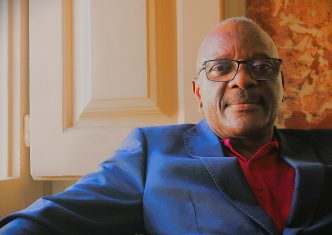
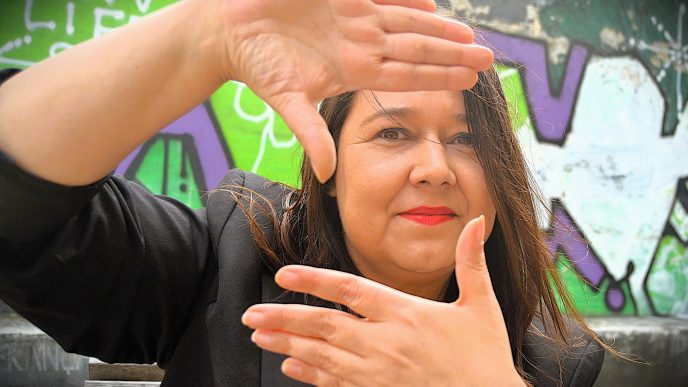
Former Deutsche Welle senior journalist, Martin Gak has extensive experience in broadcasting, including roles as a producer, presenter, reporter, and director. He served as Religious Affairs Correspondent and as editor and producer of the international politics show Conflict Zone.

His academic background, including a PhD from the New School for Social Research, informs his nuanced approach to journalism, communication strategy, and media production.
TRANSCRIPT
This is a rush transcript. Copy may not be in its final form.
BLINDSPOT: Hello, Martin. I would perhaps ask you for a few words about to present yourself.
MARTIN GAK: So I’m Martin Gak. I’m originally actually an academic. So I come from philosophy. Got a PhD in philosophy in the US.
And then as I was tired of the money that I was making in philosophy, I decided to go something a bit more humble. So I ended up in broadcasting. And I spent the last essentially 10 to 12 years working in broadcasting and media.
I was already working for media, but the last 12 years were really, 10 years were really devoted to television, international television at Deutsche Welle.
BLINDSPOT: Let’s jump to the first question. You said some time ago that it’s time for to think about building a “Rwanda radio” case for the media heading and debating Israel’s war crimes.
Let me say, and I put this question very conscious about that your origins are Jewish and not only, and very connected with, because not every Jew can say it, but also with Judaism, right? Am I wrong?
MARTIN GAK: Yes, no, you’re right. I think that probably is an important clarification. I am profoundly Jewish and I am by the very same measure, a complete atheist who has no love, much to the contrary, probably an allergy to nationalisms.
I am the kind of secular Jews that you have mostly heard of, probably when you thought about Judaism over the last sort of 50 or 60 years. I am part of the family of people like Zweig, who was writing in Austria and part of the family of people like Einstein, who was living in the US and in the UK and was born and lived in Germany for many years, here in Berlin. I’m part of the family of Jews like Woody Allen and part of the Jewish family of people like Baruch Spinoza, people that were really in the immortal words of Russian antisemites, “ruthless cosmopolitans,” who have essentially been the very object of persecution and who have pretty much, they owe their lives and their wellbeing, myself growing up in Argentina, very often under very antisemitic circumstances, we owe our lives and our wellbeing to the democratic guarantees and the rule of law that emerge in the aftermath of Auschwitz.
So I don’t really belong to the group of Jews that believe that they need a ghetto or that they need a God to protect them. I belong to the group of Jews that really believe that their most sort of profound expression of Judaism was the contribution to their communities and their communities were the ones in which they were standing, the ones in which they grew.
So my father listened to Piazzolla and my father listened to Vinicius de Moraes. He was actually, that was his religion. Vinicius de Moraes was his religion. And it was, and it is the same for me. Those were the sounds and those were the flavours and the smells of the vacations in Salvador Bahia, those are the smells of my identity.
That’s how I can, I understand my Judaism. Not, it’s not falafel and hummus, it’s feijoada. I mean, it’s strange to say, but this is really, this is really, I think that what very much defines me.
So the question about complicity and the question of how I see Israel as a national project is something that is very much defined by that. You know, I think that the point that I was making in that tweet, and it was followed up by tweets and messages and postings. And it’s something that I’m constantly discussing with friends and with acquaintances and with colleagues is the question as to the, not merely the passivity but the active complicity of media.
And I’m not just talking about like network media but I’m also talking about individual operators on Twitter, on Facebook, people that are actually putting out their statements on live streams and so on and so forth. What is the role in aiding and abetting, permitting, and as a matter of fact, furthering what I clearly see as a genocidal war in Gaza. And I, of course, can qualify the question of genocide if you want me to, but I think that even if you don’t accept the charge, which of course is now, you know, on the legal docket, because it’s actually, there is a case now of Israel committing genocide in the International Court of Justice. You at least certainly have war crimes and crimes against humanity in the International Criminal Court.
So all of these things that are now legally binding procedures that actually have evidence registered in the juridical system had been aided and abetted by media operators and people doing media work. And this is important, people, individuals doing media work on social media platforms.
And what I think it’s important to consider, it’s not just that these people might be liable, but that it is important for those of us that are looking at this to actually figure out the way to post those questions in front of courts, make those people come in and account for their support for, you know, what seems to be genocidal war crimes or crimes against humanity cases.
The process is legally very complicated. There is no clear precedent for this. This is why I refer to Radio Rwanda, which was the trial for genocidal crimes in Rwanda of members of Radio Rwanda were from the microphone actively calling for killing, for murder and for genocidal destruction. These people, in fact, were eventually tried at The Hague. And I think that this at least offers a model of what we might be talking about.
We do not have, to be clear, we do not have in major media direct calls for the destruction and the killing of Palestinians in Gaza. Of course, I mean, the machine, especially the managerial machine of networks is, you know, too smart and too well advised by legal teams in order to do that. But most certainly there are forms of complicity.
And I think that that sort of shows very clearly when you look at American and European media. In democracies, these media operations have essentially pushed the population to support government policies that have actually gone to underpin Israeli operations in Gaza. So the connection is much more direct than in a dictatorship or a tyranny where you can say, well, you know, the population had nothing to do. So it doesn’t really matter in some sense what the media might have been telling its population.
In a democracy, the connection is much more direct because as a matter of fact, if the Germans go out now and bought a platform in February of this coming year of 2025, that actually openly supports Israel at any cost, even given what has happened in Gaza and what we have seen and the evidence and so on, then the population in fact is quite directly deciding to support the Israeli war crimes and so on and so forth, or whatever the evidence might bear in Gaza. And this is knowledge that we already have, right? This is knowledge that we already have.
BLINDSPOT: Yeah, and we have those media and some are very powerful media, which have kept in silence part of the events. Then we are given one side, while at the same time, we keep feeding the illusion that those media are still objective. We are called to approach in a religious mood. I mean, we believe, we accept.
MARTIN GAK: I mean, I think that that’s true. I do think that the issue for me is a bit more, for me personally, it’s a bit more complicated, my understanding of this thing, because I also, having been on the other side of the editorial machine, I’m very keenly aware of the fact that the confidence that the public has on us, editors of a broadcasting machine, was completely collapsed. So I mean, in a sense, I think that your point is right, that they were asking us to trust, or we were asking the public to trust something that their very own eyes denied.
What that meant was essentially that at a certain point, you could no longer hold it, because if you’re watching children being dismembered in Gaza every single night, you know, if Deutsche Welle, or if France 24, or if CNN, or if the BBC, or Sky News tells you there are no children dismembered in Gaza, there are no people being incinerated in Gaza, I mean, you know, this is essentially a complete collapse of confidence, because obviously you will trust your eyes. And I think that in the grand scheme of things, this is the bankruptcy of media, the public trust in media across the board. And in my mind, it has a lot to do with an abdication, an abdication of power and a betrayal of public trust.
BLINDSPOT: And immediately as an impact, direct impact, it erodes democracy.
MARTIN GAK: It destroys democracy. It destroys democracy. It destroys democracy because, you know, I am a conservative, I think that this is also something that should probably be added. I do not belong to the traditional left, although I am of that generation that has enormous numbers of friends, family members that come from the left. So I don’t wanna kill anybody from the left.
I am also somebody that, although, you know, I would place myself probably in some sort of Christian democratic environment, the left of the Christian democratic machine, something like that. But, you know, as somebody that comes from there, I am sort of very committed to the idea that there are some truths that are better than others and that there are opinions that are better than others. And one of the problems of the media reducing itself to the level of any sort of gentleman with a camera, a cat and a cucumber on YouTube is that it becomes impossible to say what is trustworthy information.
So the problem is not just that democracy has not died because of, I think, because of the proliferation of voices. The problem is democracy dies because I don’t think we have trustworthy information anymore. The ones that were supposed to, you know, be the ones that could provide that have backed up and have basically gone into the jungle.
And, you know, I used to tell my students when I was still in academia, I used to tell them, look, everybody is a relativist. Everybody thinks that all opinions are equal until you need a cardiologist. The moment you need a cardiologist, all opinions are not equal.
And I think that to me, the issue of media is very much this one because I always understood media essentially as extracurricular education, right? Meaning I don’t wanna say that necessarily media was better at some point. And I don’t necessarily wanna say that media was honest, right? There were circumstances that permitted the media to lie without having any control. I think that we build for ourselves a model of what journalism was meant to do.
And we could say people like this one, Fox News during the Bush administration openly lied. And this is actually a violation of journalistic principles. The problem that we have now is that it’s not that we can point to violations of journalistic principles because journalistic principles have been abandoned. And this is what I find completely disturbing.
BLINDSPOT: Well, thank you very much.
MARTIN GAK: It’s been a pleasure. Things are rather depressing, but I take comfort in knowing that they will get worse. So we should enjoy what we have right now.
BLINDSPOT: That’s very Jewish humour.
MARTIN GAK: Yeah, there you go. Well, yes. Yes, in some sense, I have a lot of jokes on that department. The problem is that in Germany, you’re not allowed to tell them because you could be actually seen as anti-Semitic. You can’t make fun of my grandmother’s borscht or my mother’s attitudes because might be anti-Semitic.