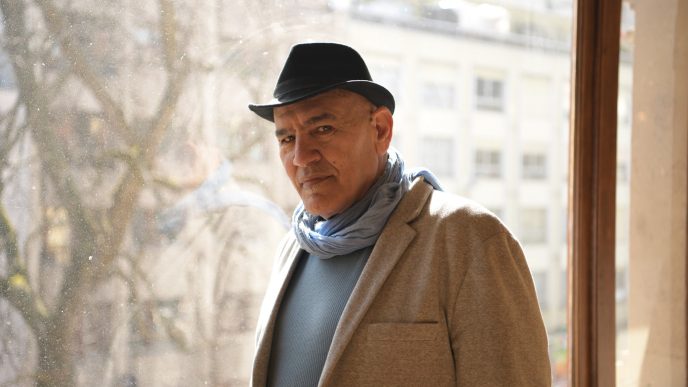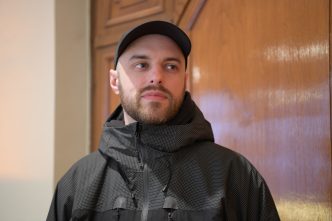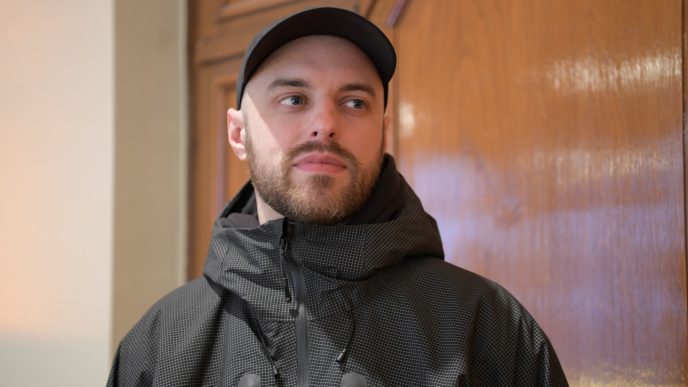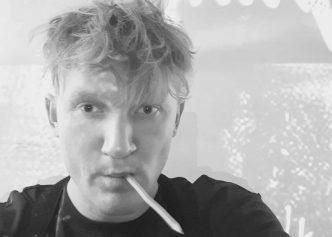
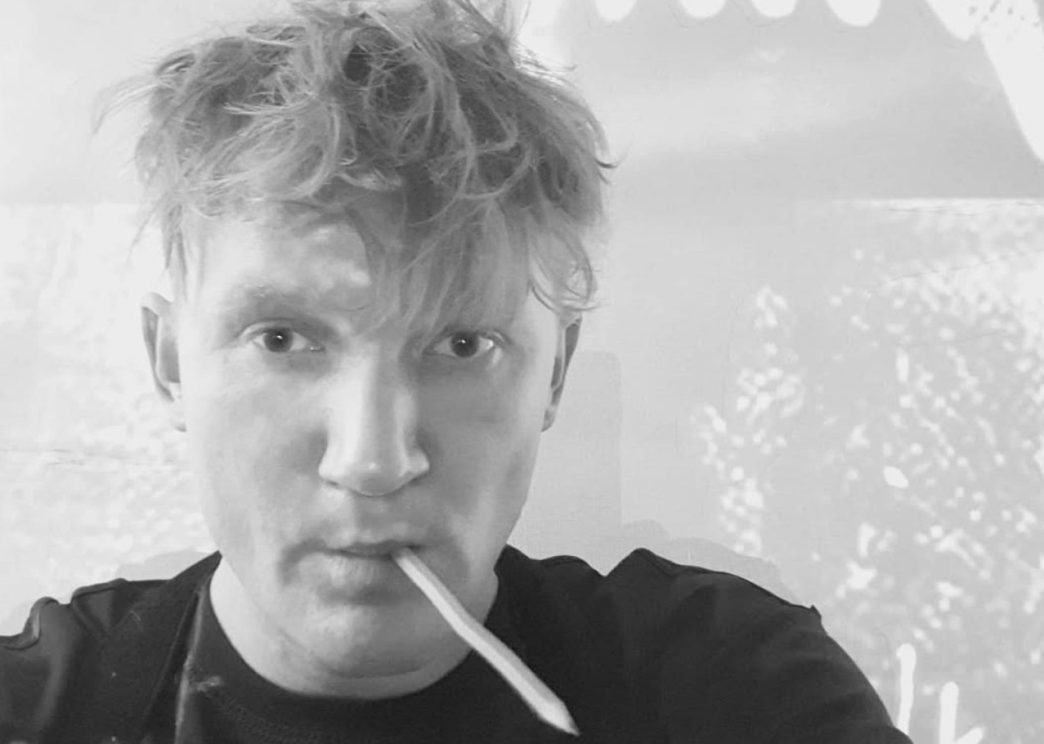
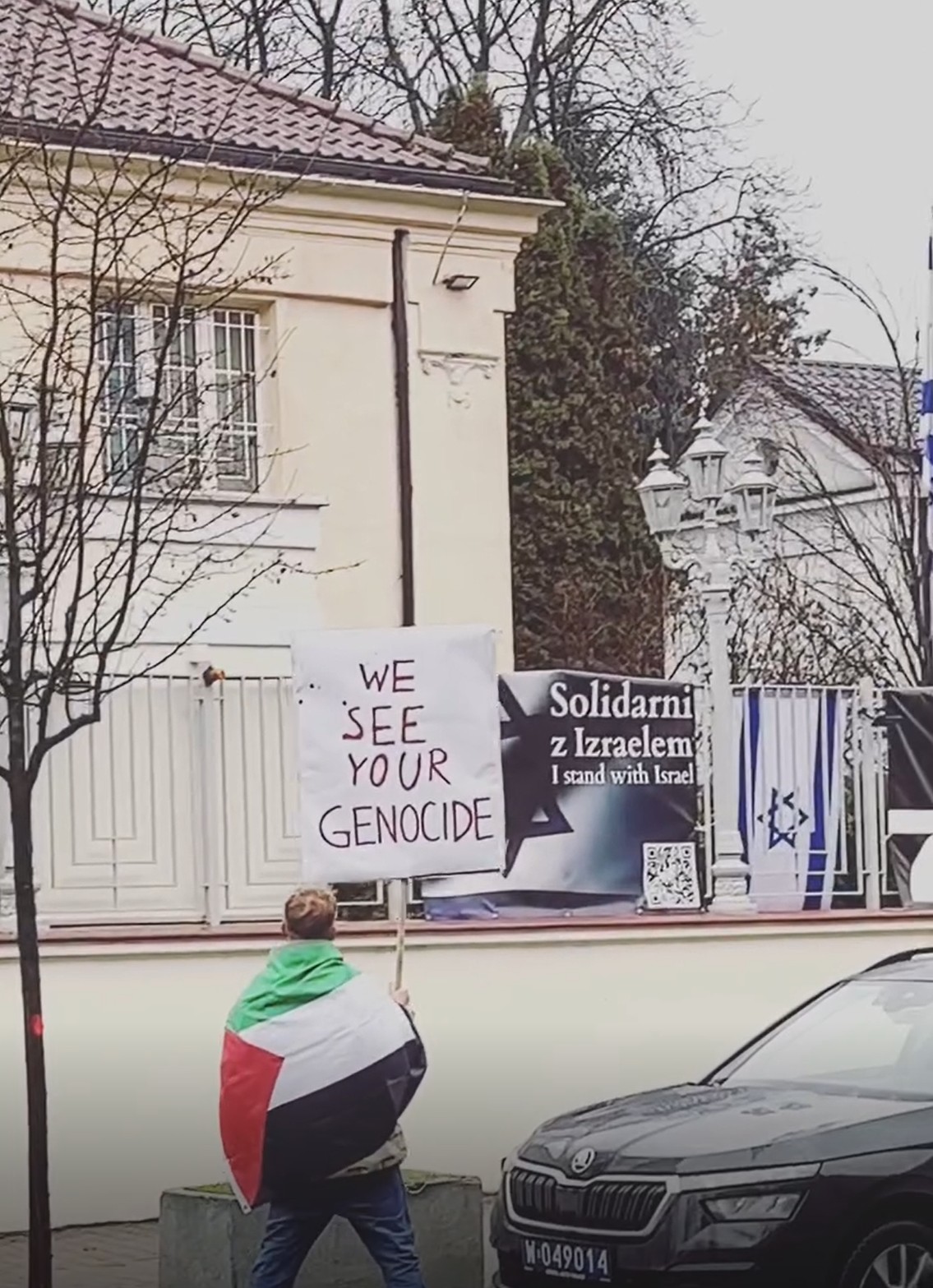
Polish multidisciplinary artist Igor Dobrowolski has publicly condemned the Gaza genocide on several occasions through performances and protest actions. Unable to remain indifferent to the massacre of innocents, Dobrowolski has taken on public artistic expressions that give voice to these feelings. “Art has to bear witness to human suffering,” Dobrowolski told Blindspot.
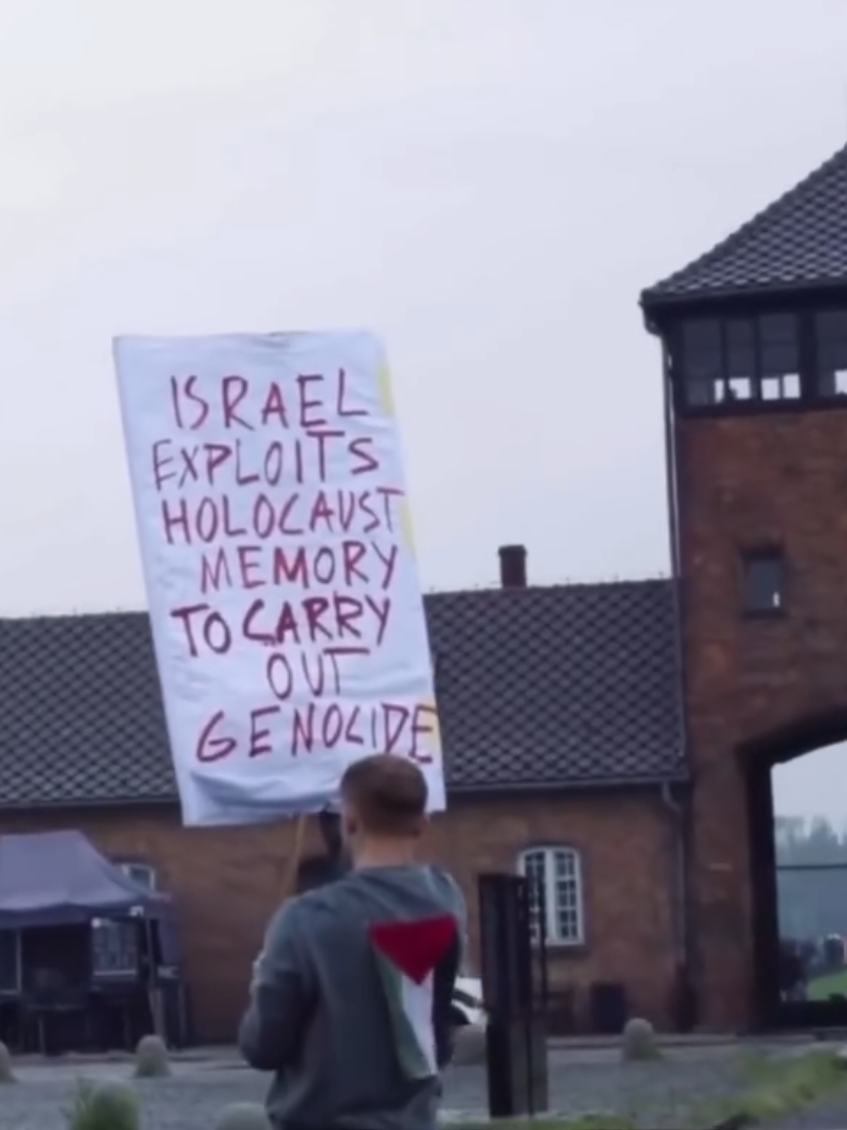
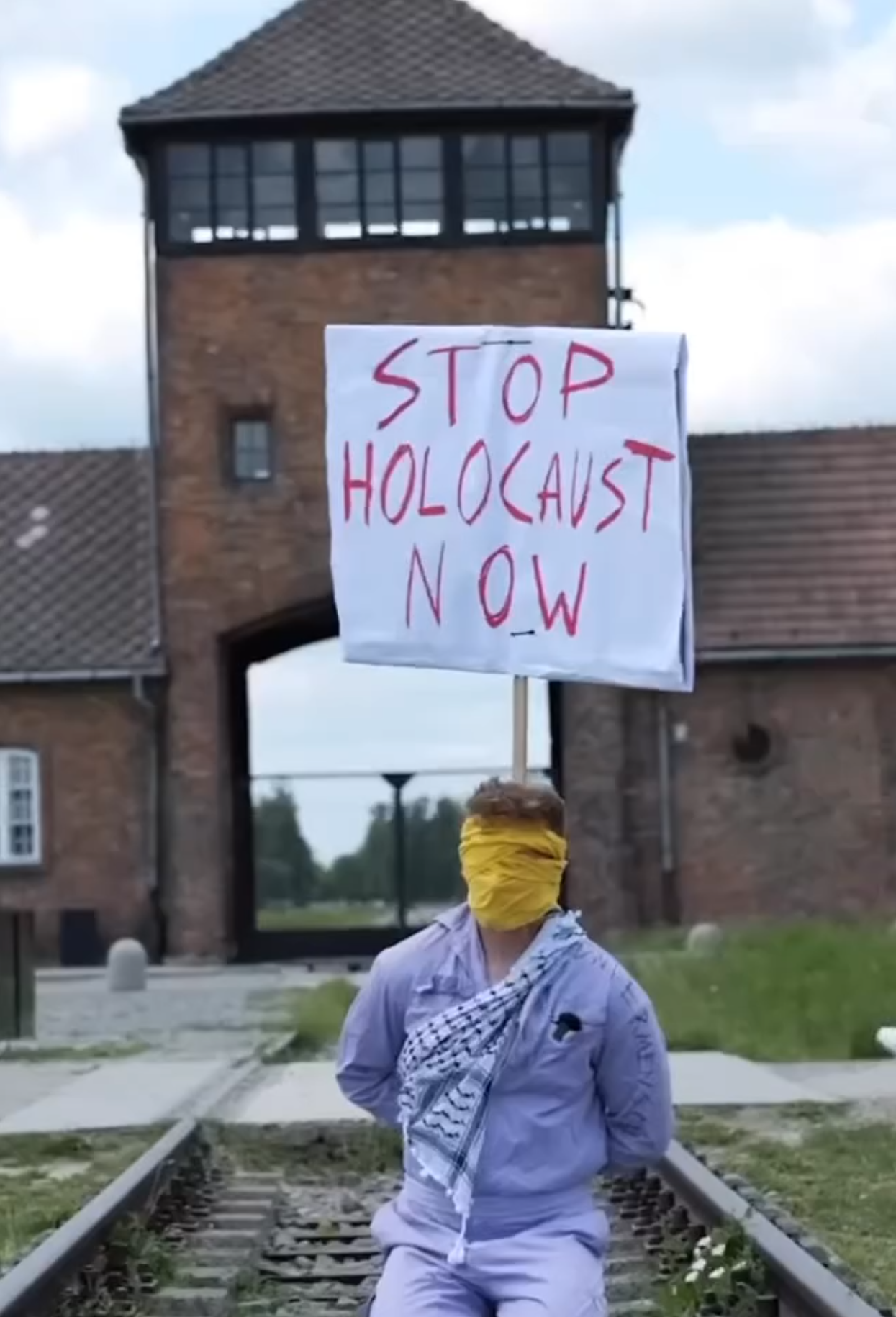
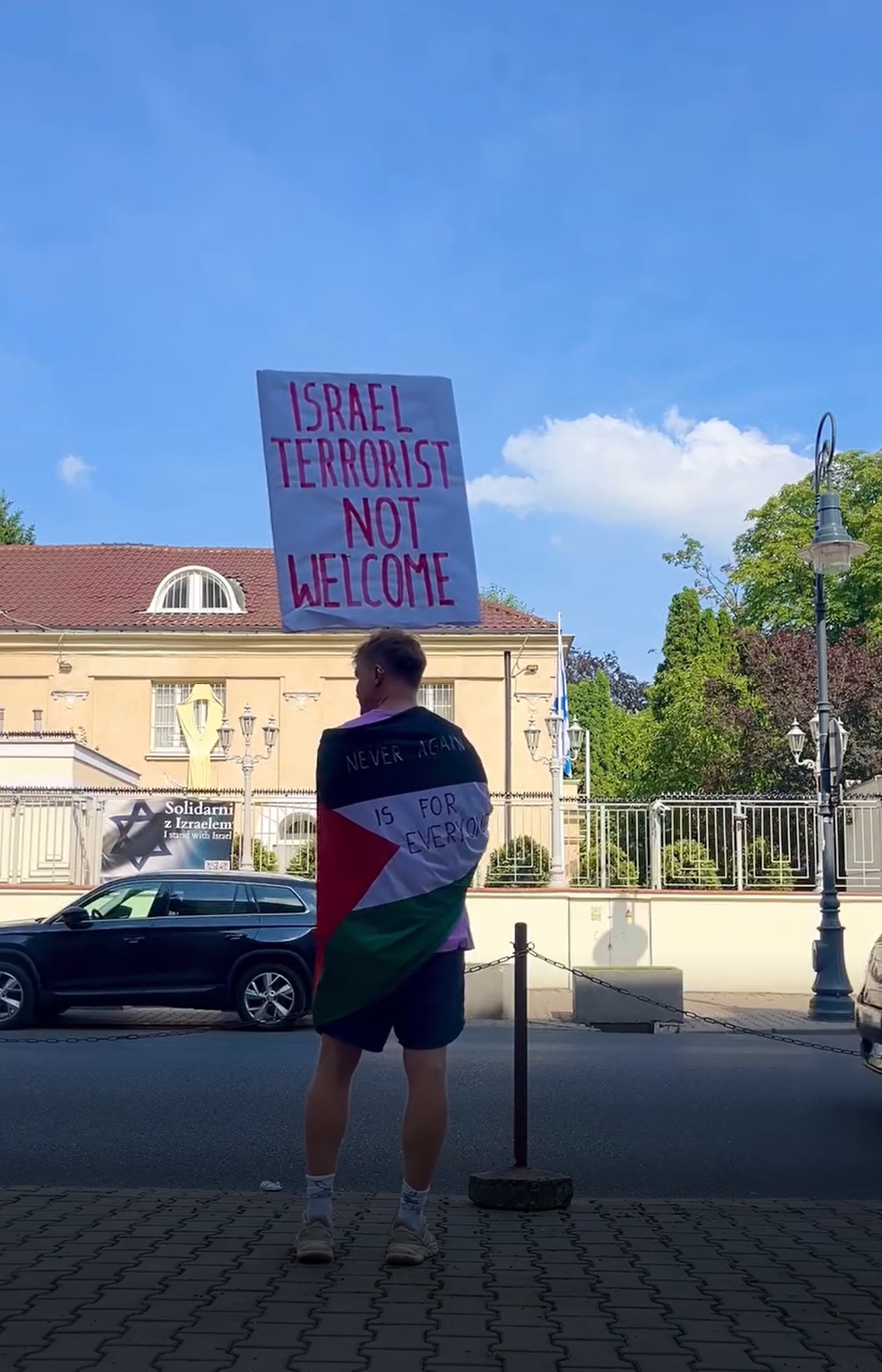
In a silent protest outside the German concentration camp in Auschwitz, in 2024, he stood with a sign reading, “Israel is committing genocide in Gaza,” and a Palestinian flag with the words “Never again is for everyone” written on it. On his social media, Dobrowolski stated, “I believe that the greatest thing an individual can do to respect the memory of Holocaust victims is to actively oppose such crimes in the present or future.”
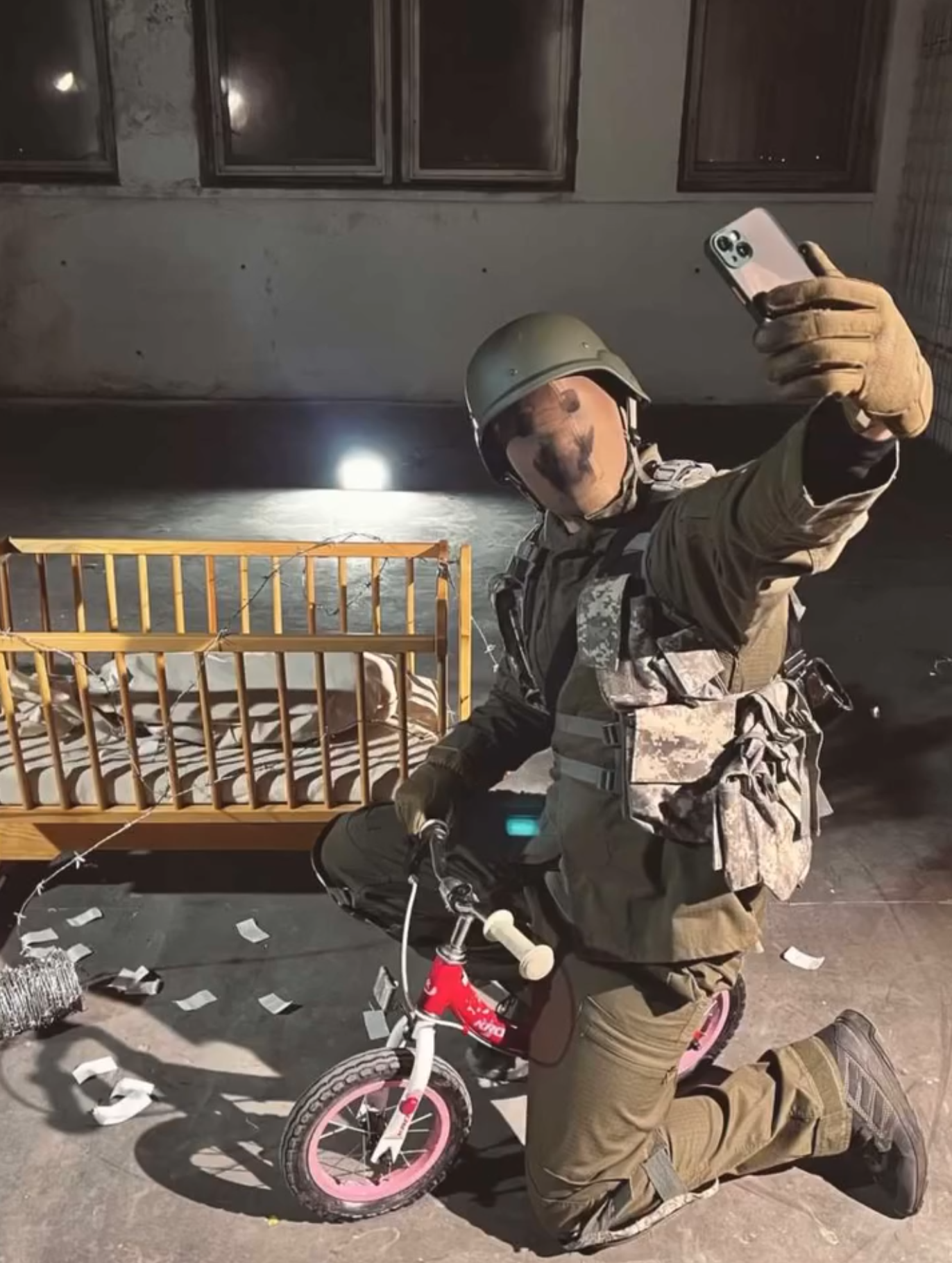
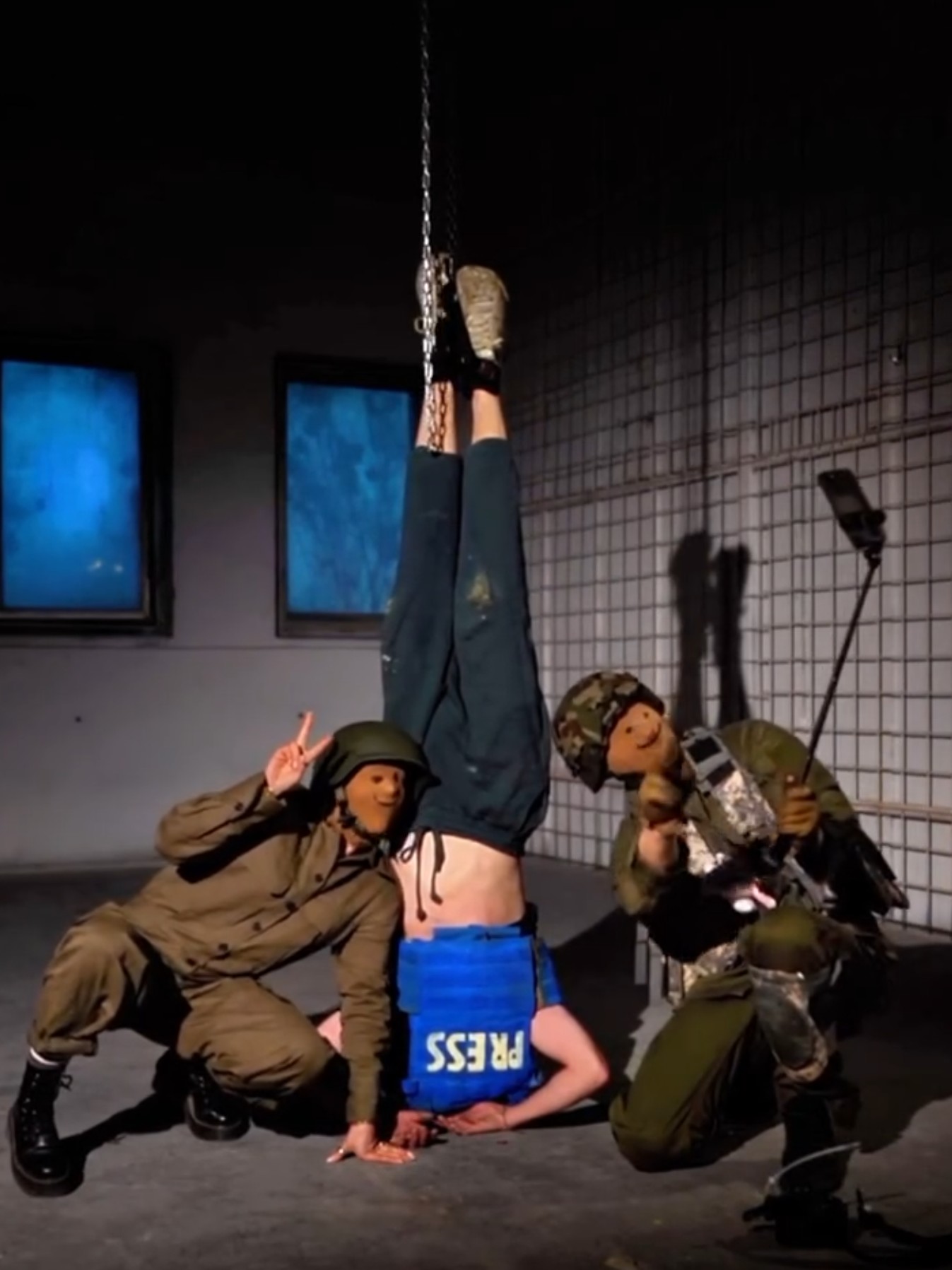
In one of his performances, called “Most Moral Army In The world”, he takes a selfie wearing a military uniform in front of an empty crib, sitting on a child’s bicycle.
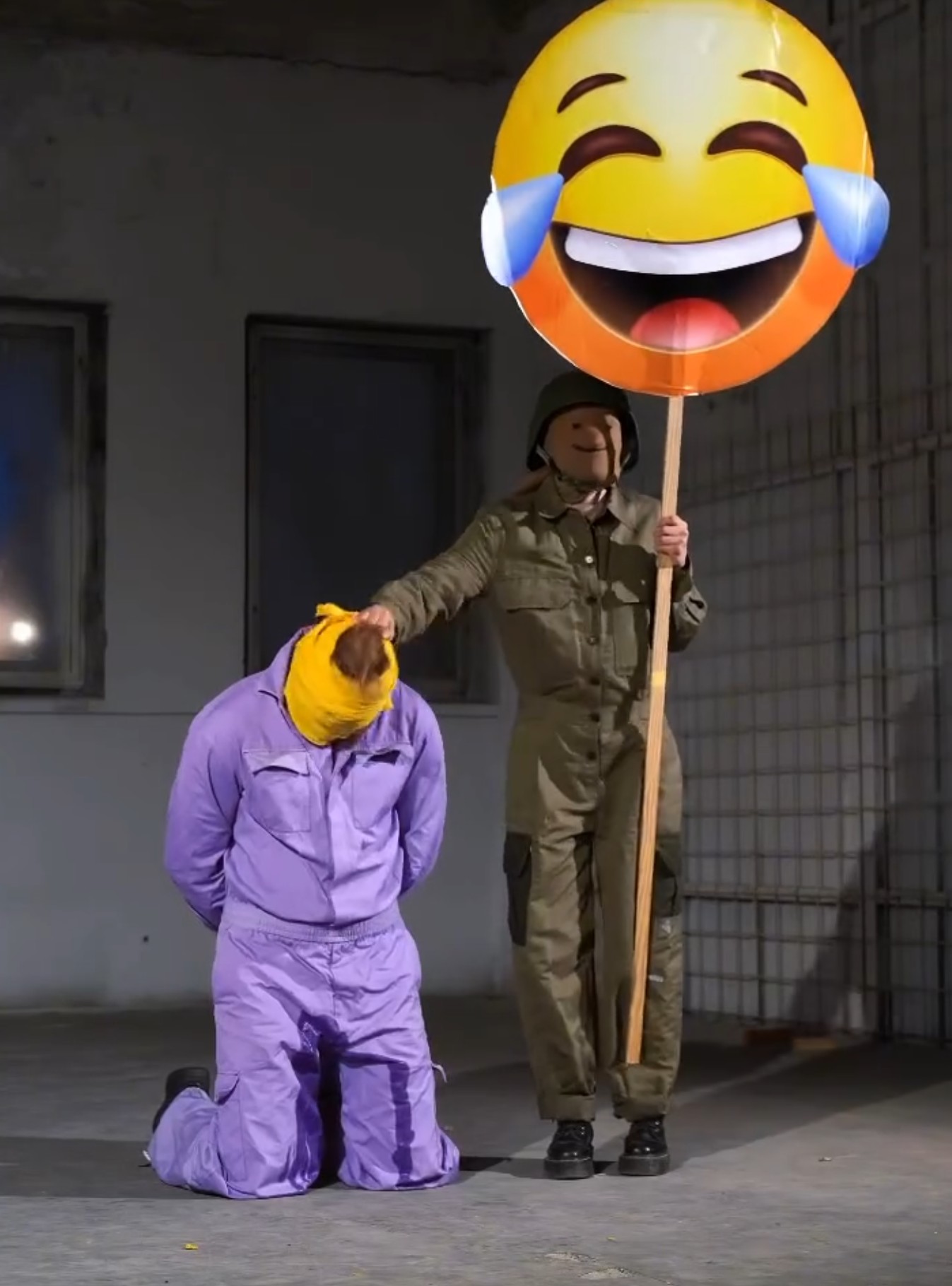
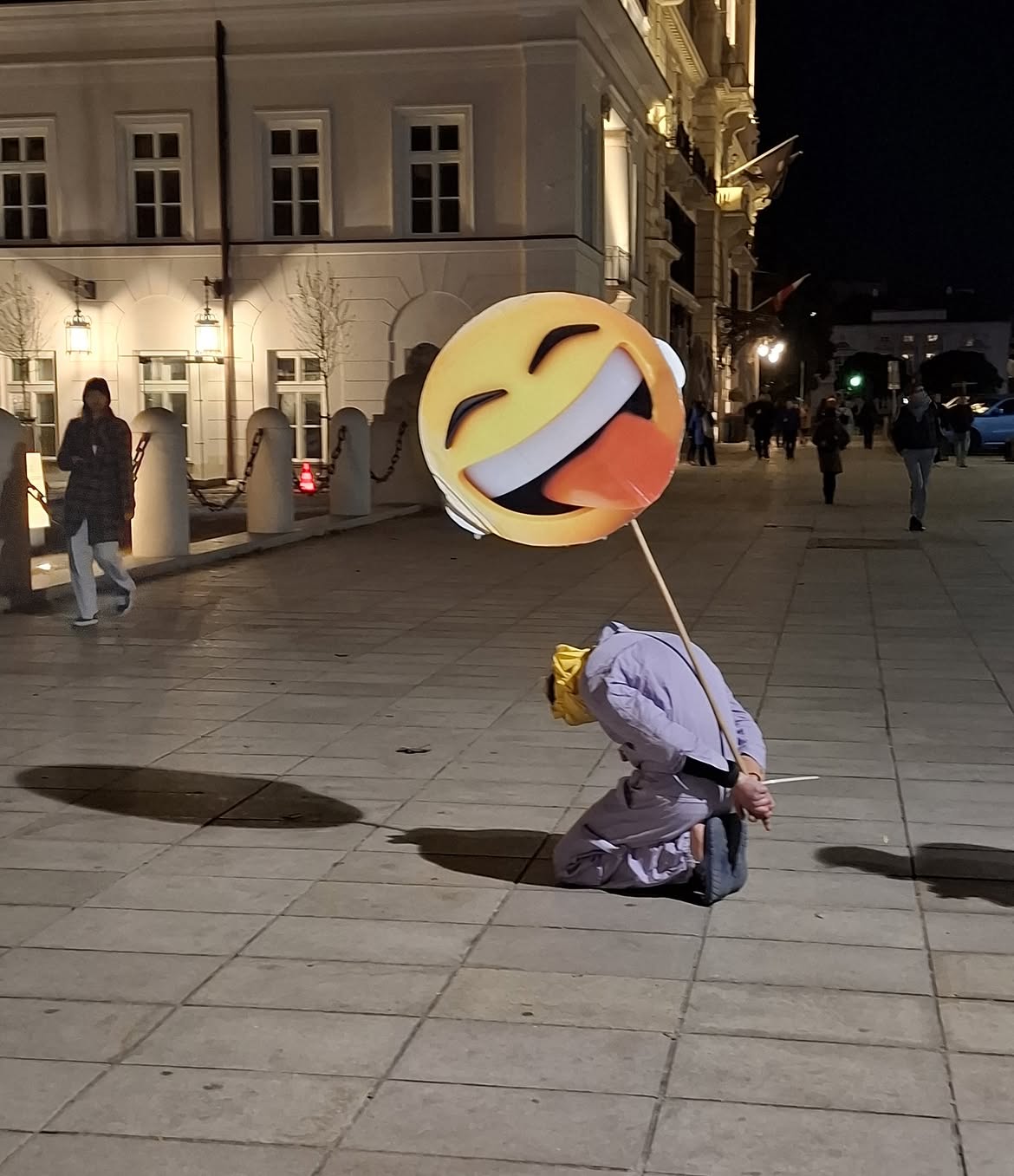
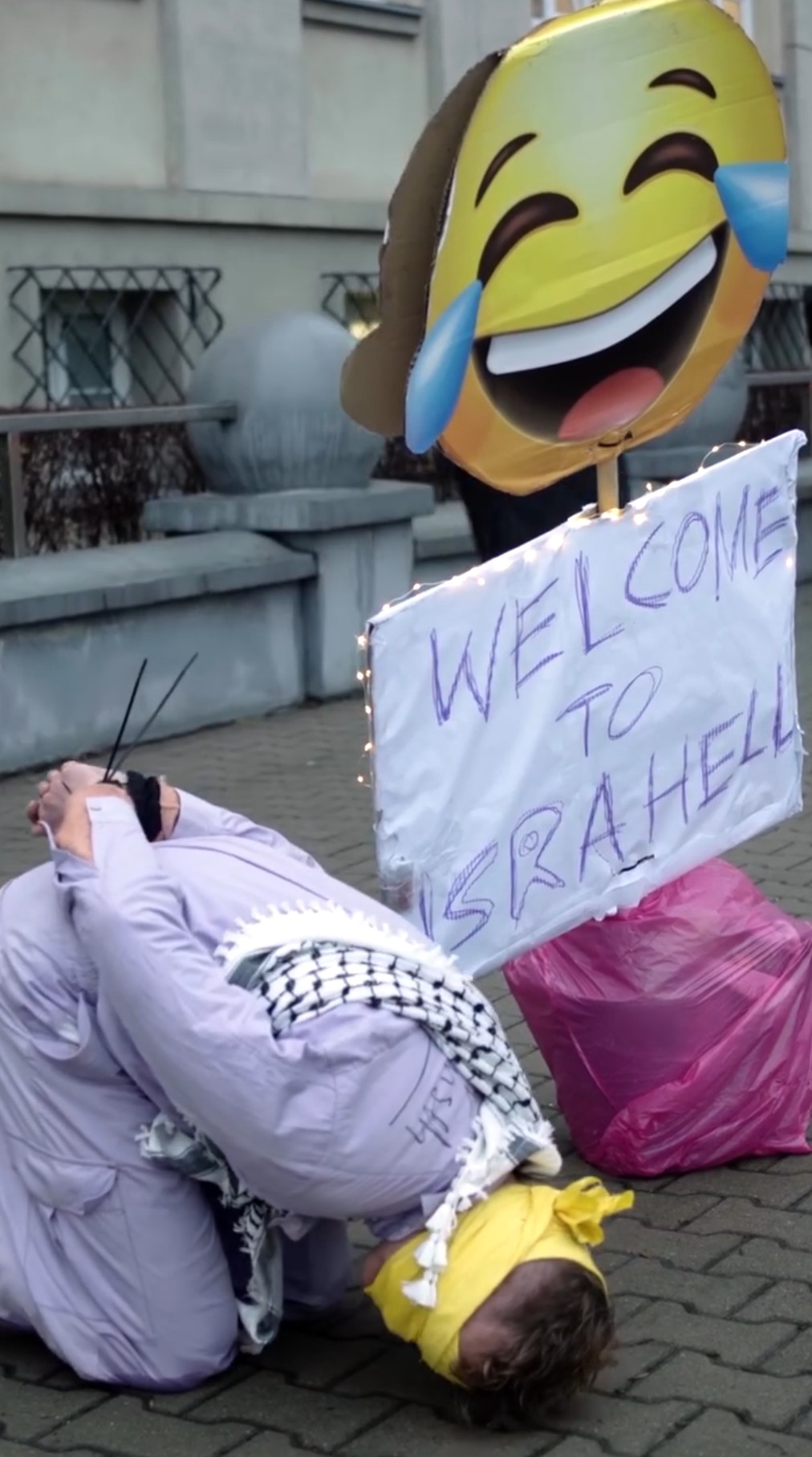
At the opening of his exhibition “With Deepest Sympathy” in Warsaw, Poland, on October 2024, Dobrowolski knelt for seven hours on the concrete floor next to child-sized burial shrouds, blindfolded and with his hands zip-tied behind his back, like the Palestinian men in the countless videos shared online by Israeli soldiers, during their deadly onslaught on Gaza.
On April 2024, Dobrowolski stood in silence outside Germany’s embassy in Warsaw holding a sign that read “Germany its second genocide. Sorry third”.
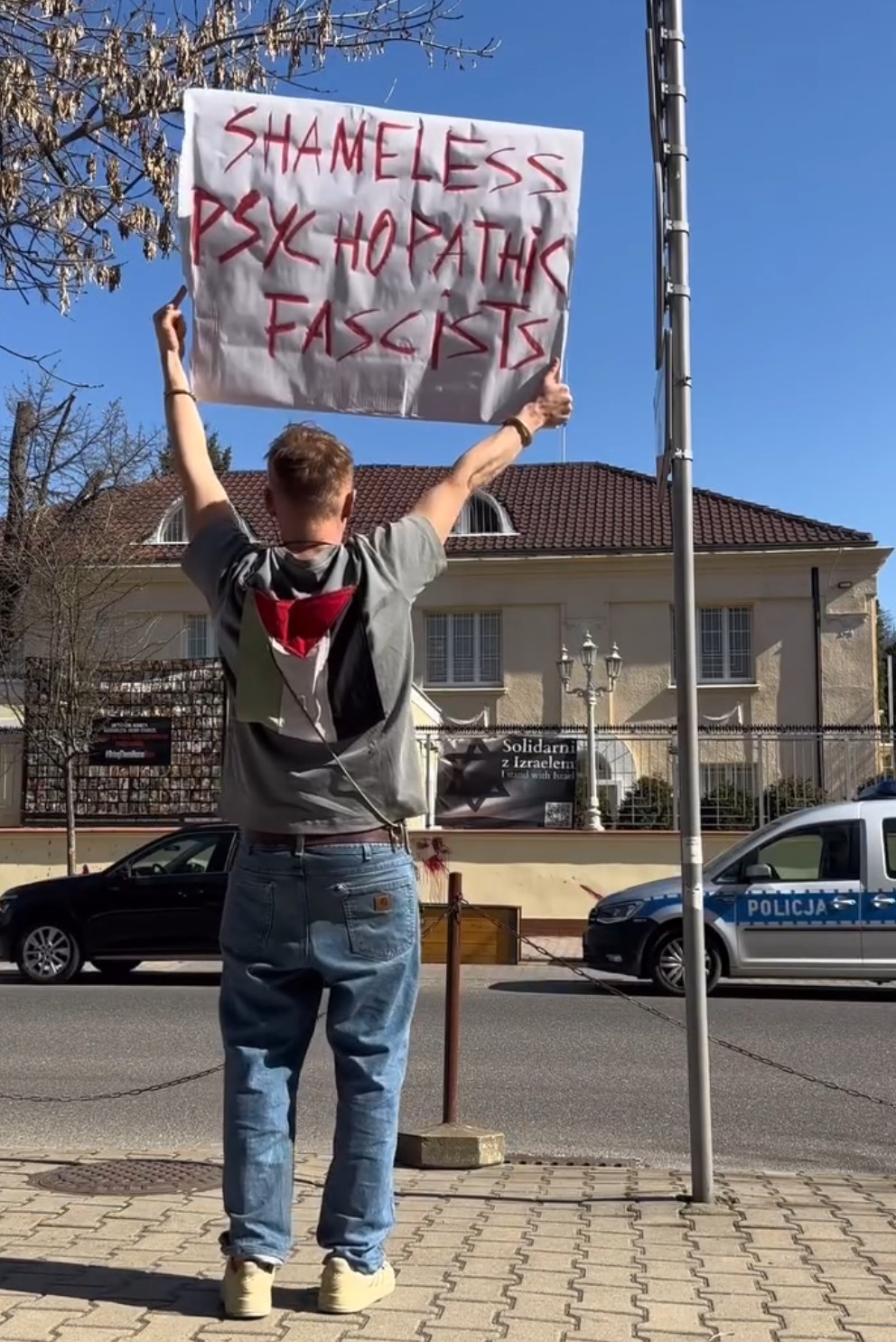
On March 2025, he staged a solo demonstration outside Israel’s embassy in Warsaw, holding a sign that read “Isr@el genocidal cowards”.
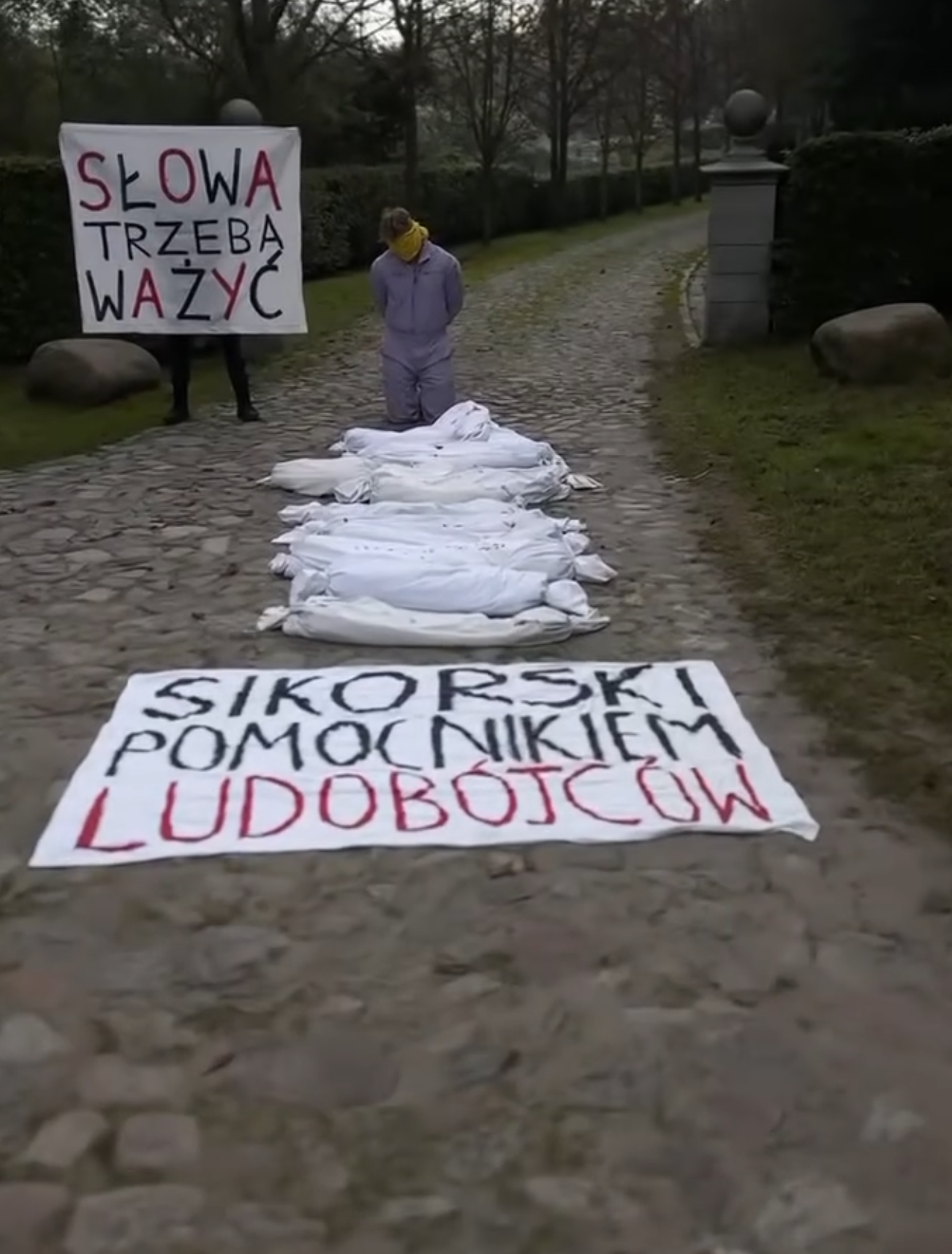
Protesting against Polish Deputy Prime Minister Radoslaw Sikorski’s refusal to acknowledge the genocide, Dobrowolski knelt blindfolded in front of Sikorski’s private residence, on October 2025, surrounded by child-sized burial shrouds and a sign that read “Sikorski an accomplice to the genocide perpetrators”.
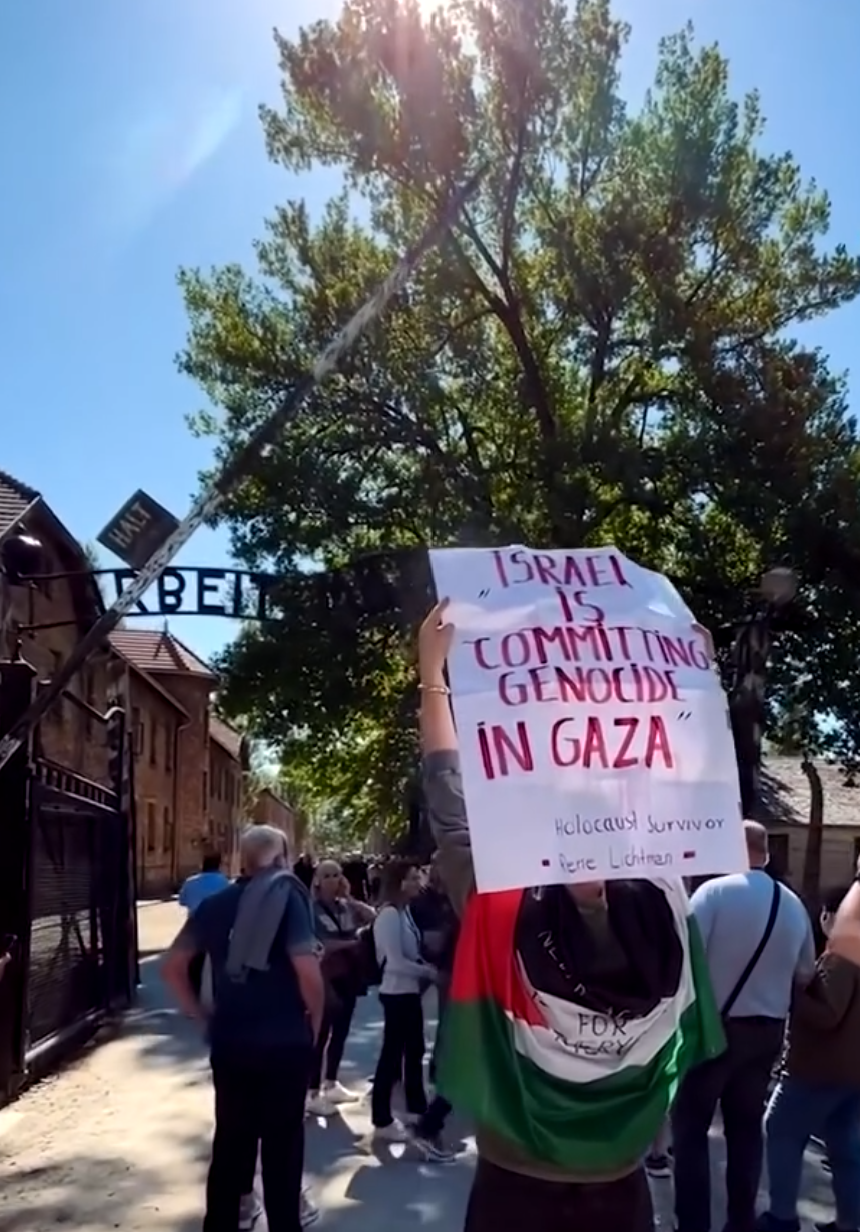
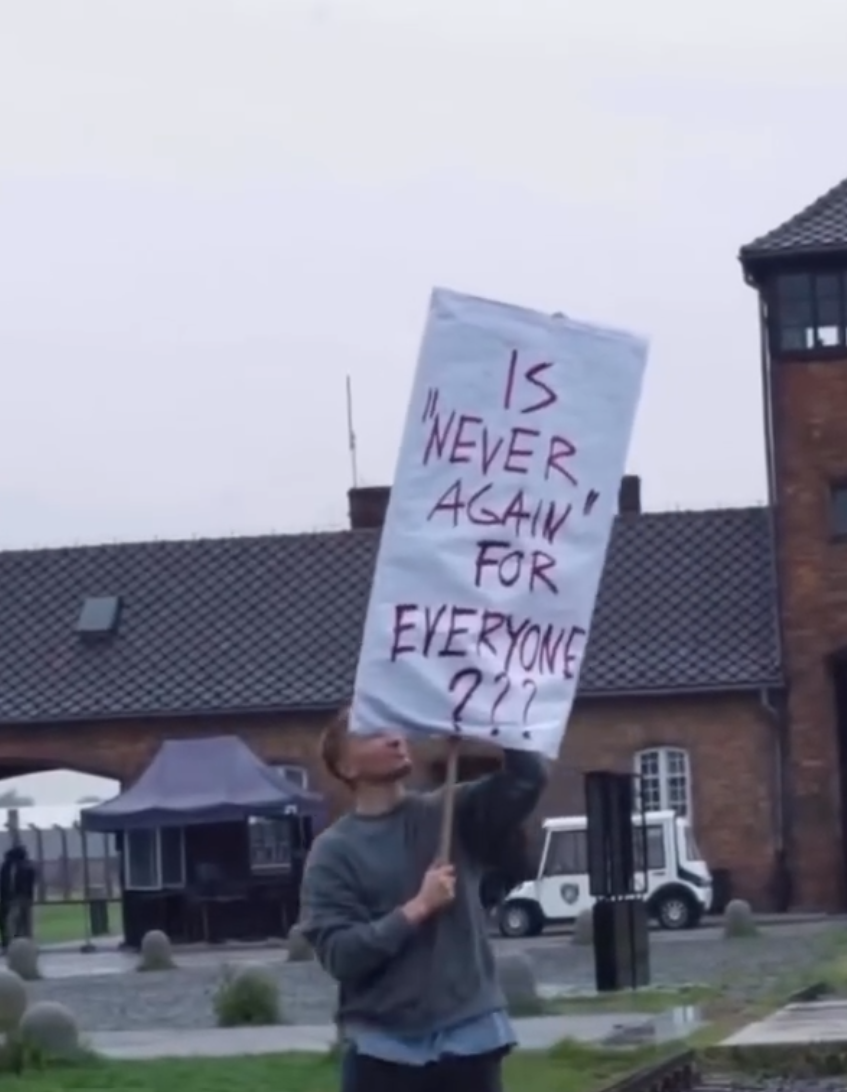
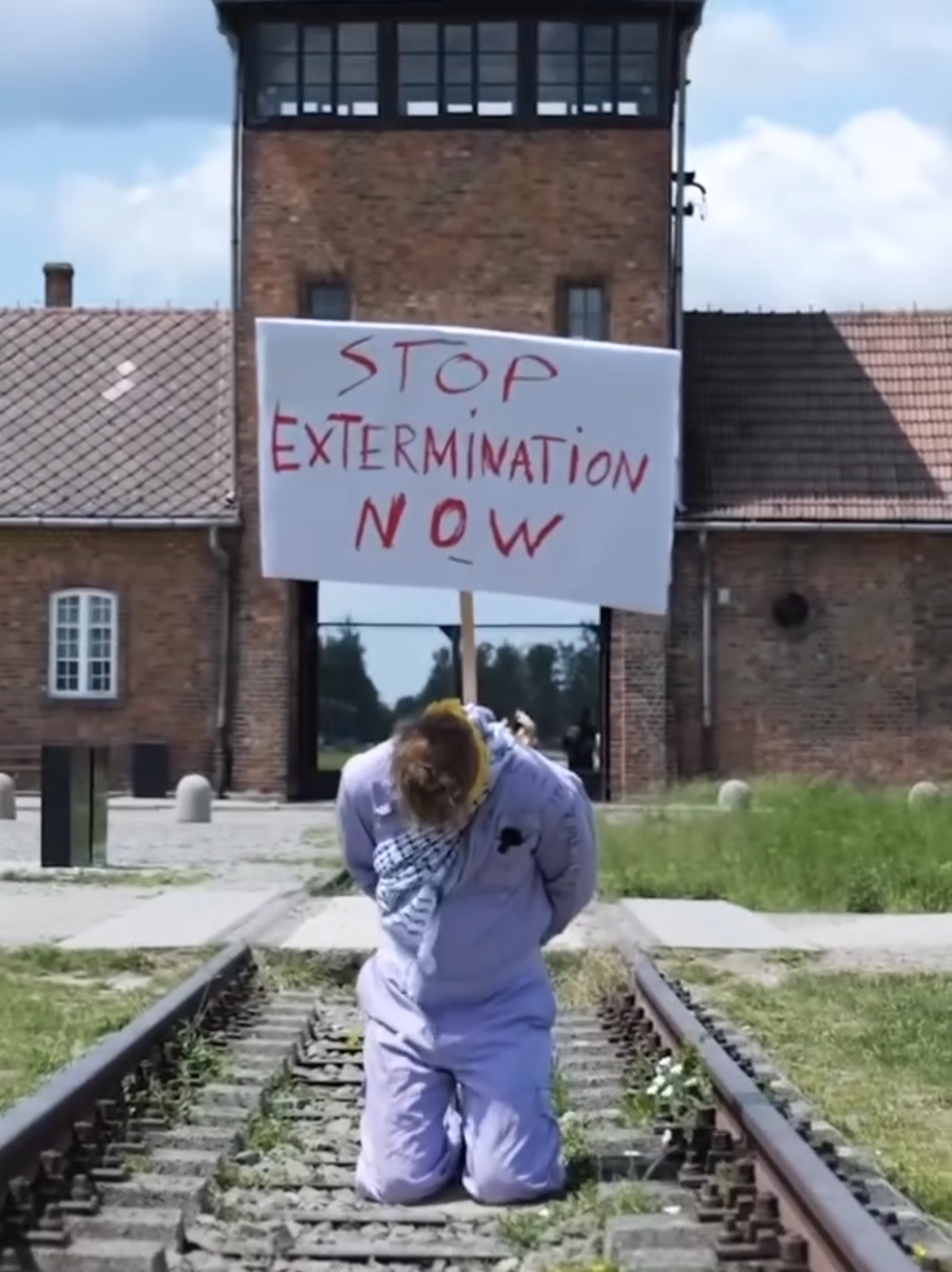
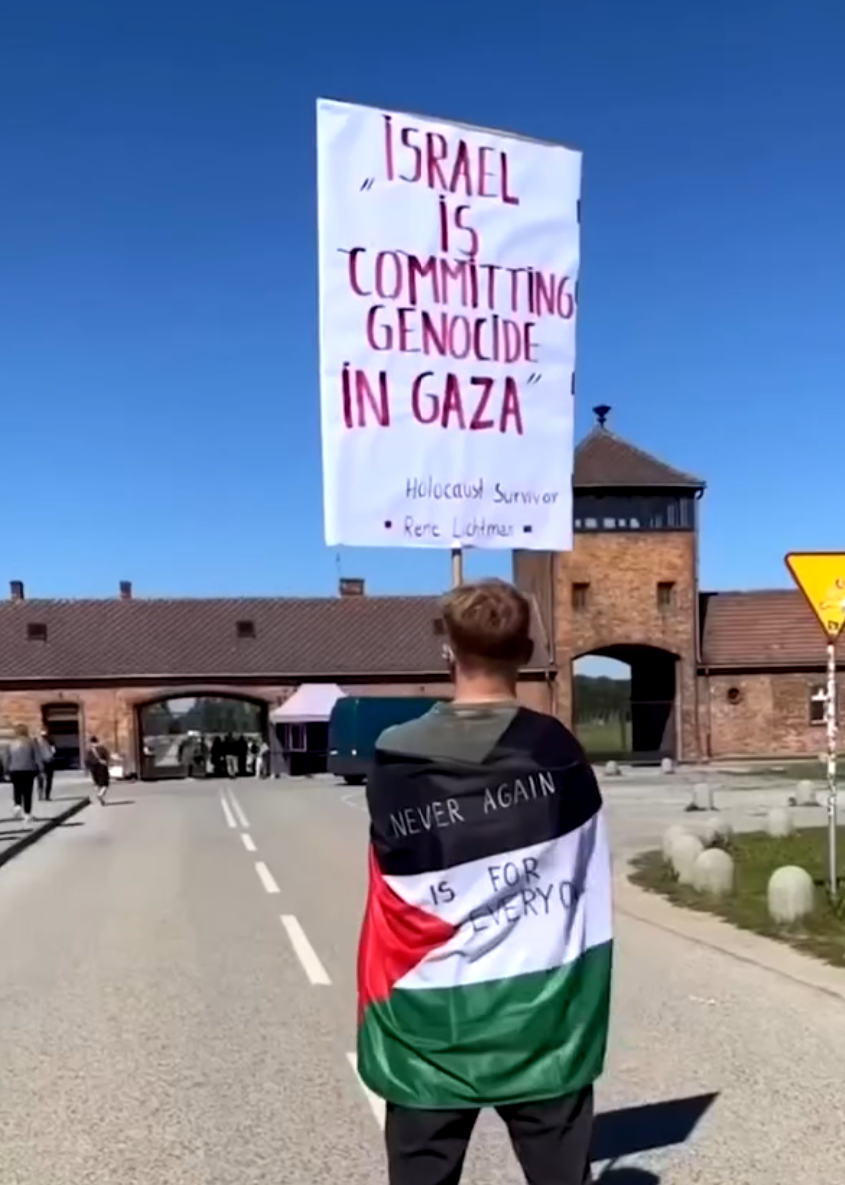
“What would I have done during the Holocaust?”
The decision to take a public position was not easy, says Dobrowolski, but adds that turning his back on what was happening in Gaza would be betraying the responsibilities of an artist. “I felt I wouldn’t be able to look at myself in the mirror and simply call myself an artist if I remained silent.”
“As Aaron Bushnell said (*), everyone thinks that during slavery, they would stand for black slaves. Now we know what would have happened. It’s the same here and now and most people simply decided to look away,” he emphasizes.
In a series of street art campaigns in different countries, Dobrowolski had often used his artwork to denounce Western consumerism, the harmful impact of fast fashion, and the cynicism of the war industry. “When I started painting I noticed that I can create works that are more social and that strike people, that can change something in the world, I knew that as an artist from the West, I have a voice, so I decided to make use of this privilege to raise awareness for social issues,” he says.
Faced with the images that reached us from Gaza after October 7, 2023, he felt that he had to do something. “It was like looking at Auschwitz and watching every day how they burn Polish Jews, while doing nothing. Is it supposed to be normal?”
An apprehensive and interiorized character, Igor Dobrowolski never showed himself in public, never did performances. “I had opted by simply dropping ideas that I knew could spread around the world and have resonance,” recalls Dobrowolski. “That day, I was sitting in silence, and suddenly this idea somewhere dawned on me, it hit me. I didn’t plan it, it just came, taking over my mind. I say, ‘Damn, I do not want to do it.’ It was about daring, and it was very hard. I felt very scared in many situations. I still often feel this fear, but because of a lot of inspiration from people who are there living hell, because we inspire each other, I don’t want to stop talking about it.”
By that time, Igor Dobrowolski artworks, ranging across a very wide spectrum, from abstract and hyperrealistic painting, sculpture, photography and bas-relief, had already gained wide international recognition. But some doors closed permanently after he started denouncing the Israeli genocide and Western complicity.
Soon he found himself being shunned by galleries and censored on social media. Collectors would come to tell him that he had great potential, but that, from that moment on, his career was over. “It didn’t surprise me,” recalls Dobrowolski. “It has happened to many people: doors have closed from the moment they spoke out against genocide or apartheid in Israel. Journalists, intellectuals, and academics were fired, often banned from conferences and universities, artists had their shows and performances cancelled. But it was nothing compared to the immeasurable suffering and despair of the people in Gaza.”
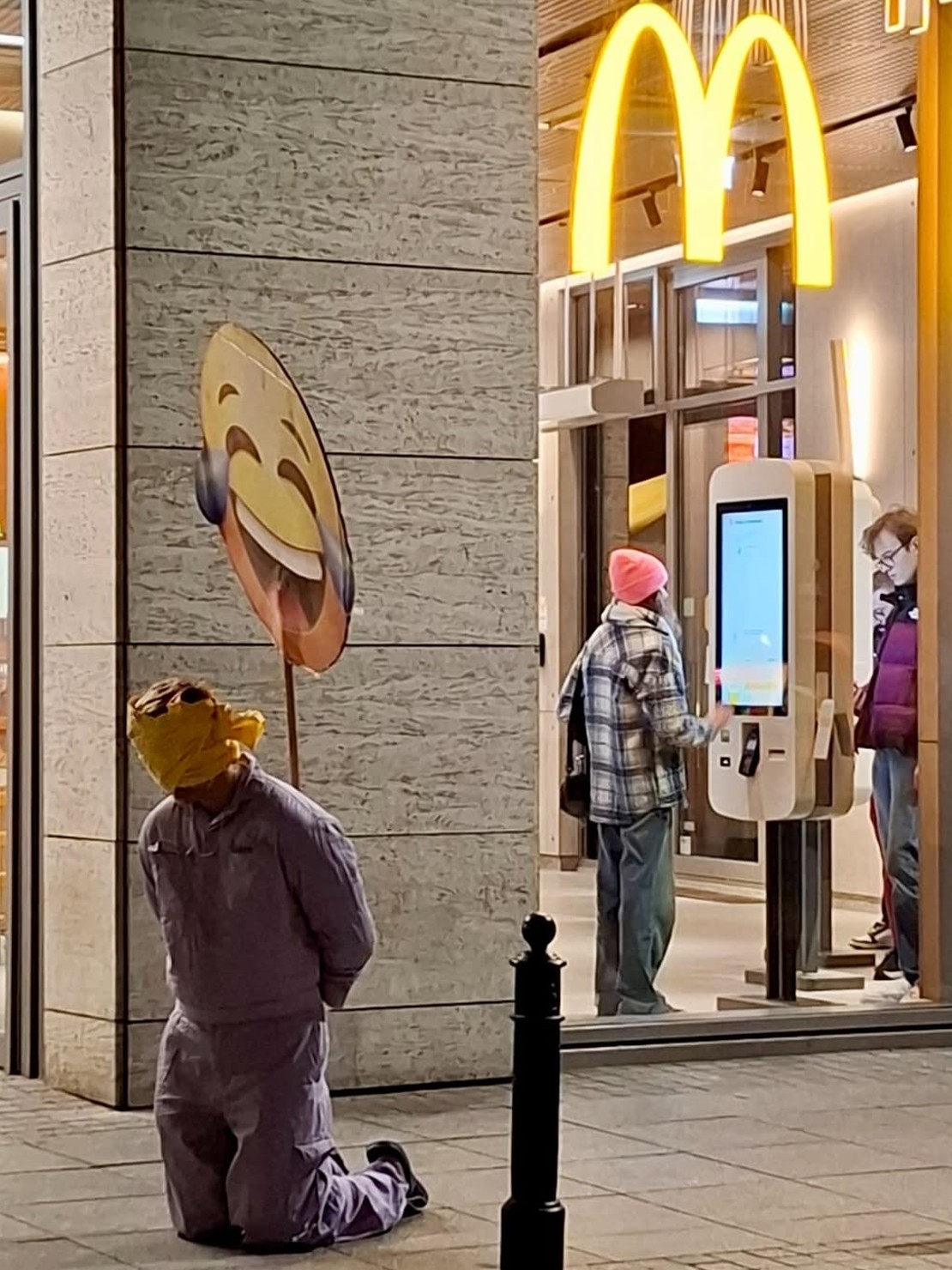
After Dobrowolski’s first performance in Warsaw, that lasted seven hours, the curator took him to another gallery. The artist was tied up the whole way, from one gallery to another, kneeling on the sidewalk in front of companies that support Israel, like McDonald’s, and Starbucks, but also in front of the Presidential Palace. “At one point, as I was kneeling, my curator, who was playing an Israeli soldier or just an executioner, started crying. She broke down emotionally, seeing me kneeling after some hours. After this performance, many people approached me to say that it made them aware of the suffering of the Palestinians. So it had some kind of causal power, as if I had smuggled the Palestinian suffering into our Western world, where we prefer to believe that all is nice and pleasant.”
Nelson Pereira
* On February 25, 2024, 25-year-old active duty member of the United States Air Force Aaron Bushnell set himself on fire outside the Israeli embassy in Washington D.C. Bushnell lightened himself on fire in protest of US complicity in Israel’s genocidal war in Gaza. His last words before his body collapsed engulfed by flames, were “Free Palestine". Taken to hospital, he succumbed to the injuries. Earlier in the day, Bushnell posted this message on his Facebook page: “Many of us like to ask ourselves, ‘What would I do if I was alive during slavery? Or the Jim Crow South? Or apartheid? What would I do if my country was committing genocide?’ The answer is, you’re doing it. Right now.”