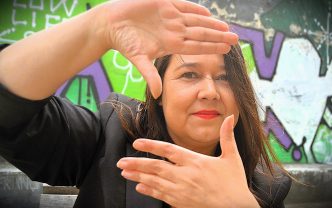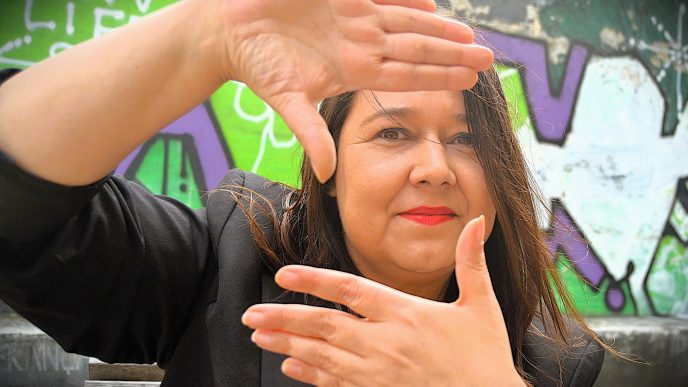
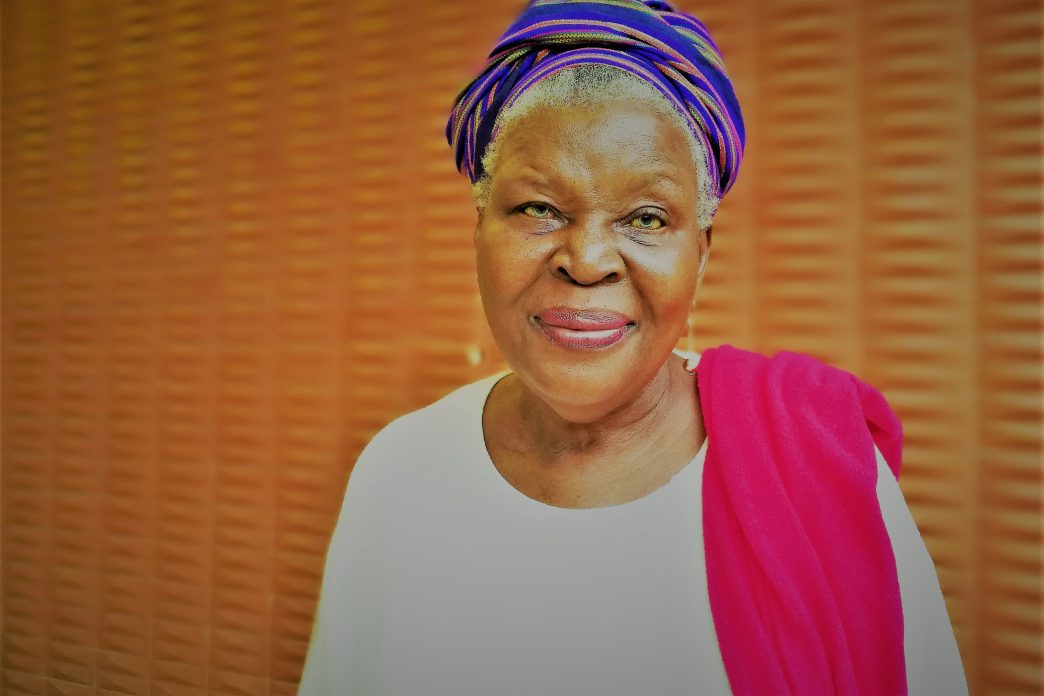
Writer Paulina Chiziane is one of the most prominent figures in contemporary Mozambican literature. She was the first Mozambican woman to publish a novel, launching her debut book, Balada de Amor ao Vento (Ballad of Love in the Wind), in 1990.
Chiziane considers herself a storyteller, not a novelist, inspired by the tales told around the campfire, which she says were her first art school.
Born in 1955 in Manjacaze, the writer grew up in a family that cultivated anti-colonial principles and had an active political youth, participating in independence movements. Her works do not shy away from difficult themes such as the impact of polygamy on society or the perpetuation of cycles of violence through power dynamics imposed by colonization.
Feeling the pulse of the world, Paulina Chiziane sees the affirmation of women in literature as a crucial step and emphasizes that “women have to write because the world is unbalanced.”
Childhood, the condition of women, stifled dreams, the reductionist discourse of philosophies and religions, the addiction to writing, prison and freedom, gender balance, the pleasure of writing, and the role of the writer are some of the themes that were addressed in this interview with the writer during a visit to Lisbon.
In 2021, Chiziane became the first African woman to win the Camões Prize, the most prestigious literary prize in the Portuguese language. An award that changed “a lot” in the author’s life. “People already take me seriously. They stop to listen to me, even if they don’t want to. They need to be well regarded. They end up listening to me and, perhaps, they end up understanding the reason for everything I do.”
Paulina Chiziane has works translated in France, Italy, Germany, Spain, and the USA.
In 2003, with the book “Niketche, a History of Polygamy,” she won the José Craveirinha Prize (an award given to Mozambican authors by AEMO, the Mozambican Writers’ Association).
Luis Guita interviews Paulina Chiziane
Paulina Chiziane, where does your dream, your desire to be a writer, come from? Do you hear stories from your grandmother around the fireplace?
Paulina Chiziane: Yes and no. Yes, because that’s where I learned the beauty of storytelling. But there were so many children, and of all of them, the one who really got into it, who truly grasped it, was me. My brothers, my cousins, my friends, didn’t have the same taste. So, it even seems like I have a natural gift for doing this.
And soon, in Portuguese, which is not your first language, it started as “chope” and “ronga.” What is the influence? As far as I know, you only started learning Portuguese at the age of six. Is there an influence of “chope” and “ronga” languages in your writing?
Paulina Chiziane: Absolutely! Sometimes I find myself seeing the logical structure of the sentence, which is not the Portuguese structure, but the structure of a language that is not Portuguese. In this case, either “ronga” or “chope,” because we structure things differently. And that’s what makes a slight difference between the Portuguese language written by someone who has Portuguese as a second language.
Before dedicating herself to writing, she had a desire, which was suppressed, to dedicate herself to painting. How did that happen?
Paulina Chiziane: I don’t know. I liked to paint, I loved to paint, and I used up school supplies. For a family of eight children, with a poor father… I used up watercolors, paper, pencils, everything. So, my father thought no, I shouldn’t. And not only that. Painting wasn’t considered a woman’s thing, in the time I grew up. After that, I thought I should do sheet music, and there I went, using up paper again. Then, I got a serious beating from my father to stop using it. Because the problem was using it up.
I was entitled to have a notebook, I think every two months, or something like that. So, I stopped, but I didn’t stop, I kept writing. So, when my father saw me writing, he thought I was studying. So, that’s how the writing went.
What did you put in your first writings?
Paulina Chiziane: Crazy things. Instead of keeping a diary of what happened during the day, like my friends did at the time, I had fun trying to write down my dreams. I kept a dream diary. So, I dreamed something and I had to put it on paper. I would wake up, of course, and start trying to remember what I had dreamed. And I would start writing. But that also earned me another beating from my father, because when it was time to go to school, I was late. Because I woke up and was writing things that didn’t make sense. But I wrote. Unfortunately, I don’t know where that notebook got lost. Those were good times.
But your first novel ends up being a book with few dreams and a lot of reality.
Paulina Chiziane: A lot of reality. But, look, in everything I write I’m also dreaming of a more balanced world. Although I’m describing reality, there’s a dreamlike quality to my books.
A message of hope? Is that what you try to convey with your books?
Paulina Chiziane: I try. I don’t know if I succeed. But it is a message of hope, yes. Because one of my books, little known, is called “Messages of Hope in Times of Coronavirus”. It’s a book that had almost no circulation, because I wrote it during the Covid pandemic and didn’t even have a way to promote it. But it’s a book that is now beginning to be read. And I worked with these young girls and others who are in Mozambique on the production of an album called “Songs of Hope”. And that’s it, I’m doing things like that, with hope for a better world.
And is it also this search for hope that led you to write “The Voice from Prison”?
Paulina Chiziane: “The Voice from Prison”… I don’t know. But when I entered prison I felt despair. And I experienced the despair of other people. And the most interesting thing is that those who are in prison have much more hope of living, of getting out of that situation, of living a life of light, much more than people who have never been in prison. That’s the most beautiful part of the story.
“The Voice from Prison,” which, incidentally, broke a promise he had made. He had said he wouldn’t write again. What did you find in these stories that made you feel compelled to write again?
Paulina Chiziane: It’s a stark reality, a reality unknown to many. Starting with myself. I knew there were prisons but I didn’t imagine the life that was led there, nor the mindset of those who are in prison. Then, I had my first contact and I thought I should document it. I did what I could, because it’s not easy to work in that environment. But I made the records I could. Now, let’s say that writing is sometimes an addiction, right? And every addict, from time to time, has a relapse. I had a relapse (laughs).
So, does that mean that, despite having promised, in quotes, not to write again after this relapse, it doesn’t mean I won’t have another relapse?
Paulina Chiziane: Oh, I don’t expect it (laughs). But if I have another relapse… what else can I do but satisfy the addiction (laughs).
One of the themes that marked your beginning as an author was the condition of women. What did you seek to convey, and what still needs to be said about women, especially Black and African women?
Paulina Chiziane: There is a lot to say. I confess that, despite having written the book, I haven’t said absolutely anything. I mean, I’ve said very little about what women are. Their deep world, their inner world, their dreams, what they would like to have accomplished, is a work that is done very slowly and will take time. So, I say that I am simply an adventurer who is also a pioneer in these matters. Because the truth about women has to be a permanent work.
What makes you talk about this topic? What makes you so concerned about the condition of women? Is it being subjugated, the lack of prospects? What do you seek to bring to light?
Paulina Chiziane: Above all, to make women feel their inner power. Because there are women who, due to different systems, end up negating themselves. They cannot negate themselves. Women have strength. But philosophies and religions have a completely reductive discourse, and women end up being left behind, resigning from life, negating themselves, in short. It is necessary to uplift women and make them discover their inner being and recognize the contribution they make to the existence of any human being’s life.
Is this reductionist role that religion ends up having over women because men are at the head of these religions and the sacred books were written by men?
Paulina Chiziane: It could be. It’s not just religion but almost all institutions are patriarchal institutions. So, all of this, the patriarchy, mixed with religions and some of our traditions, leads us exactly to this position of women. Now, there’s something I always say. If women had been sitting at the table to write the Bible, it might have had a slightly more humane beginning for women. Because, well, you open a supposedly sacred book to say that they are sinners, that they are criminals, that they are poisonous, it’s not good. I think there were women missing there.
Interpreting it in reverse, it even seems that men are afraid of women and, therefore, create this image of women.
Paulina Chiziane: It could be, it could be. But there’s always a desire, I think that’s human, there’s always a desire for one to dominate the other. When women are also in power, men better watch out. So, women in power, will the world be more just? I don’t know. Men in power, is the world just? I don’t know. And where did the balance go? Because most of the principles that govern the world are not about balance, but about the supremacy of some over others. So, perhaps, now is the time to try to talk to end the war of the sexes. The world needs balance, life needs balance, and not the war of the sexes.
Currently you are an acclaimed author, but what was it like in the beginning? What reactions did you receive for talking about sex and love?
Paulina Chiziane: The worst. Many people didn’t take me seriously and even thought that everything I wrote was heresy, that it didn’t deserve to be written. But time passed and that’s it. Today the reality is different. Even those who doubted me now end up surrendering to reality. I do the work, I write what I can. Deep down, I just want to contribute to a dialogue. Not because I want this or that to happen, to change the world, no. Just the fact that we can sit down and talk and reflect on our relationship as human beings is a great contribution.
Meanwhile, you received the most important prize in Portuguese-language literature, the Camões Prize. What did that change in your life?
Paulina Chiziane: A lot. First, people now take me seriously. Second, they stop to listen to me, even if they don’t want to. They need to be well-regarded, and they end up listening to me and, perhaps, understanding the reason for everything I do.
As a writer, what message would you like to convey to other women, to African women, and in particular, to Mozambican women?
Paulina Chiziane: I prefer to send a message to everyone. All people, all races, and all genders. Which is this: women have to write because the world is unbalanced. You don’t have to go far. Go to the first bookstore, you’ll see that half the thought and half the knowledge is signed with a male name. There are few women contributing in this area. It’s the same in libraries. So, there’s a world that’s missing to create balance, which is the world of women. Therefore, women should write.
What is the role of the writer? In this case, what is the role of a female writer? Or better yet, what is the role of someone who writes a book?
Paulina Chiziane: There are several roles. The first, for me, is the pleasure I feel. The second is to collect, to rescue some value, be it from culture, tradition, or daily life. Third, to preserve. And fourth, for me, based on the written texts, to provoke a debate and reflection for positive change in any society.
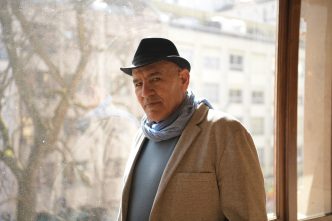
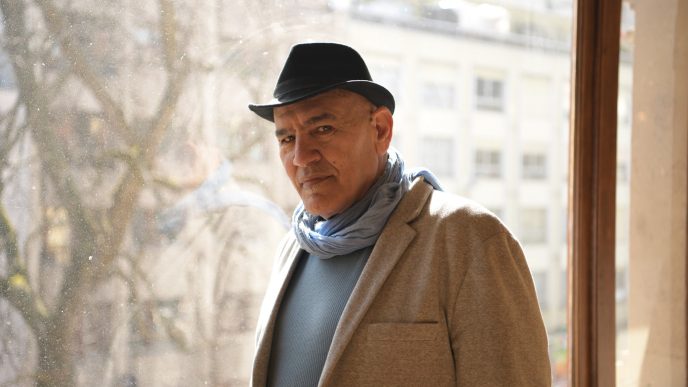
Text and photo by Luis Guita
Published on RFI on 02/06/2022