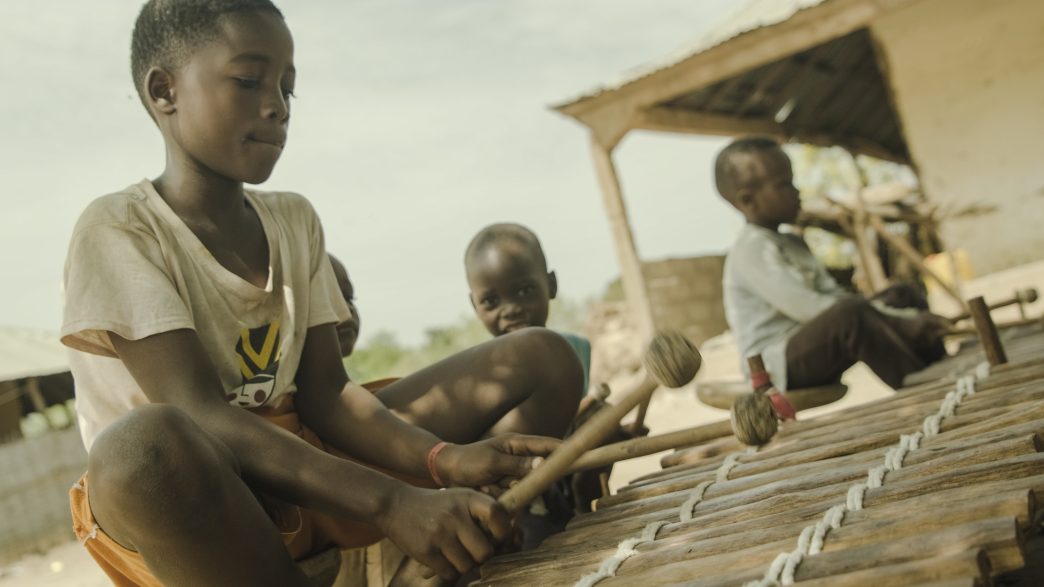
Discovering the musical universe of Guinea-Bissau is like entering the cave where Ali Baba and the forty thieves kept their stolen treasures. But here, none of this music was stolen; rather, it is the result of an immense vein of gold that, like a river, is fed by multiple tributaries.
In this country on the west coast of Africa, 2.2 million inhabitants speak 32 languages corresponding to the different ethnic groups living in the territory. With all the artistic and cultural richness that such a melting pot can provide, it’s not difficult to imagine that this is one of the most prolific musical landscapes.
Awarded Best Documentary at the MATE Festival 2025 and FESTin 2025, Nteregu is a unique testament to this rich musical universe, a testament to the contributions of dozens of ethnic groups.
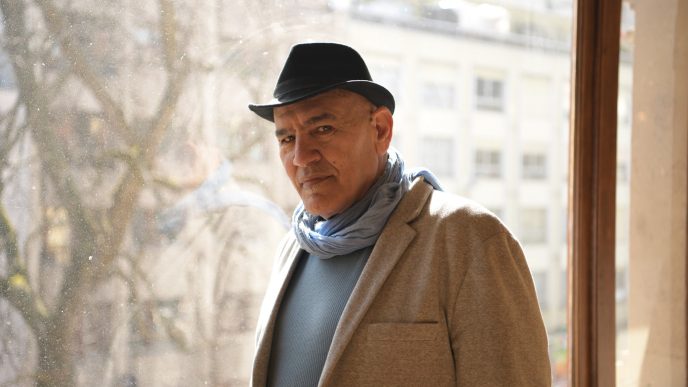
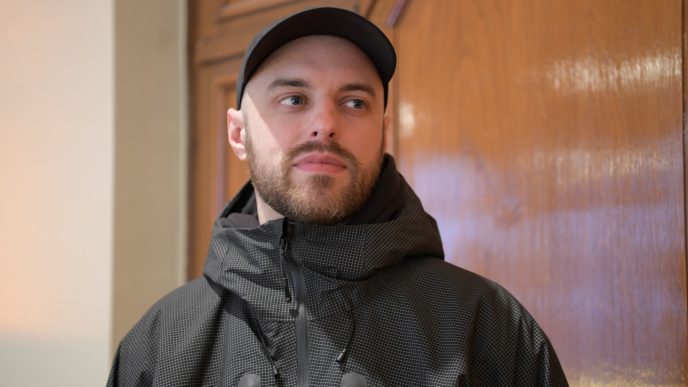
Like a vessel of Guinean music, this remarkable work by Portuguese filmmakers Roger Mor and Manuel Loureiro transports us on a passionate and intense journey through centuries of Guinean music history, from its ancestral roots to its modern expressions, tracing a nautical chart that connects, among other places, Bissau to New York or Lisbon to São Paulo.
Nteregu is a passionate journey that takes us from the tina (a traditional musical instrument of Guinea-Bissau, also known as a water drum) to the culture of the mandjuandadi (traditional women’s associations in Guinea-Bissau, characterized by groups of women of the same age who meet to sing, dance and strengthen bonds of solidarity). Or even from the tabankas (villages of rustic houses) and the griots (traditional storytellers, poets and advisors who act as guardians of history and culture, oral transmitters of knowledge), to the dance floors of Europe.
Directed by Manuel Loureiro and Roger Mor, and produced by the Associação Ser Mudança, Nteregu is a poetic celebration of Guinean music in all its diversity and richness, featuring testimonies from, among others, Ramiro Naka, Adriano Atchuchi, Eneida Marta, Miguel Barros, Tony Osvaldo, Ivan Barbosa, Karyna Gomes, As One, Juca Delgado, Odete Semedo, DJ Mandas, Nino Galissa, Dulce Neves, and Ernesto Dabó.
Associação Ser Mudança : https://sermudanca.pt/pt/
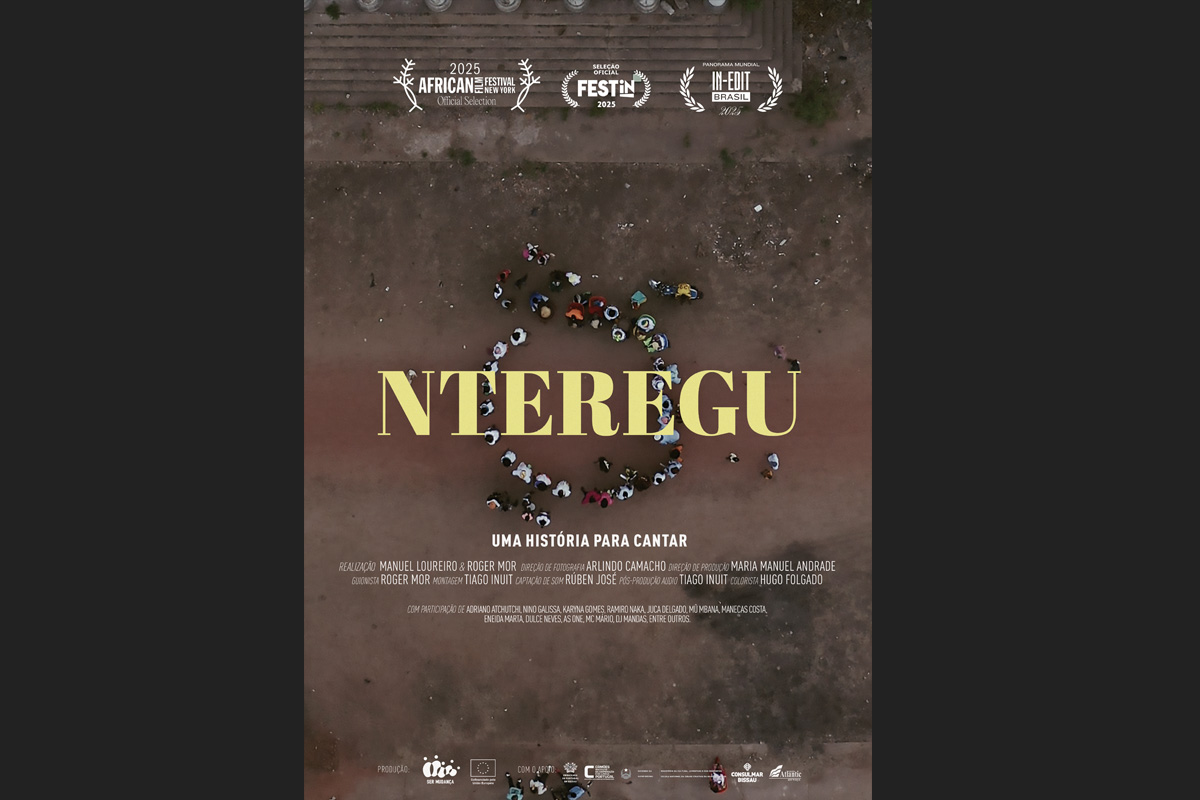
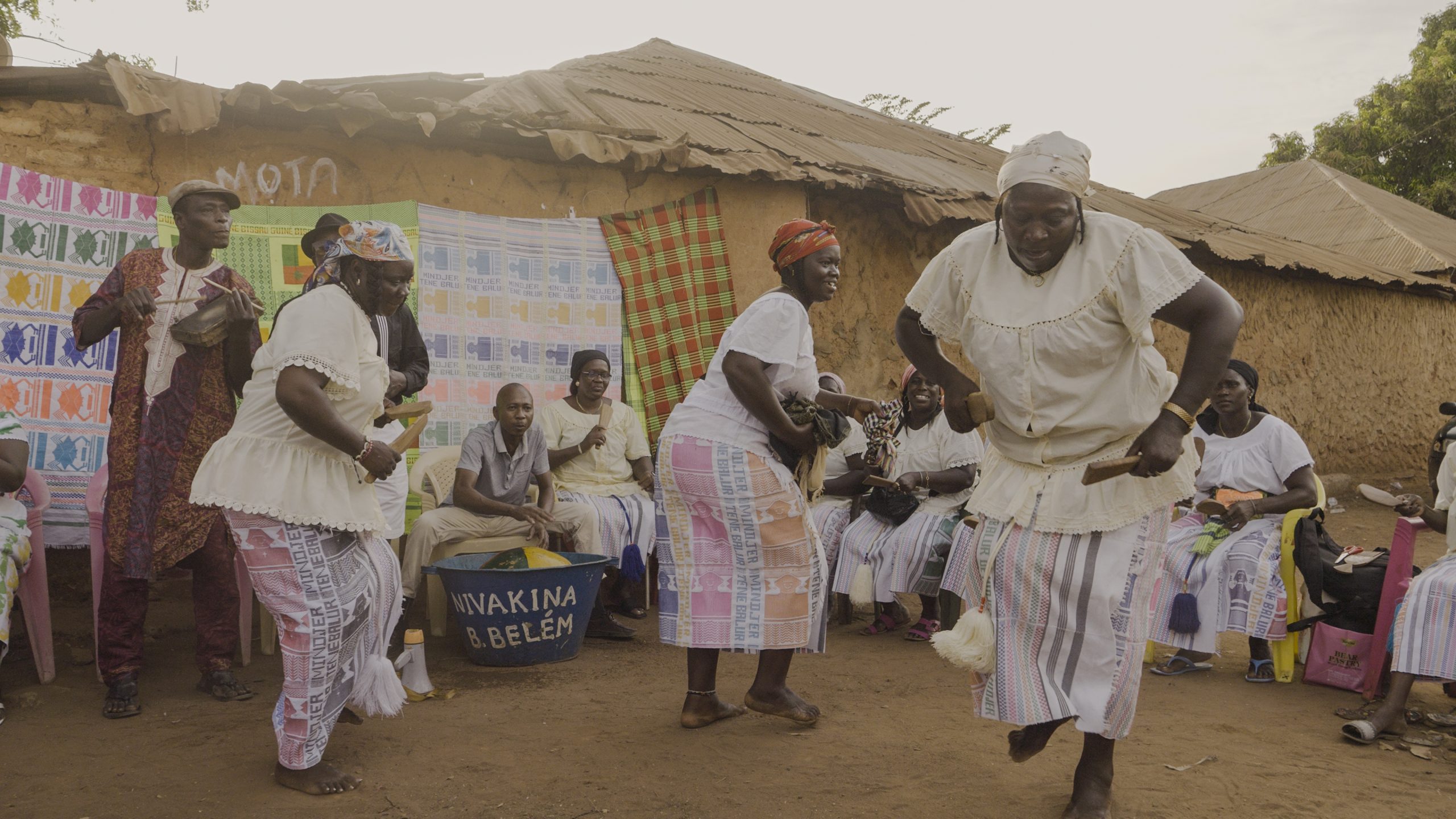
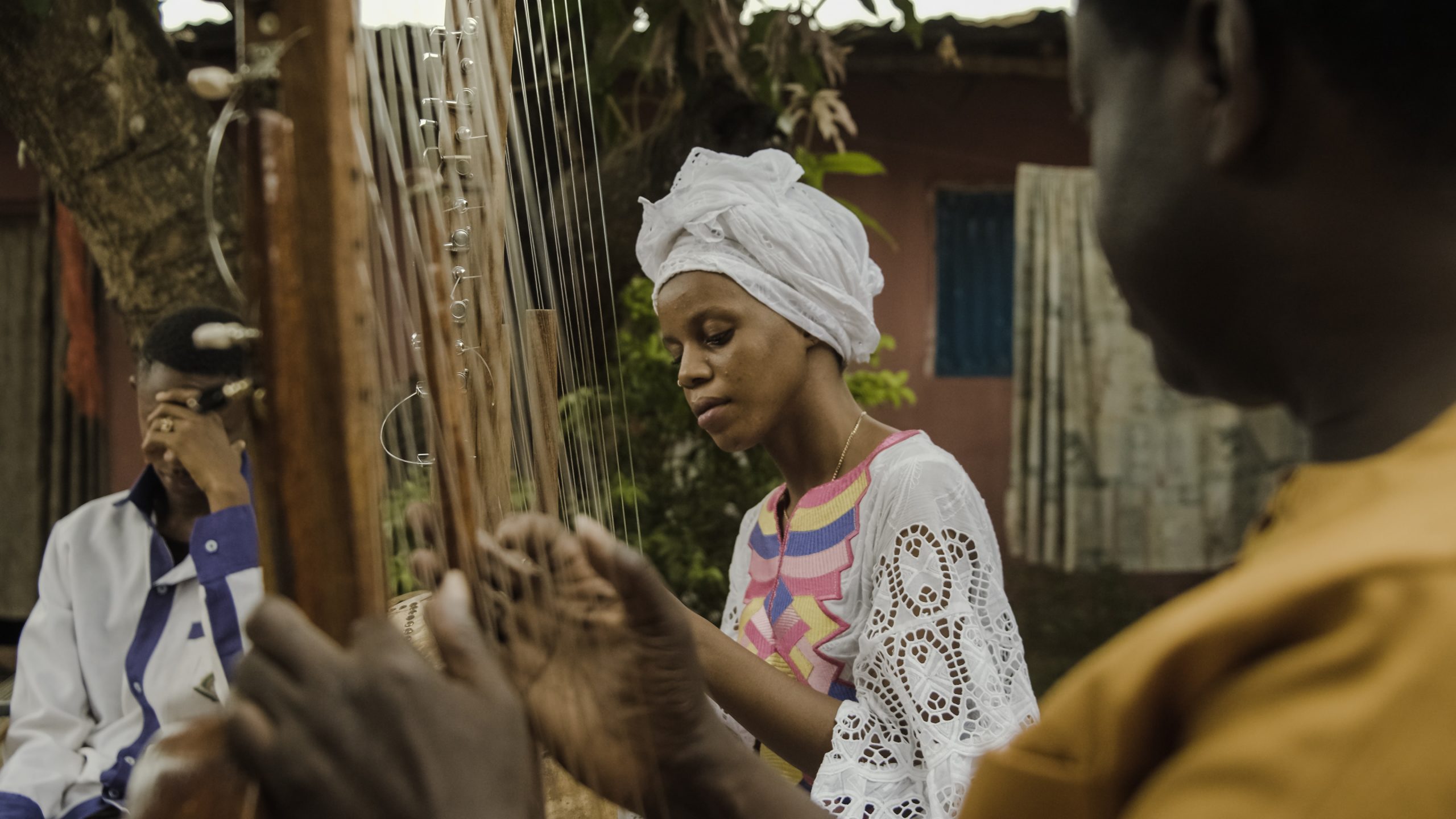
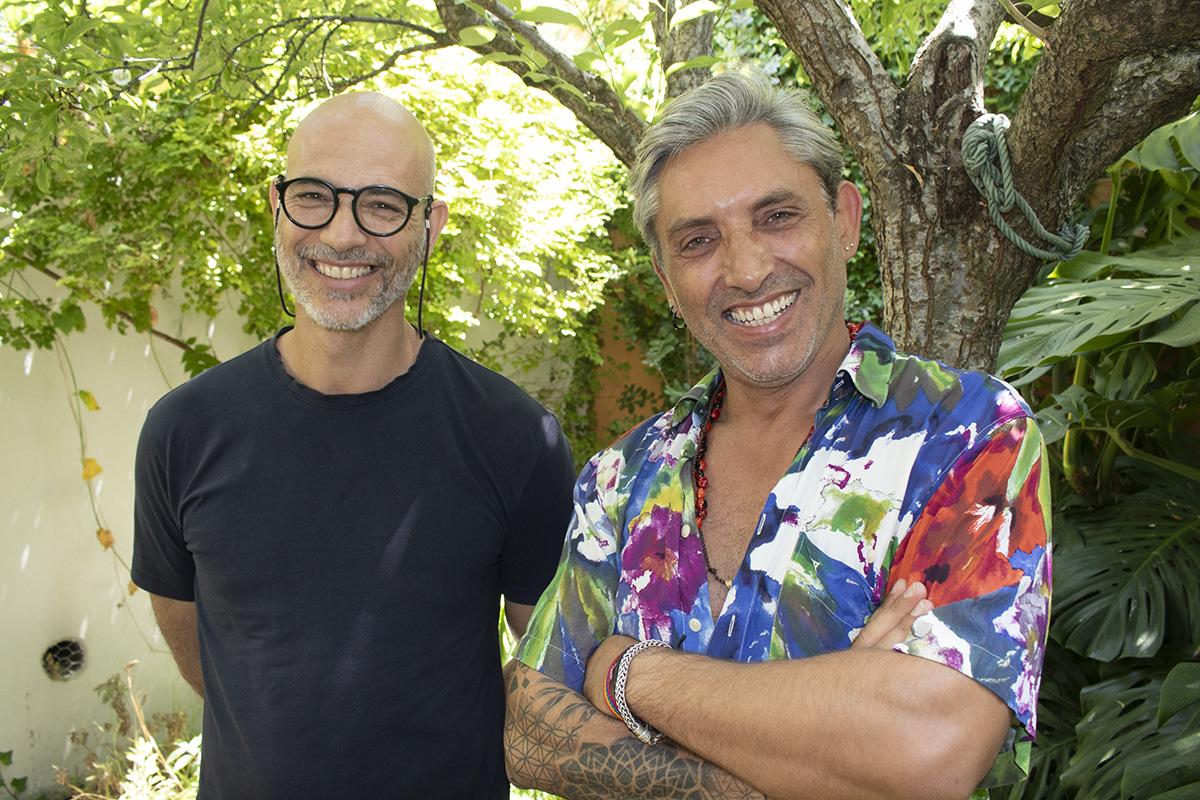
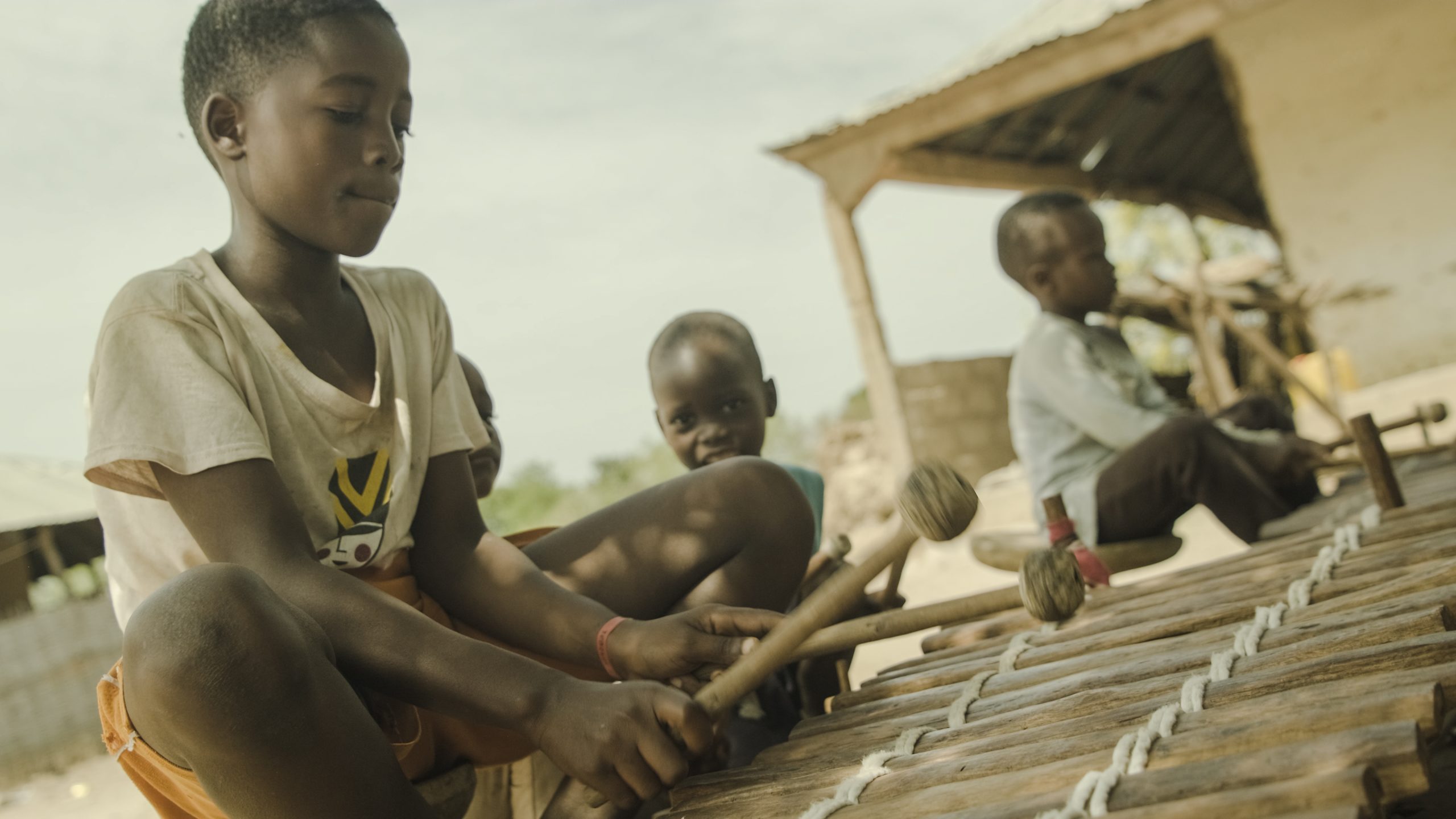
Nteregu – Luis Guita interviews directors Roger Mor and Manuel Loureiro
How did the documentary Nteregu come about?
Roger Mor, co-director of the film Nteregu: Nteregu came about in the wake of our first project, which was Ntrudo. We had this first contact with this rich universe of traditional Guinean music through this first film, which was Ntrudo, and from there we wanted to explore it a little more. The idea, properly speaking, arose from our intention to help create an inventory of Guinean culture, which was one of the projects of a prominent figure in the cultural scene in Guinea-Bissau, Dr. Cornélio. His desire was to begin this inventory, mainly of traditional rhythms. And, effectively, the film’s mission is to showcase the cultural richness of Guinea-Bissau’s music.
And they go to the origins of the music.
Roger Mor: It is often said that artists and madmen sail the same waters, but artists get out. And we almost didn’t get out because of the madness of wanting to create a piece that spanned so many centuries. That was the biggest challenge, in my opinion.
I think a lot happened, but there was also a huge headache here, which was wanting to tell a story spanning so many centuries, with so much richness, with so many rhythms. It’s a lot of history in just one film. With this madness of wanting to tell the story of where the music of Guinea-Bissau comes from and where it’s going.
And what were the challenges of putting all this history into images?
Manuel Loureiro, co-director of the film Nteregu: For now, I think I agree with Roger. We really had a lot to tell in just one film. Because since there was nothing, it was necessary to tell everything. At least, this way, it’s already told.
Sometimes with more space for poetry, more space for a more cinematic language, sometimes a more condensed and informative language, but it’s there. And I think that was the first step. What I felt was a challenge, at certain stages of the story, in terms of images, getting images to illustrate what we were talking about.
We have the stories told in the first person by the interviewees, but there are very few archival images. Then, there are other archival sources that were inaccessible to the budget and resources we had. I think that was a little more of it.
Perhaps the biggest difficulty we felt making this film was making a film with very little money. We wanted to make the film, we went to make the film, we had some logistical support. However, for this film to come out, we really needed financial support, because we have to pay the royalties to the artists who are involved, for the music, etc.
One of my biggest difficulties, at least speaking for myself, is editing, working, kicking things around, without knowing if the film was going to come out. Because if we didn’t have the money to actually pay the copyrights and respect everyone’s artistic work, the film wouldn’t come out. But everything turned out well.
In this film, what are identified as the deepest roots of Guinea-Bissau’s music?
Roger Mor: We decided to start with the two main lineages that have been identified, which are the Balafon and the Kora. That’s why the film begins in the village of Tabatô, where this lineage is still alive throughout the village of musicians. And, obviously, we couldn’t fail to address the roots of Mandjuandadi with the Tina.
Because, if there’s one element that’s transversal to modern music today, perhaps it’s the Tina. And, effectively, there’s a historical connection to Portugal with the Tina, because the tina is a bucket of water that is played with half a gourd inside, with the tina full of water. Perhaps, if the wine barrels didn’t reach there, perhaps the instrument would be different.
I would say that these are the three great roots that then guide us throughout the film.
There’s a part of the film about the contribution of music during the liberation process, the fight against the Portuguese colonial troops. A significant reference is made to José Carlos Schwarz (a poet and one of the most important musicians in Guinea-Bissau, who participated in the clandestine struggle for independence).
Roger Mor: I just wanted to make a small point here before answering your question. When you asked earlier how the film came about, actually, the first time I wanted to see the film was when I was doing research in the archives in Guinea-Bissau, and I found that phrase from a 1945 ethnographic survey saying that Guinean music is very poor in rhythms, rich in noises, infernal sounds and metallic whistles. This phrase, which is perhaps one of the least shocking I read in these questionnaires that Portugal wrote about its former colonies, I think that’s when I first felt the desire to write a screenplay about the music of Guinea.
And obviously, when we look at our culture, at the role that Portuguese music played in ending the regime, that also becomes apparent.
Obviously, it was set in Guinea. And the funniest thing was seeing how the lyrics associated with the resistance are all, in fact, true oral histories. The true role of music in Guinea-Bissau is an oral archive, which is important not to lose. And this happens with the lyrics of the resistance. That’s why we insisted on having the lyrics translated. Not only those in Creole, but also those in other languages. Because, then, we understand the true role of music in a society without writing.
The film ends by addressing rap and hip-hop made by Guineans. Are there clear differences compared to rap and hip-hop made in other latitudes?
Roger Mor: Look, that was a part we didn’t explore much. For that to be possible, you almost had to show what rap from other latitudes is like, to show what the rhythmic difference is in that rap. But there is a rhythmic difference. That rhythmic composition of Tina is present in rap and it’s possible to identify it.
Now, you needed to explore that more, but hey, the rhythmic difference is one of them. And then it has to do with the story, right? Obviously, it tells the story of Guinea-Bissau. And then there’s the issue of languages, right? It’s estimated that there are still 32 languages in the country, and there are many musicians who still insist on incorporating a part of their mother tongue into rap. And those are the differences.
This film was initially presented in Guinea-Bissau. What was the reaction of the Guineans?
Roger Mor: Yes, Manuel went to New York, I went to Guinea-Bissau.
They were completely different realities, for sure. The pre-premiere was in the courtyard of the Portuguese Embassy. Of all the events I went to, I think it was one of the most popular at the first Biennial of Contemporary Art of Guinea-Bissau. Showing a film about music from Guinea, in Guinea-Bissau, was a surprise. The applause, the dancing, the recognition of the lyrics. It was incredible! And the reactions?! It was an emotional moment! People have a new perspective on themselves. Throughout the film, there are almost injections of self-esteem in that audience.
How was it to present the film about the music of Guinea-Bissau in New York?
Manuel Loureiro: At the Africa Film Festival, it was also very well received, but for completely different reasons. While in Guinea-Bissau we had a whole audience seeing themselves reflected in the music, in New York what I felt was that the audience was mostly composed of professionals. Radio professionals who, for example, had many World Music radio programs. In the end, many of them said that they had been to dozens of African countries and knew nothing about Guinea-Bissau. Which is very strange. It’s almost absurd that those interested in music don’t know Guinea-Bissau. Because it’s incredibly strong, incredibly powerful. And they feel that desire; many of them said they have to go to Guinea-Bissau.
I left there with a list of emails, including some to answer, and I replied with the names of the artists and with tips. Because they were all very enthusiastic about the idea of visiting the country. I think that’s very beautiful, and I think the film works.
And after New York and Guinea-Bissau?
Roger Mor: Nteregu ended up premiering at the Festin (Film Festival), and won the Audience Award, which made us very happy, of course.
Then it was shown in São Paulo, at In-Edit. We’ve already had some reactions, namely some universities are interested in creating a partnership with us to show it. We’re going to be in Australia. In other words, the film is, surprisingly, entering circuits where we hadn’t even thought it could enter so easily.
And we’re talking about the New York African Film Festival, which is one of the main African music film festivals in the world. In other words, for us it’s also a sign that we have indeed managed to attract the attention of major beacons that have their light shining on world music. This film will now be shown at film festivals, and then possibly on national television, either in Portugal or Guinea-Bissau. Later, in the long term, it will be available on our website, sermudança.pt. I think this could be a very interesting start to continuing this project. We would like to make more documentaries about music in Guinea-Bissau.
Just think that, if there are still 20 ethnic groups, each ethnic group has its own rhythm, its own musicians, its own instruments, its own language. In other words, just think about that and we immediately think of a documentary series.
The appeal I would like to make to people is that, when they have the opportunity to see the film, they should invest those 90 minutes. There is a whole new world out there, one that schools haven’t shown us, one that the media continues to keep hidden from us.
There is a Eurocentrism in our culture that often distances us from a richness of culture that is simply not found in our latitude. And this richness often helps us create something new.
I am a completely different person after experiencing Guinean culture. There is a richness there that makes me richer.
Luis Guita