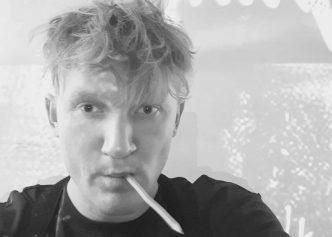
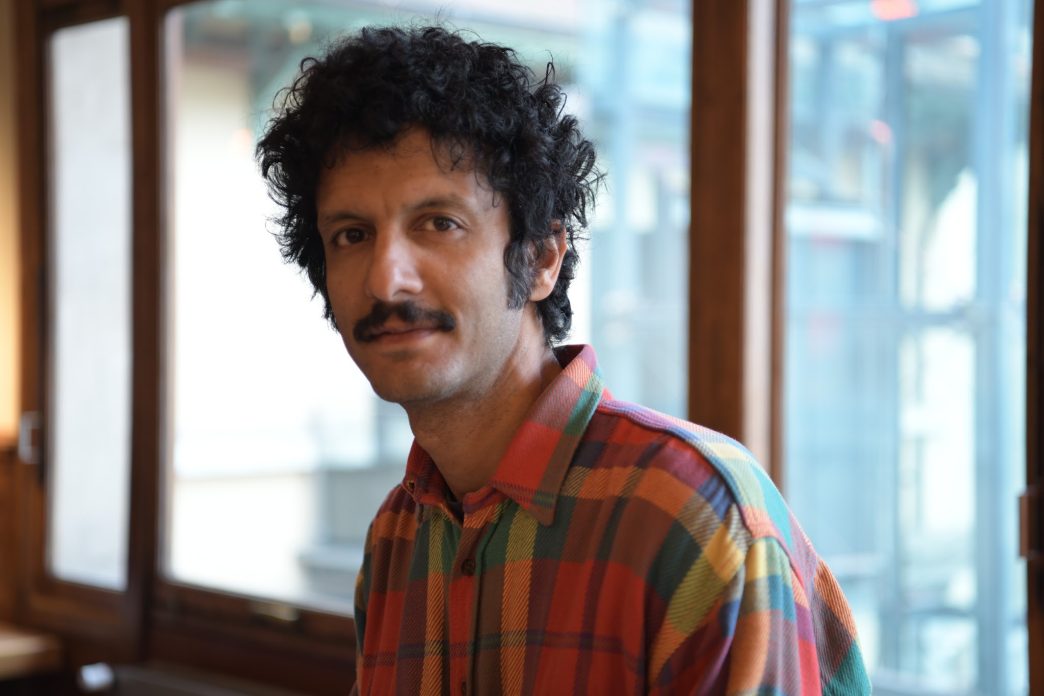
Can a country be discovered on the street where we live? To a large extent, by getting closer to our neighbors, as demonstrated by the documentary Letters from Wolf Street (Listy z Wilczej), filmed in Warsaw by an Indian immigrant, Arjun Talwar.
Arjun left Delhi with a friend, both determined to study at the Lodz Film School. The tragic death of his friend pushed him on a quest for meaning. Camera in hand, he filmed life in the microcosm of the street where he lived, among neighbours, the doorman, the grocer, the postman, and the shoemaker. By getting closer to those geographically closest, he made them humanly close, wove bonds. Armed with curiosity, Arjun built community.
“The motivation to make the film came as I felt I had to answer these doubts that I was having after the death of my friend and react to it in some way. It was a very fulfilling thing to make a narrative out of my own experiences,” Arjun told Blindspot in Geneva, where the film was screened, during the International Film Festival and Forum on Human Rights.
The film was very well received in Poland, not only in the capital but in other cities across the country. Poles were drawn to a film that showed them the neighborhood reality where they live, portraying the everyday existence they experience, something that rarely interests Polish cinema. This, while allowing them to discover not only Arjun, but other immigrants, from the Chinese Mo to the Syrian Feras and the Gypsy Oskar.
“The Warsaw that appears in this film is closer to the Warsaw they live in than the city they see in other Polish movies, because Polish cinema ignores the existence of foreigners,” he stressed. “The reality of today’s Warsaw is neither present in movies, and that was one thing that people really felt, okay, that is my city, and they really appreciated the novelty of it. But also, my perspective on Poland as an outsider, that is something that they hadn’t maybe seen before. And the protagonists also were very happy to watch the film.”
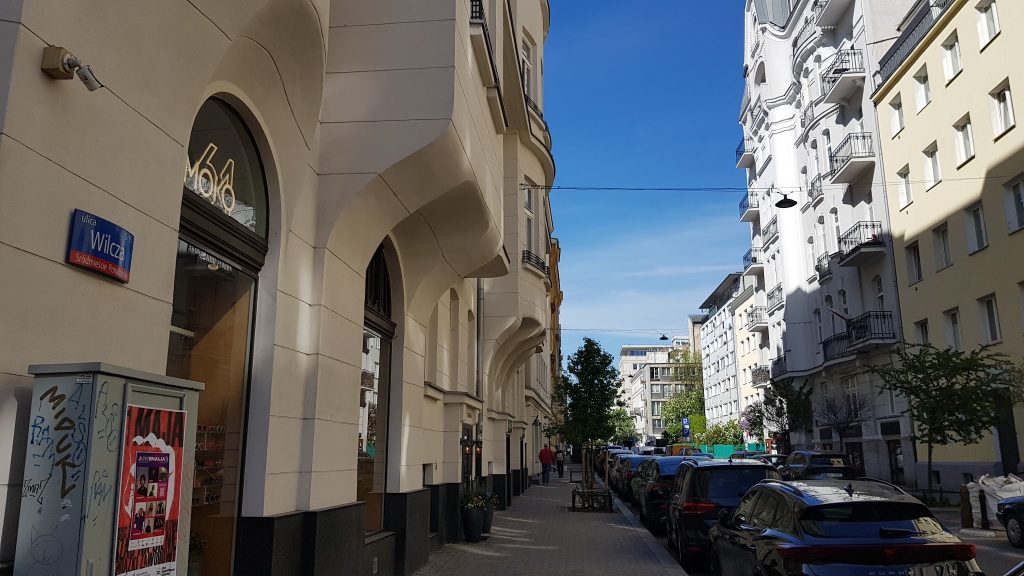
Arjun confessed that there was something very satisfying in making a film on the story of his immigration and giving a voice to all these other people who he felt have been ignored in Polish culture. “All of this gave me a lot of motivation to make this film and a reason to be there,” he recalled. “In that sense it was cathartic and then the film getting popular in Poland and internationally was also another kind of catharsis because then you feel that somehow this work has made these people visible and has also given some acknowledgment, some understanding to your own personal story.”
The Polish premiere was in May at the festival Millennium Docs. “After that there were many screenings in Warsaw and other cities and they were really full and people had heard about the film. There was a lot of buzz around the film and it was really nice, it was in the cinema for two months in Warsaw and a little less in other cities. So people really appreciated it,” he said.
Arjun underlines that the film wouldn’t have existed without the help of a group of friends. “We were basically a small collective, like me, Bigna Tomschin, who edited and co-wrote, and Alexander, my friend, who did the music, and my friends, Feras and Mo, you know, acting in the movie. So it was this really tight-knit group of friends making a movie, most of these people. And so we sort of were able to be free from the system and the negativity of the film industry.”
The fact that Poles think that a foreigner can’t understand Poland was an advantage for the film, Arjun found, “because they’re explaining Poland to me. The dance teacher, the woman in the kiosk, the therapist, they all wanted to explain Poland to me. They wouldn’t have gone through the trouble of trying to tell me these things about Poland and the Polish mentality if I was Polish.”
After eleven years in Poland, he is back in India, working on a fiction movie. “In the Polish tradition, the documentary is definitely the strongest part of Polish cinema. That’s also one reason I was attracted to it in film school. But I do want to just see what it’s like, you know, after all these documentary experiences, to make a fiction film.”
Nelson Pereira