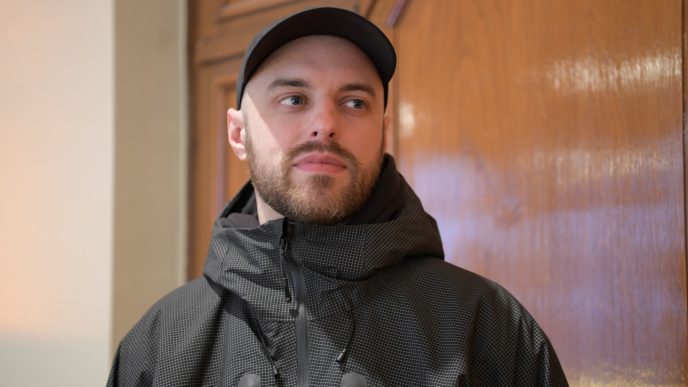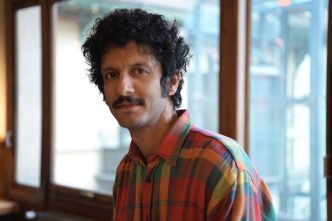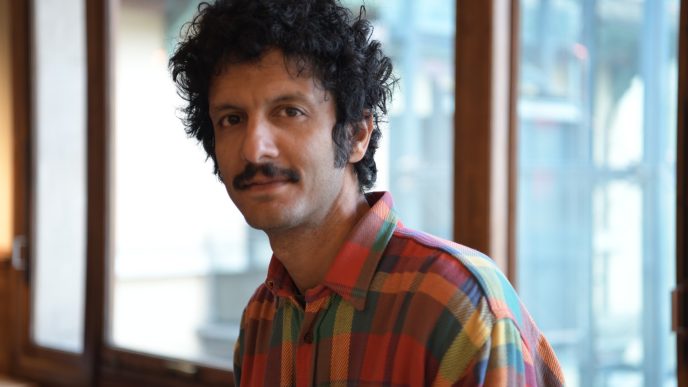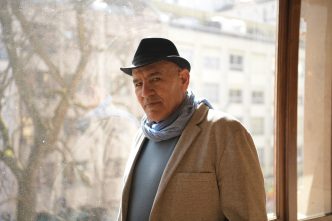
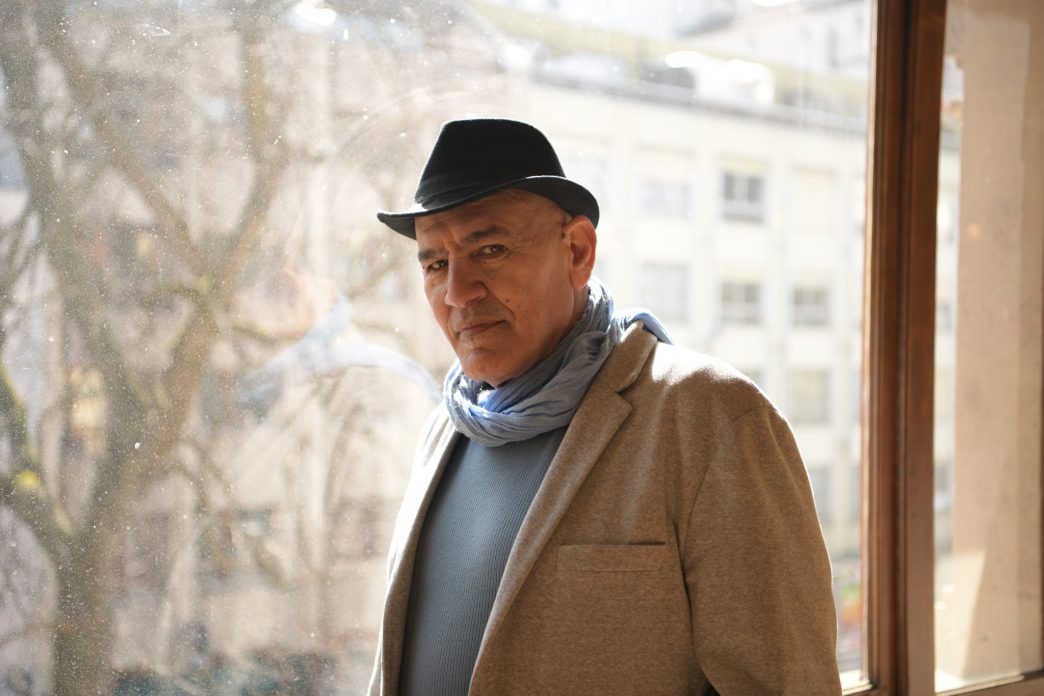
Life is about hope, but especially about tenacity and perseverance. Palestinian filmmaker Rashid Masharawi is made of this stuff, the kind of person that refuses to quit. The Israeli invasion and genocide in Gaza compelled him to embark, with a sense of urgency, on a project to support the production of documentaries filmed by Gazans in Gaza. “I’m fighting to save the memory. Once people will die their story will also die, and I don’t want people to die twice,” he told Blindspot in Geneva.
After the start of the war, Rashid founded the Masharawi Films Fund with the purpose of encouraging young Palestinian filmmakers to tell through film the raw human stories that show the world what life is like in Gaza.
“It was not easy. When I started, I seriously doubted whether I would be able to do it,” he recalled. “We started under real genocide, under real bombing, when people were moving and losing houses and searching for food, and the film was not really priority at this time, but me and my team, we insisted, at the same time when people were trying to save their own life. With the filmmakers in Gaza, I wanted to save people’s life stories.”
The obstacles were numerous, affecting every detail of the filming and production. “Once you don’t have electricity, you cannot charge batteries for cameras, you cannot charge mobile phones, you cannot have internet to communicate,” Rashid elaborated, confessing that a feeling of guilt was always present. “I was outside Gaza, and then we were all the time risking people’s lives to search for internet here and there, and usually internet close to hospitals, where the journalists who have international SIM cards are working, it was very dangerous. The other option was to go to the border of Egypt to use Egyptian SIM cards, which work inside Gaza, so some people were really risking their lives to go there to upload material for me.”
Rashid Masharawi supported the production and post-production of the 22 short films that make up From Ground Zero, filmed in different parts of the Gaza Strip at the end of 2023.
The compilation was scheduled to have its world premiere at the 77th Cannes Film Festival, but was pulled by the organizers over “political” tensions. In response, the Palestinian film director staged a protest screening via a projection outside the official festival venue.
“There are two stories about the Palestinians,” said Masharawi. “We have the story told by the Israeli occupation, that we are all criminals, we are cutting hands, raping women, and the other that nobody wants to see, that only in the first year of the genocide Israel killed 20,000 kids, women, old people. There are so many Palestinians who are innocent, they have nothing to do with Hamas, nothing to do with 7 October.” The anti-Palestinian tropes propagated by Israel made it very difficult to find space for the stories that the From Ground Zero project wanted to tell. “It was very difficult, especially in Europe, including France, in 2024, to make them listen, to make them look.”
This is despite him having a good relation with the Cannes Film Festival. “I had myself two films in Cannes, I had a prize in Cannes, I made activities in Cannes, I had good films, I had filmmakers, but six months after October 7, 2023, they didn’t want to deal with us, they didn’t want to question their prejudices,” said Masharawi.
Having always been independent and without ties to Israel, the Palestinian Authority, or Hamas, he was continually confronted with suspicion because he was Palestinian. “As a filmmaker, I spent so many years, through so many films that I made as a director, trying to explain to the world our humanity. And then I meet the point where the world failed to explain me its humanity.” From that point on, Masharawi decided to stop explaining that Palestinians are also human beings. “We are human beings before all these films, we are also artists, we are filmmakers, we are musicians, we are dancers, we are making theater, we are writers, and we are like any kids in the world, or any people in the world who have dreams, who look for tomorrow, without being engaged in all this political dirty story, we just want to live the life.”
He understood the time has come for Palestinians to build their present together without waiting for validation. “We stuck to ourselves. I said, they left us, and we should stick to each other, and tell our stories, and this is what I did through From Ground Zero. I’m building a film school in Gaza, I am running now, and every day, a big film festival for kids in Gaza, every day, and today, and tomorrow, and yesterday, hundreds of children watching Charlie Chaplin, and cartoons, and animation, and beautiful films. So I said, okay, let’s deal with ourselves, and keep telling our stories, let’s do true, good cinema.”
The From Ground Zero series of eyewitness shorts has been continued with a new anthology of seven short films and three feature films, From Ground Zero +. A selection of three shorts was presented by Masharawi at the Geneva International Film Festival and Forum on Human Rights: Very Small Dreams by Etimad Washah, Hassan by Muhammad Al-Sharif, and The Wish by Aws Al Banna.
In Very Small Dreams, Etimad Wishah brings us a very feminine perspective on the hardships and suffering experienced by women amidst war, when they and their children become refugees. The women speak to the camera about an exhausting and humiliating daily life, confronted with skin rashes and painful illnesses caused by the lack of hygiene in the tents where they live, but also the total lack of privacy in overcrowded spaces.
A documentary that, in raw and straightforward language, reveals to us, with a candor that makes it all the more shocking, the immense psychological impact these women face daily, crushed by the absence of any sign of hope for an end to their despair.
A young woman says it is extremely depressing to have to share a tent with a dozen other people, where they sleep without any possibility of privacy. Another woman, suffering from multiple illnesses, confesses that she wishes she could die. And a third young woman who gave birth to her fourth child in the camp tells a medic that she and her baby suffer from bacterial infections because, due to a lack of sanitary pads and diapers, she is forced to use strips of towels and clothes that she washes and rewashes only with water because she has no soap or detergent.
Hassan, by Muhammad Al-Sharif, follows a 17-year-old boy named Hassan during fifteen months of forced displacement in southern Gaza after he risked his life to get a sack of flour for his starving family in the north. Hassan, who had lost a younger brother before the displacement and his father during the forced exile, moves from one shelter to another, searching for food and a place to sleep, driven by the hope of reuniting with his mother and sister.
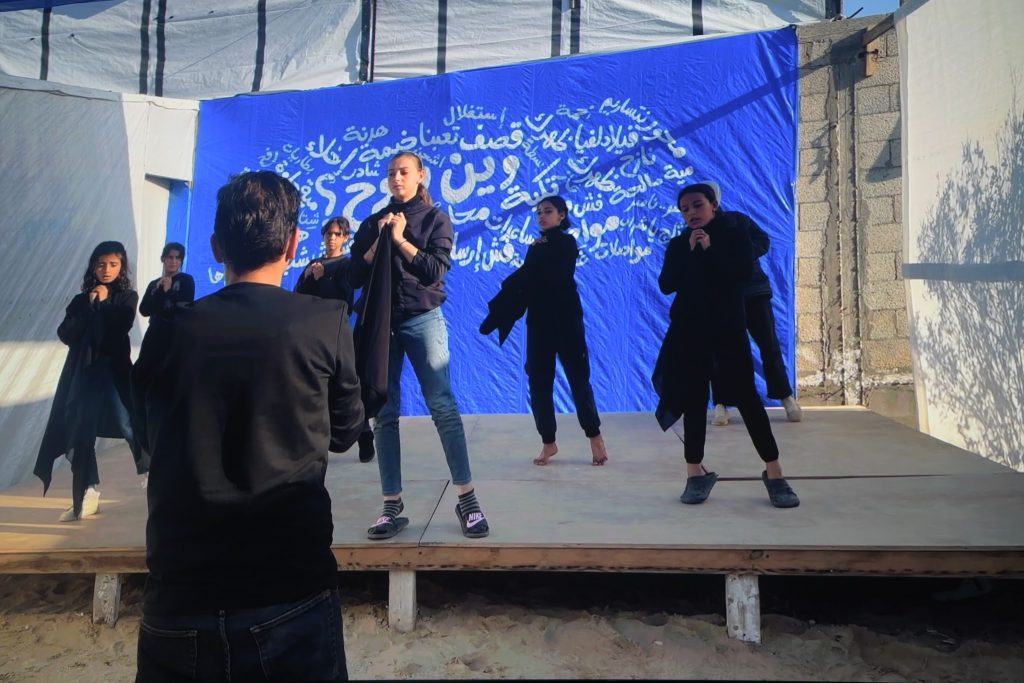
In his film The Wish, 26-year-old theater director Aws Al Banna tries to use art to help others amid the ongoing war, after he himself has lost everything, bringing their pain and wounds to the stage to confront and heal through performance. By bringing a group of teenage girls together for rehearsals for a play, he creates a space where they are allowed to express and cry out their trauma, to dream and reconnect with their humanity.
Rashid Masharawi was born and grew up in Gaza. He was working as a film director during the first Intifada in 87, made films in Iraq during the war, in Lebanon, and in Syria. He used his experience and relations outside Palestine to show films in Cannes, in Berlin, in Venice, building during 40 years a network that is now serving the project From Ground Zero. An ambitious project supported by a big team in France working on post-production, editing, color correction, sound design, sound mixing, subtitling, music, graphic. “We are in many important film festivals, winning prizes, more than 300 international film festivals in one year and a half, but this is not the important part, we are not doing this for film festivals or promotion,” he said, emphasizing that the main goal is to share these untold stories with the world, to “save the memory”.
Masharawi’s house in Gaza was bombed by the Israeli army. He lost an immense collection of equipment and filmmaking machines, video projectors, an impressive archive of films, reels, and tapes. But nothing stops him. “No one is safe in Gaza. I lost 76 family members. There is no one who hasn’t lost their home or family members. It’s a real genocide. But they will not stop us. My house was bombed, and I’m rebuilding it to house a film school. I am developing film industry in Gaza, I’m training new filmmakers, we are coming all the time with new good films, because we are first filmmakers, then we are Palestinians. As long as we think cinema, we will make good films, even with a lack of equipment, money, or technicians.”
For Rashid Masharawi, being optimistic is a matter of choice. When asked about the future of Palestine and the Palestinians, he doesn’t hesitate for a moment. “We have tomorrow. Tomorrow is ours. The Israeli occupation can destroy our land, our houses, our buildings, and they have done so; they can kill many of us, which they have done. But I don’t believe they will win this war,” he stressed. “Because you cannot fight culture, you cannot fight history, you cannot fight an identity. They cannot get seven million Palestinians outside Palestine. It’s not possible. They cannot arrest them all. They cannot kill them all. We are there, and we will be there.”
Nelson Pereira