We often hear people repeat the same phrase: “I have nothing to do with politics; I don’t like to get involved in it.” At times, this sentiment transcends personal choice to become an unwritten decree imposed by authorities upon the citizens they rule.
But can we truly live without engaging in politics?
In the West, this might be possible—though I have my doubts and reservations when looking at the broader picture.
But in the Arab world—the wealthy, the poor, and the occupied—I can almost swear that it is impossible. How can we ignore the events unfolding within and around our borders when our very lives are tethered to them and dependent upon them?
Take the Palestinians, for example. Can this people overlook or ignore what is happening on their occupied land and beyond?
Does it not affect their lives? Haven’t the successive wars over decades shaped the fate of a people languishing either under occupation or under an authority whose legitimacy expired more than 16 years ago?
If a Palestinian in Gaza wants to eat or travel, doesn’t politics intervene in their food, drink, and movement due to the border closures imposed by Israel on the world’s largest open-air prison?
And how can they rebuild their destroyed homes unless politics decides to allow the removal of debris—estimated at 70 million tons? Is it not politics that determines whether a Palestinian remains unsheltered or is granted the chance to build a roof to protect against the summer heat and winter cold?
Are international calculations not deciding their fate in meetings held thousands of miles away?
Not far from Palestine lies Lebanon—a small country whose misfortunes and calamities barely fit within its 10,452 square kilometers. Two wars in two years have caused massive destruction and displaced hundreds of thousands.
A new portion of Lebanese land has been occupied to establish a “buffer zone,” adding to previously occupied areas like the Shebaa Farms and Kfar Chouba Hills.
This is a region Israel seeks to reshape into a border strip, similar to the one established in the late 1970s, which remained a thorn in the side of Lebanon until May 25, 2000—the date the Israeli army withdrew from the south under the pressure of Hezbollah attacks.
Incidentally, that was the first time Tel Aviv withdrew from land without negotiations or humiliating peace treaties.
In the “Land of the Cedars,” because of the recent war, we find people whose life decisions were dictated by the politics forced upon them and their country.
A young woman in Beirut was preparing to marry a man living in Europe. The plan was for the newlyweds to settle in their new home abroad after a wedding in their homeland, surrounded by family and friends.
But the war imposed a completely different scenario. Fearing the closure of Beirut airport due to the volatile situation and Israeli raids, the young woman had no choice but to scrap her plans. There was no wedding, no gathering of loved ones, and no groom arriving to take his bride on their new journey.
She seized the first opportunity to board a flight to Istanbul, and from there, she traveled in silence to where her husband lives—without a celebration or traditional cheers (zaffa). Thus, the moment every girl dreams of—wearing the white dress and celebrating the happiest day of her life—never came. Politics aborted that dream and buried it.
Another Lebanese woman, who recently met a young man and agreed to get engaged, was asked by friends about her plans. She replied: “We are waiting for the war to end before finalizing the engagement.” Here, we ask the same question: Has politics not entered the finest details of life for people in our Arab world?
A third example: A lady living abroad wanted to return to her country to commemorate the anniversary of her mother’s passing. She had booked her ticket, but the rapid escalation and tensions preceding the recent war made her hesitate.
She wondered if it was right to leave her family and go when the country was “on the edge of a volcano,” as the saying goes. Ultimately, she decided not to go—a wise choice, as the war soon broke out with all the tragedies and horrors it brought.
Some might argue that war is an exceptional circumstance or a fleeting event. To them, I say: Does not every tension in this region bring calamity upon the people?
Were Palestinians not expelled from Kuwait in the 1990s because of the miscalculation of PLO leader Yasser Arafat and his support for Iraqi President Saddam Hussein during his invasion of the oil-rich emirate? Were those people not punished for the actions of a political leader they might have even disagreed with?
Their livelihoods were cut, and they were expelled from a country they helped build, with no homeland to return to and no land to settle in.
Take also the Arab labor force in “sisterly countries”—are they not affected by the quality of the relationship between rulers, burning in the fire of their disputes?
The conclusion is that our bread is politics, our water is politics, and everything in our lives is politics—no matter how much we deny or argue.
Regarding bread, we all know the impact of the Russia-Ukraine war on wheat imports. Arab countries import about 60% of their grain from these two nations, leading to price hikes in countries like Lebanon, Egypt, and Sudan.
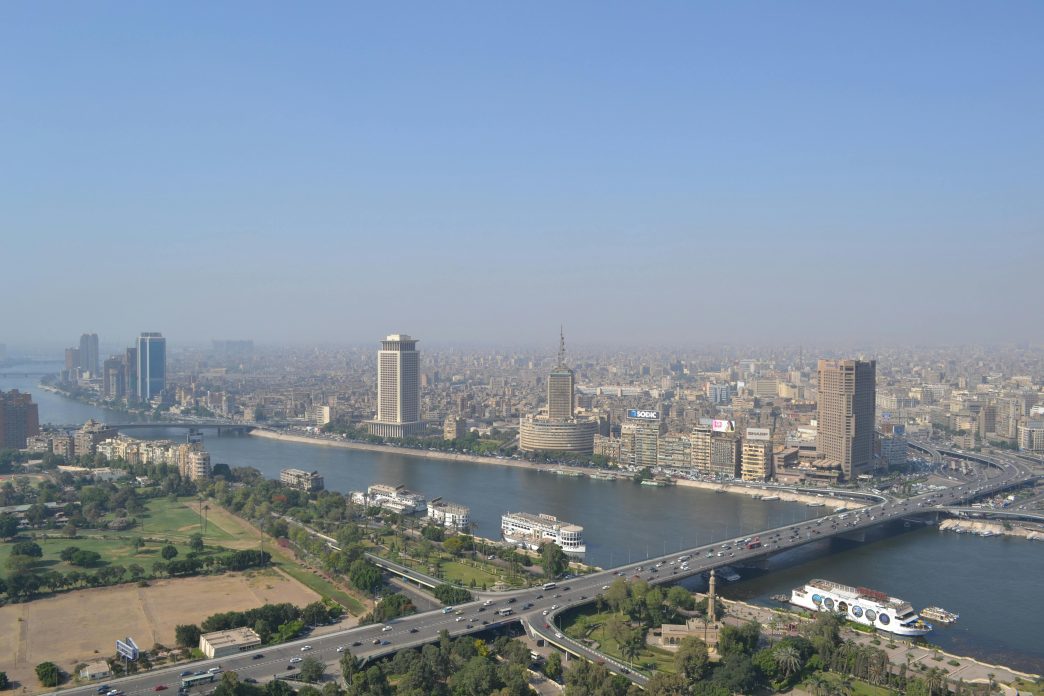
As for water, that is another story. Take Egypt and the existential threat posed by the Ethiopian Renaissance Dam to Cairo’s share of Nile water—estimated by the 1929 agreement at 55.5 billion cubic meters. What is the fate of a desert land where this river is the literal lifeline?
I am reminded here of two quotes by the late journalist Galal Amer, three years before his passing: “If the water is cut off while you are showering, you might run out onto the stairs covered in soap to shout for your neighbor, but you cannot shout for Ethiopia.”
He also wrote: “If Egypt’s prestige is lost among the Nile Basin countries, a day will come when a citizen will have to ask Kenya for permission before taking a bath.”
These quotes are the greatest testament to what has been said. Our bread is politics, our water is politics, our relationships are politics, our travel is politics, and everything in our lives is politics. It is the fate of this East that if someone sneezes anywhere in the world, its people catch the cold.
Those who do not want to interfere in politics will find that politics will interfere in their lives and determine their fate; it will invade their kitchens, their bathrooms, and even their bedrooms if it so pleases.
We must choose between two things: to be the subject (the actor) or the object (the acted upon).
Be well.
Mimsin