While Tel Aviv keeps repeating that everything its army has done in the last 14 months in Gaza is done in defence of Jews living in Israel and around the world, there are voices that point to the military and diplomatic support of the US and its allies for Israel as proof that a “Jewish lobby” dominates the world, a typically anti-Semitic libel.
To contradict these two narratives, there is a growing and very active opposition from Jews around the world to the policies of the Zionist state. An opposition that is often unknown to public opinion, just as few are aware that this opposition has deep roots in political and religious currents of Jewish history.
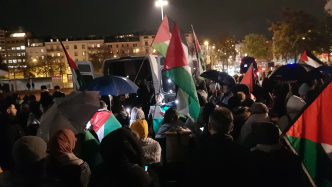
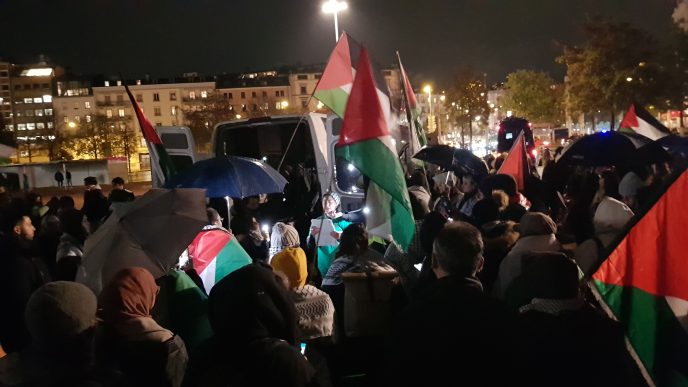
A demonstration that took place some months ago in The Hague, Netherlands, demanded that the International Criminal Court issue arrest warrants for Israeli Prime Minister Benjamin Netanyahu and Defense Minister Yoav Gallant on suspicion of war crimes and crimes against humanity.
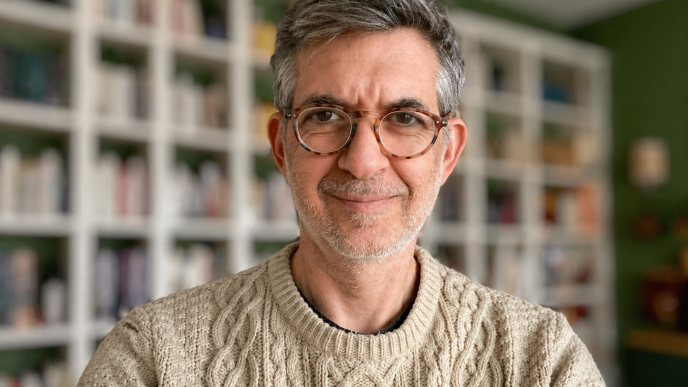
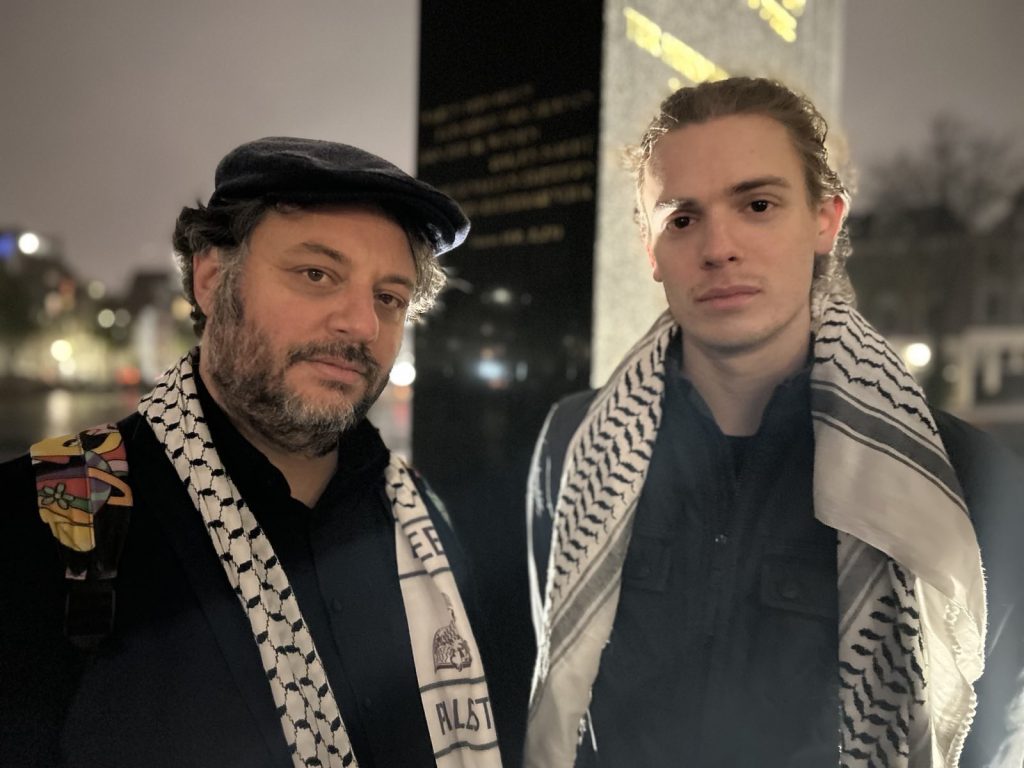
The demonstration was organized by the anti-Zionist Jewish movement Erev Rav and brought together Jews from all over the Netherlands. Across the street, there was a counter-demonstration called by a synagogue closely linked to Israel. The group was much smaller, made up mostly of fundamentalist Christians and very few Jews. “We have very few resources, and yet the synagogue, with all the means at its disposal, could not even gather Jews, while at our demonstration there were many,” says Yuval Gal, one of the founders of Erev Rav.
Yuval, who was born in Tel Aviv, left Israel at the age of 30 because he did not want his son to grow up in a society “where they want to teach him to hate.” Involved in political activism since his adolescence, he says he was disappointed early on with the Oslo accords, when he realized that they would not create a Palestinian state nor would the right of return be granted to Palestinian refugees. He was at the demonstration in Tel Aviv in which Israeli Prime Minister Yitzhak Rabin was assassinated in November 1995.
In his family of liberal Zionists, the origins of the conflict, the mass displacement and expropriation of Palestinians in 1948 (Nakba), or the Palestinian refugees had never been discussed. The discrimination suffered by the branch of his family descendants of Bukharan Jews from Central Asia was for Yuval the first warning sign of the deep divisions that fragment Israeli society. After October 7, the divisions worsened. “In a recent article in the daily Haaretz, a former general director of the military academy said that if the war drags on for another year, Israel will collapse. And in a leaked phone conversation with his wife, Netanyahu accused the generals of plotting against him. They hate each other. The Zionist project has reached the end of its rope.”
According to Yuval, the Israeli regime is also aware that it is losing support in the diaspora. “And it doesn’t help that Israel has been strengthening ties with far-right and neo-Nazi parties in Europe and the US, and with Christian fundamentalist groups like American evangelicals,” he adds. “That’s why we hear today from Jews who have joined anti-Zionist Jewish movements saying that for the first time in their lives they feel proud to be Jewish. And free from Zionism.”
On March 10, around a thousand demonstrators gathered at Waterlooplein, in central Amsterdam, to protest against the presence of Israeli President Yitzhak Herzog at the opening ceremony of the new Holocaust Museum. The crowd waved Palestinian flags and carried banners with slogans such as “Museum yes, Herzog no” and “Never again means now”. The demonstration, called by Erev Rav, was supported by other anti-Zionist Jewish movements in the Netherlands, including A Different Jewish Voice (Een Ander Joods Geluid, EAJG).
Jaap Hamburger, who leads the EAJG, was born in 1950 to Jewish parents who had lost a one-year-old daughter in the German Nazi concentration camp of Bergen-Belsen. Jaap accuses Israel of endangering diaspora Jews by insisting on labelling any criticism of the Zionist state as anti-Semitism. “The official Dutch Jewish organisations are all pro-Zionist, with strong ties to Israel.
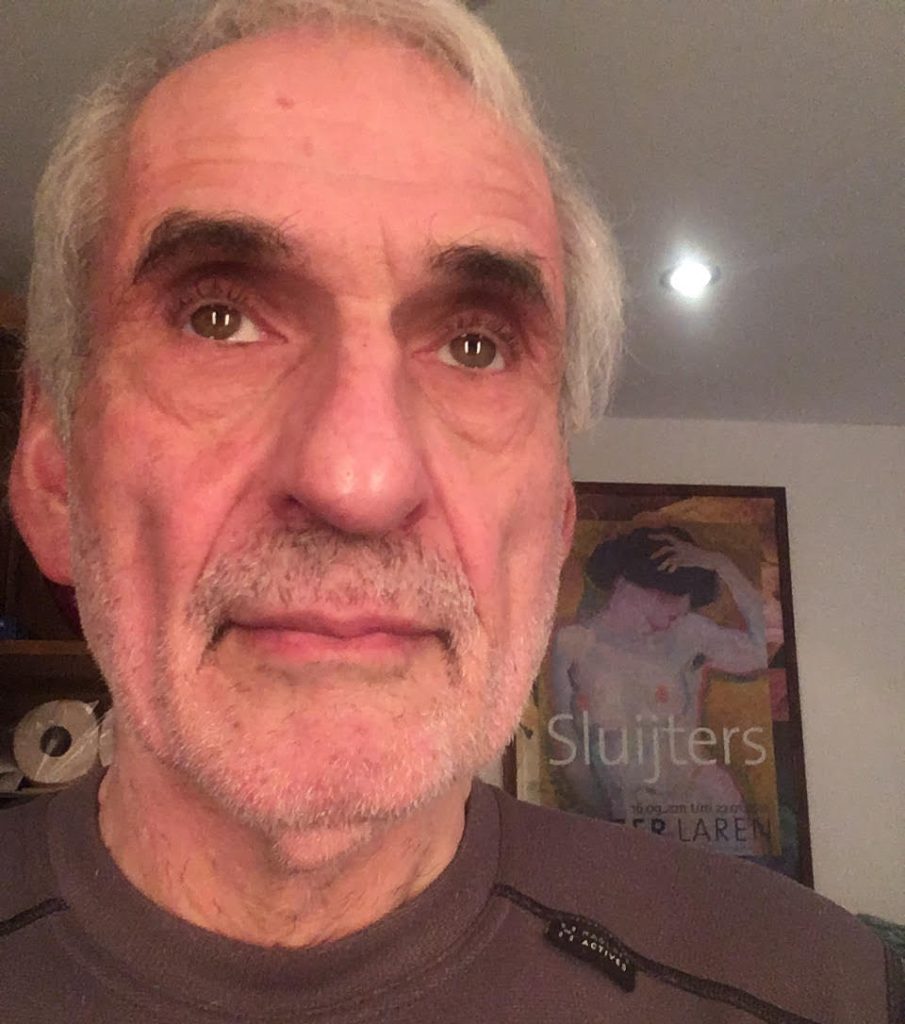
However, they hide their Zionism behind a mask of Judaism and resort to accusations of anti-Semitism whenever they are criticised.” In Jaap’s view, this strategy undermines the necessary fight against genuine anti-Jewish racist attitudes and “becomes all the more outrageous when we see Israel granting legitimacy to far-right politicians who defend Israel.”
Movements such as the EAJG and Erev Rav exist in several European countries. The French Jewish Union for Peace (UJFP) has a long history of opposition to Israel. Its co-president, Pierre Stambul, denounces the censorship of the media in France, which “muffles critical voices regarding Israel and the genocide in Gaza”.
The son of Jews who fought in the French resistance against the German Nazi occupation, Stambul was born five years after the Second World War. His father, who had been a member of the Manouchian Group, was arrested by the French police, tortured, handed over to the Gestapo and deported to Buchenwald. He was one of the few members of the group to survive the concentration camp.
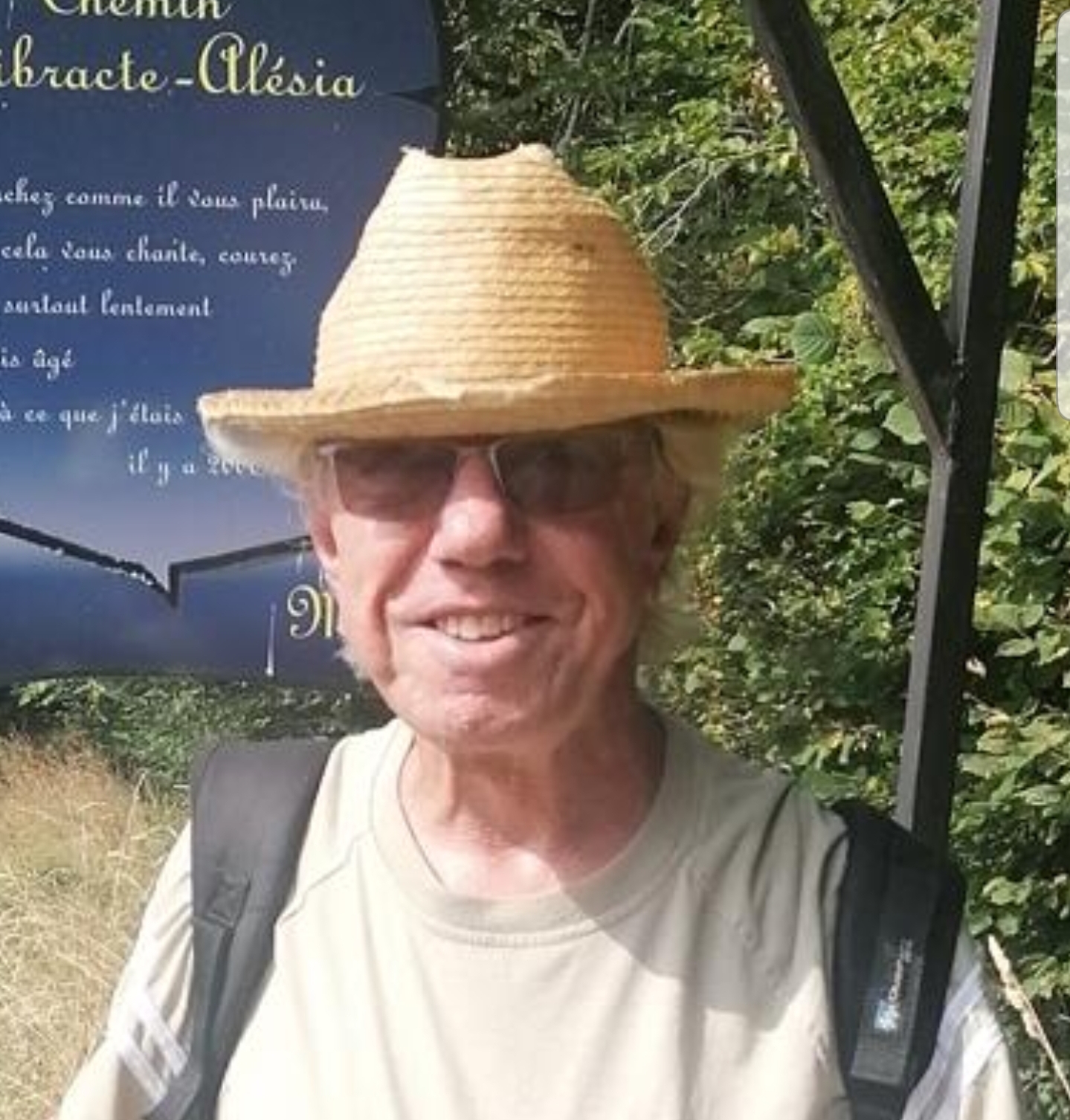
Heavily influenced by May 1968 in France, Stambul’s break with Zionism was a process that took several years. “The fact that Israel was on all the wrong sides, alongside the Argentine torturers, the racists in South Africa, and the United States in Vietnam, made me realize the destabilizing role Israel plays in the world,” he recalls.
Committed to fighting all injustices, he did not want to be active in an association that called itself Jewish. He says that he ended up deciding to join the UJFP because he understood that “it is very important not to leave the term ‘Jewish’ to the fascists and colonialists.”
The UJFP recently published the book “Anti-Zionism, a Jewish History.” For Stambul, “we must claim historical truth, because anti-Zionism has, from the beginning, essentially been the opposition of Jews everywhere – religious, binational, assimilationist, Eastern Jews – against Zionism.” In his opinion, the Zionist ideology “is not only a crime against the Palestinians, it is also an insult to memory, history, and Jewish identities.”
The activist denounces Zionism as a theory of separation, according to which Jews and non-Jews cannot live together, and stresses that this idea coincides with the anti-Semites’ project, which is to remove Jews from Europe. Is there a future for a Zionist apartheid state? Stambul emphasizes that what allowed whites to remain in South Africa was the end of apartheid and not the maintenance of apartheid. “In the same way, what will allow Israeli Jews to remain there is the end of Zionism and a state that recognizes equal rights.”
“Zionism copied from European nationalisms the terrible and criminal idea of an ethnically pure state, an idea that caused two world wars and led to today’s fascism and genocide,” says Stambul, adding that it is a very particular nationalism, since it invented a people, a language and a land. “The notion of the Jewish people is a religious notion. It makes no sense to say that I belong to the same people as an Iraqi or Yemeni Jew. And there were several Jewish languages, but Zionism invented Hebrew, which for religious people cannot be used as a secular language.” As for the land, Stambul recalls that “for religious Jews it was forbidden to return to the ‘holy land’ before the arrival of the Messiah, while secular Jews understood that the fight for emancipation and equal rights should be fought where we live.”
The son of survivors of the Nazi genocide of European Jews accuses Israel of instrumentalizing the trauma of the Holocaust. And he recalls the repression and humiliation that Holocaust survivors faced when they arrived in Israel. “They called them cowards, they despised them for not living up to the mythical model of the new invincible Hebrew. Nazism and Stalinism had already tried to create a new man and we know very well where that led us.”
But it is from where the main military, diplomatic and financial support for Israel comes that the voices of anti-Zionist Jews have been heard most numerously. The American movement Jewish Voice for Peace (JVP), the world’s largest progressive Jewish anti-Zionist organization, has been organizing demonstrations demanding a ceasefire since the beginning of Israel’s military campaign in Gaza.
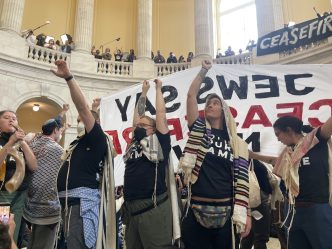
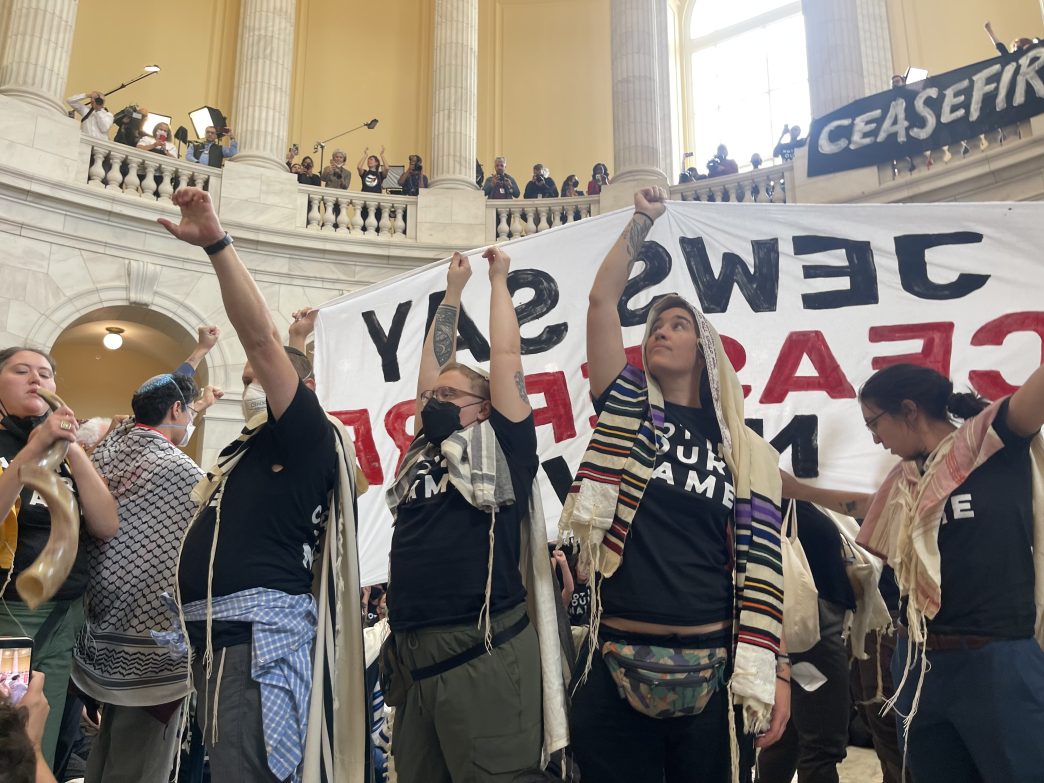
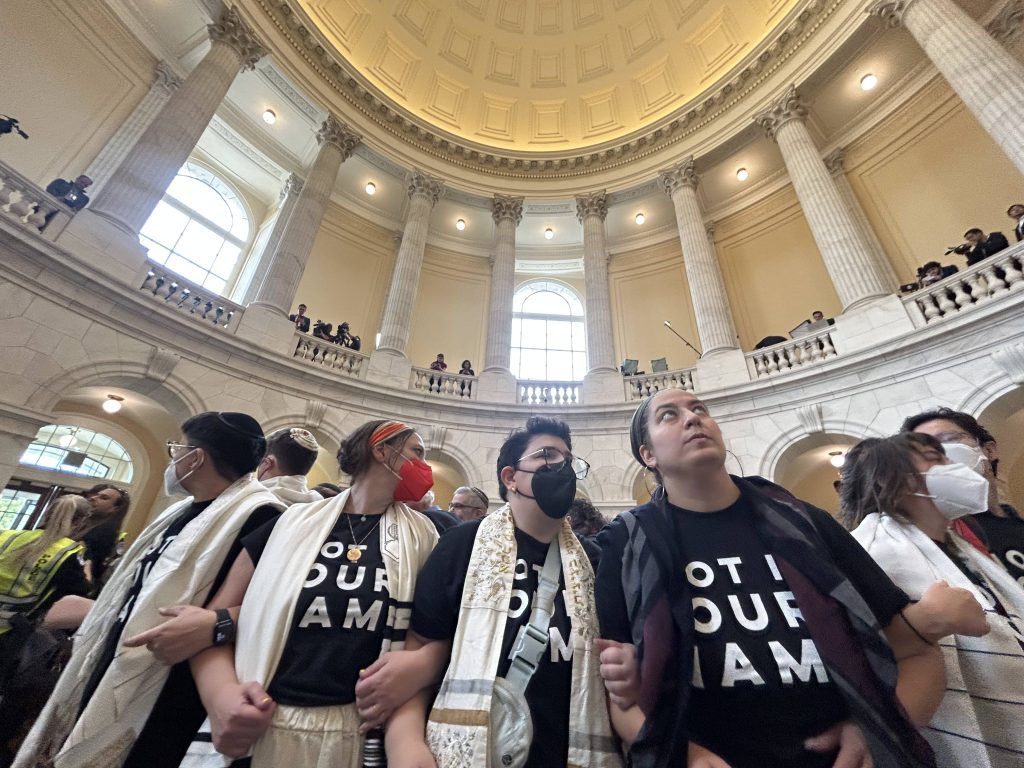
In October 2023, hundreds of Jews linked to JVP and other anti-Zionist Jewish organizations were arrested for protesting inside the US Congress building in Washington while thousands were demonstrating outside. In July, they returned to the congressional buildings, on the eve of Netanyahu’s speech, to demand an arms embargo on Israel. Hundreds of protesters wearing T-shirts that read “Jews say stop sending weapons to Israel” and “Not in my name” chanted slogans such as “Let Gaza live.”
Tallie Ben Daniel, managing director of JVP, says it was at university that she began to realize that “Zionist ideology is based on the displacement of Palestinians, that for Israel to be a Jewish state, there can be no Palestinians.” And she accuses Israel of using the Holocaust “to justify what it has done to the Palestinians” and of having refused to accept ceasefire agreements that would have saved the lives of the hostages. “We all expected that the Israeli government would negotiate the release of the hostages captured by Hamas. And it was a surprise that they rejected ceasefire agreements that had been on the negotiating table since October and would have freed hundreds of people and saved hundreds of lives.”
However, she does not lose sight of the responsibility of the United States and stresses that “if Joe Biden called the Israeli Prime Minister tomorrow and said: we will not give you any more weapons until you stop this, the genocide would stop the next day.”
According to Jewish political commentator Peter Beinart, one of the factors that explain Kamala Harris’ electoral defeat was her failure to distance herself from Biden’s policy of unconditional support for Israel in Gaza and Lebanon. Among the traditional supporters of the Democratic Party who decided to refuse to vote for him was a significant number of Jews.
One of them was Rich Siegel, a musician and songwriter from Teaneck, New Jersey, who was very active in his Jewish community against the local synagogue’s sale of properties located in Palestinian territories, in the West Bank settlements. While Siegel did not vote for Donald Trump, he says he would have voted for Harris if she had committed to forcing Israel to a ceasefire and ordering an arms embargo.
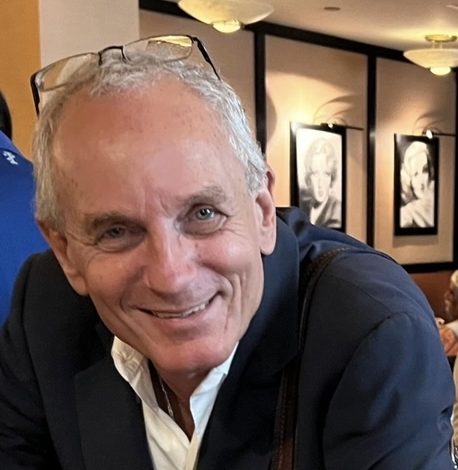
In a video that quickly went viral in February, Siegel addressed the Teaneck Jewish community to warn that the sale of properties in the occupied West Bank would violate national and international law. And when his arguments failed to sway the organizers, he called a demonstration that brought hundreds of people outside the synagogue to protest the real estate event.
“I had already organized a demonstration against a similar event here in Teaneck in 2007, it was not the first time. And I organized another large demonstration when a local synagogue invited speakers from Zaka, the first-responder organization that told lies about beheaded babies and serial rapes committed by Hamas militants on October 7th.” Siegel’s great-grandparents were Eastern European Jews who immigrated to New York in the early 20th century. The family members who remained in Europe were murdered by the Nazis. He grew up in a community affiliated with a Reform synagogue in New York where he was instilled with the idea that Zionism is an integral and inseparable part of Judaism and that Jews are safe only in Israel, especially after the Holocaust. He says he was so “brainwashed” with disinformation that it was only many years later that he began to realize that he had been led to believe a collection of lies. “I had absorbed a whole system of misinformation about Israel, according to which we never did any harm to the Arabs, we just wanted to be good neighbors, but they hate us with an irrational hatred, just as everyone hates us, because we are Jews.”
As an adult, Rich Siegel realized that in the pro-Zionist synagogues “religion has been replaced by idolatry, there are two idols worshipped: the Jewish state and Jewish tribal identity.” With concepts that did not exist in Judaism, he emphasizes. “The Zionist rabbis say that the redemption of the land is a religious duty. Redemption of the land? Redemption of the land means putting the Jews in the land and taking the Muslims and Christians out of it.”
Israel’s military campaign in Gaza has made him see the Zionist state in starker colors than ever before. Siegel says he has been “completely devastated” since hearing doctors talk about their experience in Gaza. And he sees no future for the Zionist project. “Israel and the Zionist movement are committing suicide at this moment. But tragically, they are committing genocide in the process. And there is a huge denial surrounding this genocide,” he concludes.
Protests against the violence imposed by Israel on the people of Gaza have been repressed in some countries with greater or lesser police brutality, but it is in Germany that pro-Palestine demonstrations have been met with the greatest hostility from the authorities. Numerous events, panels and lectures have been cancelled and banned. A pro-Palestine conference organised in April in Berlin, which was to feature several international speakers, was raided by the police and interrupted shortly after the first lecture. This level of repression is little reported outside the country, just as the fact that there was a very significant proportion of Jews at these demonstrations does not make the front pages.
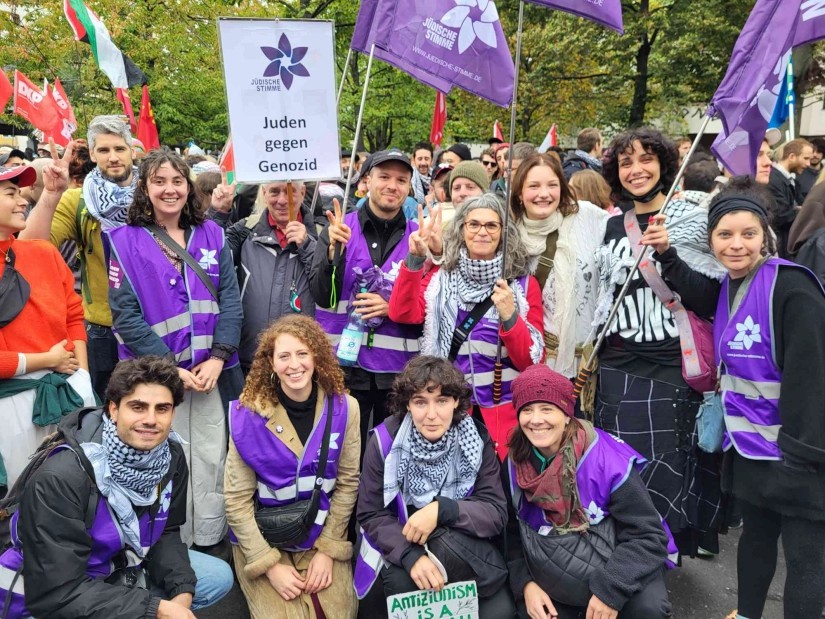
“In the name of fighting anti-Semitism, Germany is targeting anti-Zionist Jews,” says Wieland Hoban, president of the movement Jewish Voice for Just Peace in the Middle East (Jüdische Stimme für gerechten Frieden in Nahost), founded in 2003 in Berlin.
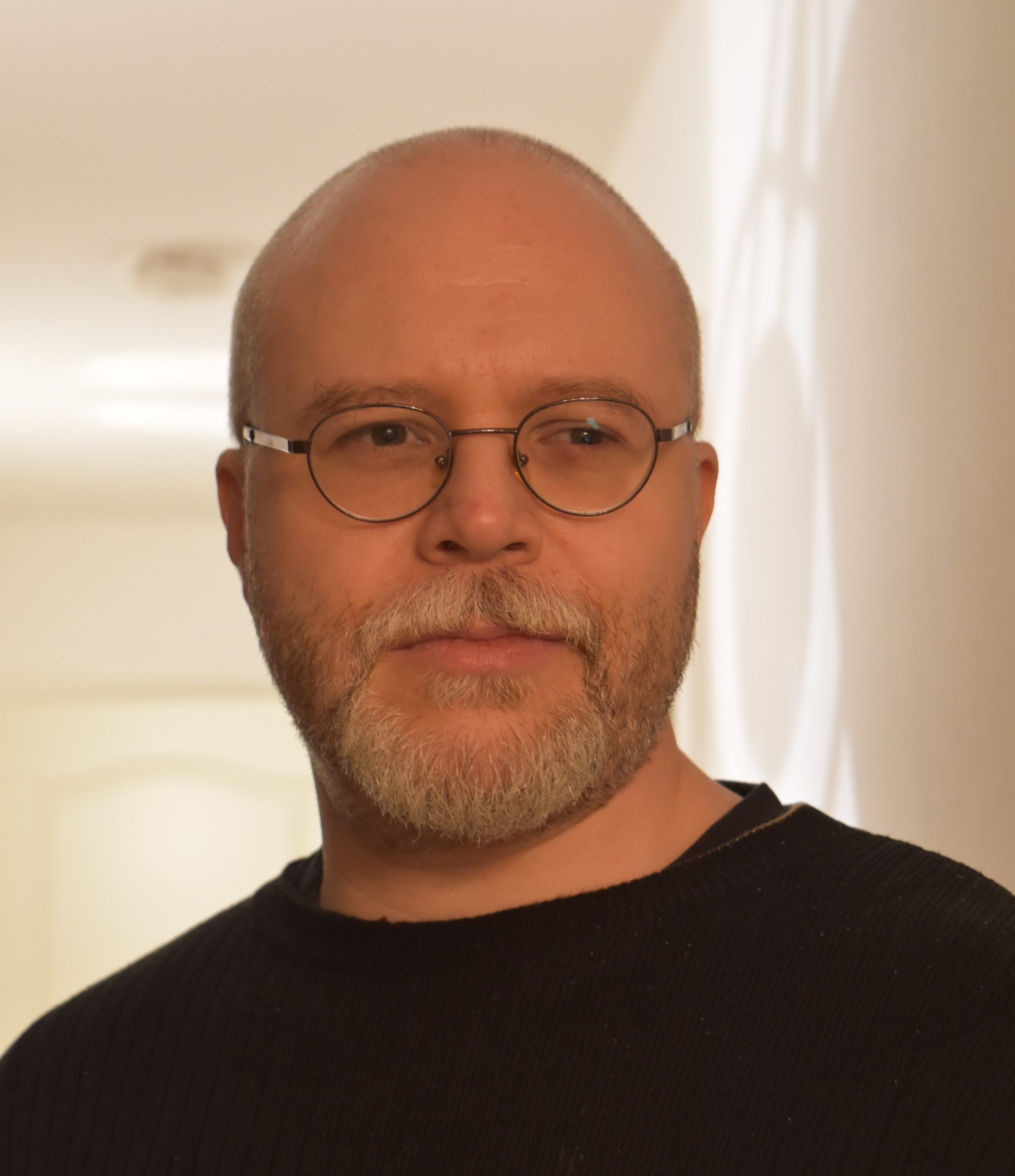
In recent months, Jewish Voice for Peace has faced various forms of repression from the German government, including bank account freezes and event cancellations. Members of the movement have been arrested, fired from their jobs and censored. “This repression is a form of modern anti-Semitism. Not in the sense that we are targeted because we are Jews. What is anti-Semitic is that the German establishment wants to decide who is Jewish. And they tell us that we are not Jewish if we do not support Israel,” Hoban says.
Conflating Israel with Jews has a serious consequence, according to the activist, because “it benefits Israel’s core supporters, the evangelical fanatics in the US and the pro-Zionist far right, who remain in the shadows while Jews are blamed for Israel’s crimes.”
For the German political class, Jewish identity has Israel as its central pillar and rejecting what Israel does and represents means rejecting Jewish identity,” Hoban denounces, adding that “it is this cognitive aberration that in their eyes makes us Jews anti-Zionists, anti-Semites.” The activist stresses that this idea has deep roots. “The association of Jews with Israel is part of the narrative of national redemption in Germany. If the Holocaust is the original sin of modern Germany, then the only thing that can moderate this guilt is unconditional support for Israel, which is presented as the closest thing to a happy ending after the Holocaust.”
“By being anti-apartheid or anti-occupation, we disrupt this narrative,” he adds, explaining that the German establishment cannot tolerate any solidarity with the Palestinians because “anyone who reminds the world that Israel was created through great injustices and continues to perpetrate crimes against the Palestinians is revealing that the evil done has not disappeared, the blame has just been transferred to the Palestinians.” Movements like Jüdische Stimme are very problematic for the official narrative, stresses Hoban, because “support for Israel understood as a way to compensate for the Holocaust is a source of a sense of moral superiority, and this only works as long as it is possible to identify Jews with Israel.”
However, there are already cases of people from Arab countries, and especially Palestinians, who have been questioned about their opinions on Israel during naturalization processes. “The nonsense of asking a Palestinian refugee if he recognizes Israel’s right to exist is surreal,” says Hoban, adding that all this shows that for the German state, Israel is part of its official identity. “Recognizing Israel’s legitimacy goes hand in hand with recognizing Germany’s legitimacy.”
Nelson Pereira