A scientific investigation into a marine species endemic to São Tomé and Príncipe, which is fundamental to the communities of this small island nation in the Gulf of Guinea, has received an international award from UNESCO (United Nations Educational, Scientific and Cultural Organization).
The study directly involved fishermen, students, local communities, and institutions in São Tomé and Príncipe, promoting a model of participatory science.
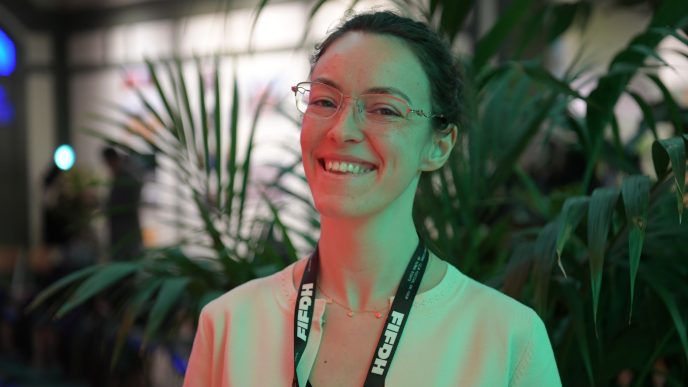
Led by Vânia Baptista, a researcher at the Algarve Marine Science Centre (CCMAR), Portugal, and visiting assistant professor at the University of Algarve, the project was awarded the Mário Ruivo Prize 2025, granted by the Intergovernmental Oceanographic Commission of UNESCO (UNESCO-IOC), in partnership with the EurOcean Foundation and the Portuguese government.
Vânia Baptista studied a small endemic marine species called the Little Fish, which researchers identify as Sicydium bustamantei. Fishing for Little Fish is done primarily by women and children and is fundamental to the subsistence of riverside and coastal communities in the archipelago on the west coast of Africa, near the Equator.
Vânia Baptista emphasizes that the research would not have been possible without the involvement of the communities and institutions of São Tomé and Príncipe.
Luis Guita interviews Vânia Baptista
How did you win this UNESCO award?
Vânia Baptista: We applied with a project aimed at younger scientists who led or co-led a research project and had to fulfill Goal 14 of the SDGs (Sustainable Development Goals) of UNESCO’s Decade of the Oceans. I competed with the Little Fish project, which takes place in São Tomé and Príncipe, and we ended up winning this distinction, this award. I say we won because, although I was the one who competed, this award is for the entire project team, not just for me.
Besides studying a species that hadn’t been studied before, it’s a species of great socio-economic importance to the country. We also had a great involvement with local communities for their development and sustainability.
How did the interest in doing research on the Little Fish in São Tomé and Príncipe arise?
Vânia Baptista: In 2017, here at CCMAR, some professors, such as Professor Alexandra Teodósio, Professor Ester Serrão, and Professor Karim Erzini, organized a course on the Ecology and Feeding of Sea Turtles in São Tomé and Príncipe. We also have a strong connection with the NGO of the Tatô Program. And it was during this course, which I attended as a student, that, on a visit to the fish market in the city of São Tomé, we found some basins full of a very small fish. We said they were fish larvae, that they were baby fish, but people said no. They said it was a dwarf adult. But we began to realize that no, they really were fish larvae. On that occasion, Professor Alexandra Teodósio collected a sample and brought it to the laboratory. Later, it was identified as Sicydium bustamantei. Professor Peter Wirtz ended up confirming it. And then we started to realize that there were no studies, only some scientific studies that said that the species had actually been described in São Tomé and Príncipe, that it was endemic, meaning that it only lived in that region. From there we started trying to get funding. After a few years we managed to get funding from the Aga Khan and FCT [Foundation for Science and Technology of Portugal] to develop the Little Fish project.
This fish larva, or, as the communities identified it, this “dwarf fish,” is it consumed? How does the community connect with this animal?
Vânia Baptista: It is widely consumed by the local communities. So, you have a life cycle that is called amphidromous. This life cycle is spectacular. The adults live upstream in the rivers, quite far upstream. People often don’t see the adults, or they think they are different species. Then, the adults lay their egg clutches attached to rocks, and after the larvae hatch, they are carried to the sea by river currents because they don’t yet have the swimming ability to cope with those currents. They spend a few months in the sea, where they feed, grow, and develop. Once they have sensory and swimming abilities, they return to the rivers, where they are caught by people. Besides attracting other species, and being consumed by existing species, they arrive in schools in the rivers, and people are already waiting for them with traps and nets. So, it’s a super intensive fishing season. And of course, this Little Fish also has another very interesting characteristic: in some rivers, it has to climb waterfalls to reach the habitat where it will transform into an adult. It has developed a sucker on its abdominal region. It’s a goby, like the gobies we have here in the tide pools. However, this metamorphosis for the development of this sucker happens as soon as it enters the river. When it enters the river, it doesn’t yet have this sucker. As soon as it enters, in a matter of days, this sucker transforms, and it is able to climb waterfalls or even cling to other rocks.
Does the population not consume the adult fish?
Vânia Baptista: They don’t consume the adult fish. Some communities are beginning to realize that Little Fish is really a baby, but some communities don’t even get to see the adult, because it lives far away, well above the rivers. And others think they are different species. But yes, they only consume them during the baby phase. We even find it funny because when the Little Fish enters the rivers it is white, it has an earlier development phase. After some time in the rivers, it begins to develop fins, and it starts to get darker, and they call it the black fish. The white fish and the black fish. They all have a greater preference for the white fish. In fact, fishing stops when there are more blackfish. They probably have a different texture by then, and people don’t appreciate them as much anymore.
It’s easy to imagine that this type of catch will have an impact on the species. They have already been able to document, or not, the impact of this practice. What about the impact?
Vânia Baptista: We understand and believe there is a significant impact, because in addition to natural predation, there is this immense mortality. We have some data for some communities, but we haven’t yet been able to document and compare it with previous years because there is no data from the past. We recently discovered, in conversations with some community members, that during the colonial period, the Portuguese prohibited the capture of this species. At the time, fishing was prohibited because there was already the idea that it was a baby. However, as soon as the Portuguese left, this fishing was allowed again.
The communities also have a feeling that it’s not right, and that the fish population has been decreasing over the years. They even say that there are certain rivers where the fish no longer swim upstream at all. They often associate this with fishing, and also with river pollution.
How is such a small fish captured?
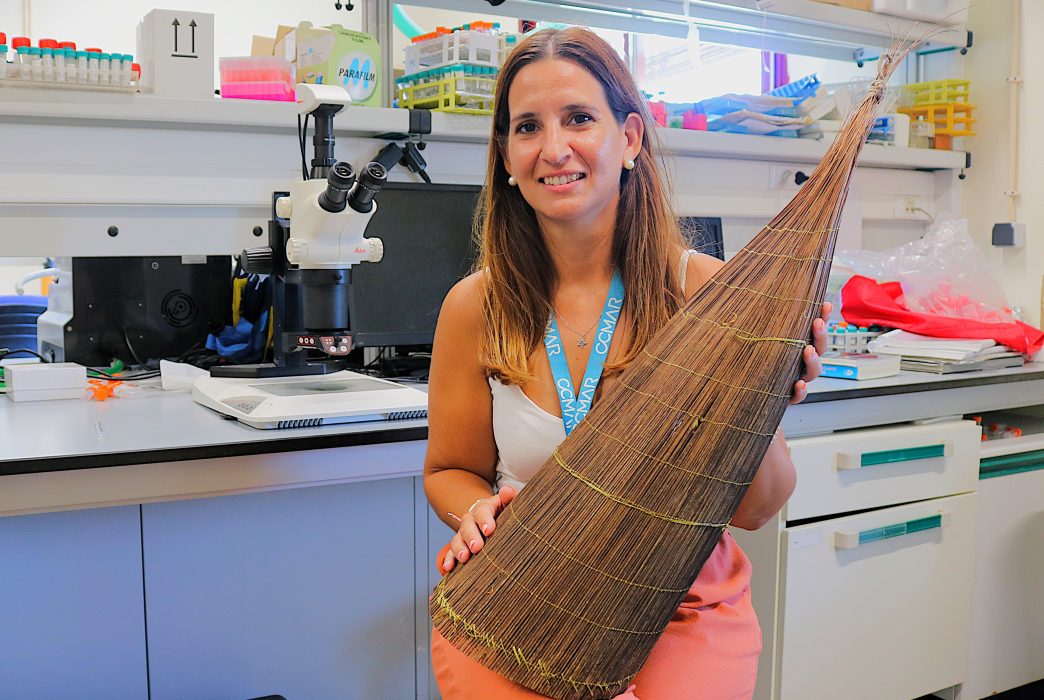
Vânia Baptista: It varies from community to community. In some communities they use a trap made of palm leaves, called a “changa,” which is like a cone, placed submerged in the river. The river can’t have too much water, and then the small fish end up getting caught in this net. Other communities, where the river has more water and fishing is done mainly at night, use mosquito nets, insect screens for windows, often also impregnated with insecticide, and then a flashlight or flame is used to attract the fish to these nets.
If this net with insecticide is used, does that mean there’s a quantity of chemicals that are very likely released into the waterways afterward?
Vânia Baptista: Yes, yes. Often they also end up washing the nets before fishing, and they also wash them in the rivers. This also applies to other pollutants. The cleaning of most household materials and everything they use is done in the river, so the pollution levels are quite high.
How did the communities react or participate, did they get involved or not in the work, in the research?
Vânia Baptista: I think that was the biggest surprise for all of us, even for our colleagues from São Tomé and Príncipe, because there was a huge involvement. At the time, we organized the first meeting and decided that the community members would also come, to explain to us how they fish, what their opinion is, what they think. It’s really very important. And right during that meeting they showed us. Initially shy, but then they were almost pushing each other, they all wanted to show us how it was done. And it was explained to them that we weren’t there to prohibit anything, that we just wanted to know more and we wanted their children and grandchildren and future generations to know better the Little Fish. So, from then on, we all created a bond of friendship, which I think is essential and which drives this project, this bond of friendship that we have with the communities.
And they have been helping us. We discuss results, try to understand the best sampling locations and times. They show us how they build their fishing gear and how they fish. If samples are needed, we buy them from the communities ourselves, thus helping the communities as well.
We try to find alternative means of livelihood to reduce fishing somewhat. Last year, we organized a course on the production of holothurians (sea cucumbers) and crabs, which are relatively easier ways to generate income, especially for women and children, who make up the majority of the community that fishes for these small fish.
Did you find any reason, any explanation for this?
Vânia Baptista: It’s mostly done by women and children because it’s a type of fishing where there’s no danger.
They are in the rivers, the rivers are low, and it ends up being easy. However, this fishing can also happen a little more in the sea, where it’s the men who do it. But when it’s inland, the woman is right there at home; she might set the trap during the day and then retrieve it a few hours later. Or she’s out in the river washing things and sets the traps there too. It ends up being a significant part of the family’s livelihood, created by the woman.
Is this connection between the communities of São Tomé and Príncipe and the Little Fish something that can happen in other parts of the planet, or is it something very specific to São Tomé and Príncipe?
Vânia Baptista: From the beginning, we focused a lot on work developed in the Caribbean, notably in Dominica, where there were also species of the same genus, that is, very similar species, although the species itself is different. And in the case of Dominica, something very sad happened, unfortunately: the small fish ceased to be a local resource for the communities and became so expensive that it became a resource for tourists. Instead of perhaps paying one euro, as in São Tomé, or less than one euro for two mugs of small fish, because the measure is one mug, there it can reach 50 dollars, because it’s a delicacy for tourists and has ceased to be a local delicacy. And that’s not what we want to happen in São Tomé and Príncipe.
These species with this life cycle, we are realizing that they exist throughout the world. They have to be tropical islands, of volcanic origin, generally with rivers, with large waterfalls. And the funny thing is, in many of them, in many of these places, it has been verified that the methods of capture are quite similar. And this is also a very interesting thing for us to continue studying, to try to understand this connection between islands around the world.
How has the connection, the partnership, the collaboration with institutions in São Tomé and Príncipe been?
Vânia Baptista: This project would not be possible without the support of the University of São Tomé and Príncipe and the NGO Marapa, which are our direct partners in the project. They have been with us from the beginning. And we have also had the support of the Tatô Program, for Sea Turtles. And we have been working closely with the Directorate-General for Fisheries and Aquaculture. We have developed training courses, we discuss the results we are obtaining from the project.
In fact, that institution is always open to us. We try to get them to accompany us on field trips, in discussions of various results, methodologies, etc. It is, basically, also a bit like our home.
Luis Guita