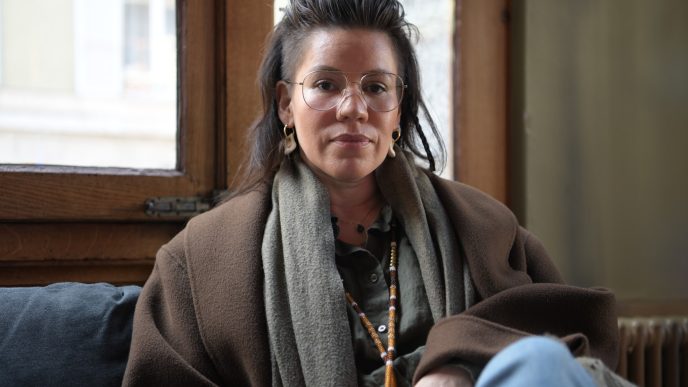
Israel has always killed and tortured Palestinians, but when our democracies crush freedom of expression, they reveal that they are part of “the same system,” Francesca Albanese told Blindspot in Geneva.
On March 23, UN Special Rapporteur Francesca Albanese presented a report to the Human Rights Council in Geneva, alleging that Israel has adopted the systematic use of torture as state policy against Palestinians. Titled “Torture and Genocide,” the report argues that torture is a structural feature of the ongoing Israeli occupation and genocide, aiming to break the spirit of Palestinians as a people.
“I see a system,” denounces Albanese. “A system that has enabled, provided weapons and means to Israel to commit this genocide. And this system is acting erratically, violently, without any restraint, but because it’s losing the legitimacy that it had.”
It’s not that this is new, the Italian legal expert specifies, it’s just that we didn’t know as much as we do know now, and it became “very unapologetic, without restraint.”
On 9 July 2025, the United States imposed unilateral sanctions against Francesca Albanese. According to US Secretary of State Marco Rubio’s allegations, Albanese had directly engaged with the International Criminal Court in efforts to investigate, arrest, detain, and prosecute nationals of the US and Israel, without the consent of those two countries.
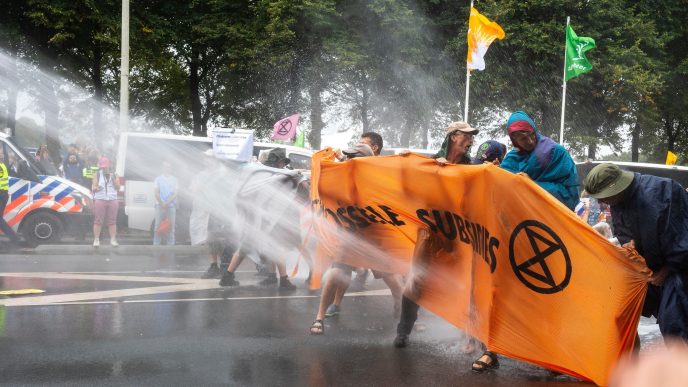
“I poked the bear,” she says, adding that while the United States and Israel are waging wars in the Middle East, “our countries, so-called democratic, liberal countries are crushing freedom of expression and freedom of association of their own citizens. It’s the same system.”
Calling it a system of “global apartheid,” Albanese points out it’s about domination of the plutocracy over the rest, “so that they can continue to be richer and richer, while we have to look without reacting at the slaughter of women and children.”
She also reserves harsh criticism for the media. “I think that especially Western media have amplified the dehumanizing narrative against the Palestinians by giving unfettered space and platform to the Israeli military strategy.”
Western media have not been factual and objective, bewails Albanese. “They echoed the dehumanizing stereotypes that Israel has relied upon, justifying this assault against the Palestinians as if there was a legitimate self-defense. It has never been legitimate self-defense, because international law says that an occupying power cannot wage a war against the occupied population. And the occupied population will always resist. Now, resistance can be violent, resistance can be illegal, unlawful in the means it uses, but resistance to occupation is legitimate in essence, which doesn’t mean justifying the crimes that have been committed.”
By obscuring the context to avoid assigning responsibility, media lose sight of the way out. “We need to remove the root causes of that violence: the occupation, the apartheid, and the genocidal culture.”
The UN special rapporteur for the West Bank and Gaza is a member of a group of experts chosen by the 47-member UN human rights council in Geneva. Her criticism of Israel’s policies during the war with Hamas in Gaza have drawn harsh condemnations. On 12 February, as the US, France, Germany, and Italy escalated attacks against Albanese, UN Secretary-General Antonio Guterres distanced himself from her when his spokesman, Stéphane Dujarric, said “we don’t agree with much of what she says.”
This move was not a new one coming from Guterres. In March 2017, the head of UN’s Economic and Social Commission for Western Asia (ESCWA), Rima Khalaf, has resigned over what she described as pressure from Guterres to withdraw a report that was critical of Israel.
Khalaf’s report accused Israel of imposing an apartheid regime on Palestinians, and was swiftly pulled from the ESCWA’s website.
Asked by Blindspot if, despite Dujarric’s statement, she had received any support from the UN chief, Albanese replied curtly: “No.”
Nelson Pereira