Israel’s actions are documented, states can’t say they didn’t know, says legal advocacy NGO
Given the spectacle of impunity and blatant disregard for international law that has accompanied Israel’s war crimes and genocidal campaigns, is there a horizon of accountability before us? What do the legal experts say?
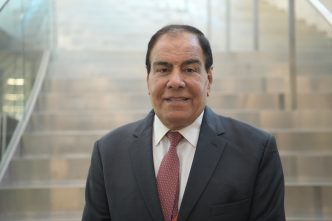
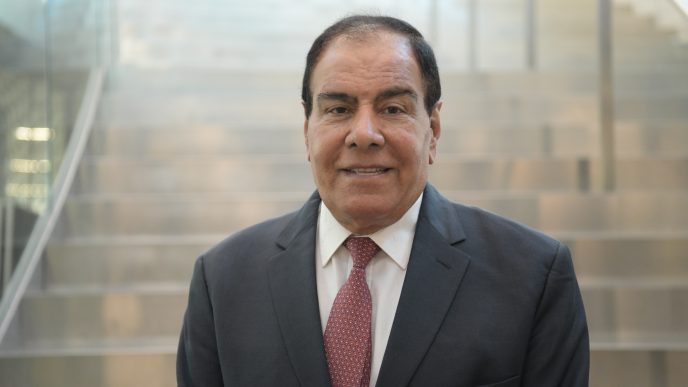
“I don’t have any description — whether legal or moral — that I or anyone else could add to what Israel is doing in Gaza, the West Bank, and Jerusalem (genocide—ethnic cleansing—terrorism—racism—apartheid…)… as they say, words fail us,” recently wrote on X the former International Atomic Energy Agency (IAEA) chief, Mohamed ElBaradei.
The fact that this spectacle of horrors was tolerated by governments that had an obligation to act is something that has left the entire world stunned, noted the Egyptian lawyer. “The truly astonishing thing is that most of the near and far governments, and even the so-called ‘international community,’ which has the power to do something, have turned into the deaf, dumb, and blind… whereas this is the exact opposite of the vast majority of people everywhere, who see Israel’s policy for what it truly is”.
Adding that “we’ve come to live under systems where governments are in one valley and the peoples in another, whether democratic or dictatorial,” ElBaradei described this situation as one “that no mind can accept as sustainable,” to conclude, however, that “yet hope lies in the fact that every injustice has an end.”
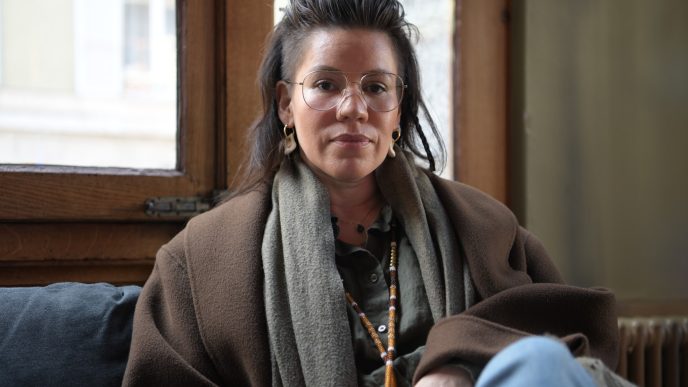
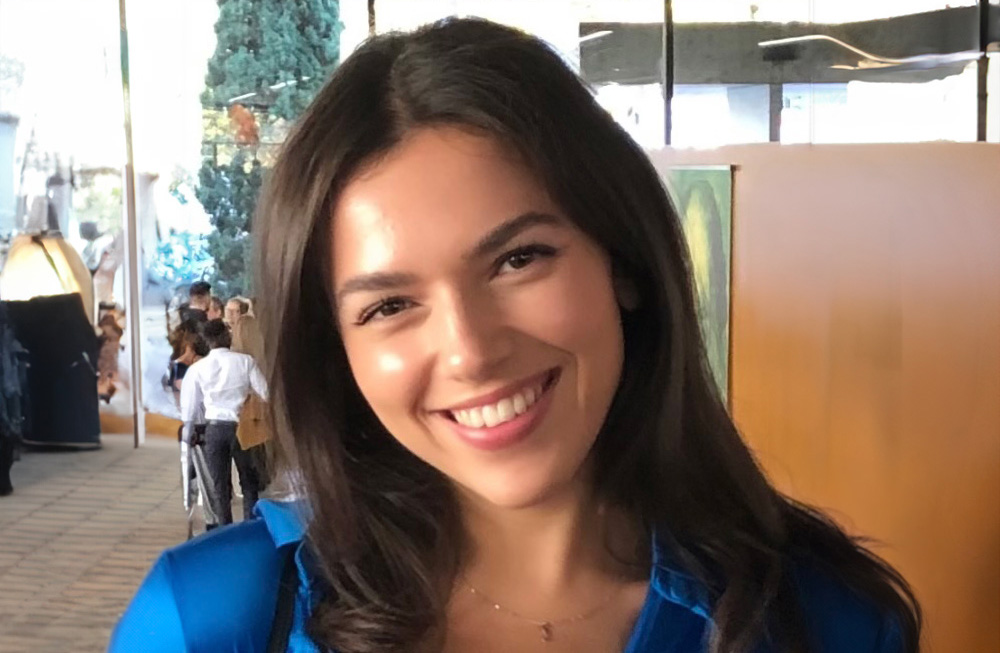
Israel’s actions were ignored for too long, but “with so much documented evidence, no one can claim ignorance anymore,” told Blindspot Tanya Boulakovski, Senior Legal Officer & Research Lead at MENA Rights Group (MRG), a Geneva-based legal advocacy NGO.
MRG documents violations of civil and political rights in the Middle East and North Africa (MENA), providing legal assistance to victims of abuse.
“Israel’s tactics have become so egregious, so outrageous, and so in blatant violation of pretty much the entire international law corpus that, at least at this stage, the documentation is clear, the awareness is clear, there’s no more ignoring and states can’t say that they didn’t know,” Tanya Boulakovski told Blindspot.
“At this stage, it’s impossible not to be aware,” MRG’s legal advisor pointed out, adding that everything is documented, everyone has access to what’s happening through social media, through videos. “All UN experts have condemned Israel’s actions in one way or another, and there’s just mounting documentation of everything that’s happening at the UN level, before the International Court of Justice, with the warrants issued by the International Criminal Court.”
This change also occurred thanks to the fact that we now have a greater diversity of information sources, as big media didn’t always fulfil their mission of informing, she noted. “For example, using very passive tones for Palestinians who are killed, and presenting Palestinian deaths as it would happen out of nowhere, without naming the perpetrator. This double standard has been very apparent, especially in Western media.”
According to Boulakovski, under political pressure the media move away from objective information, presenting a narrative that lacks essential context for a correct understanding of events. “It’s been concerning to see how the media have been portraying things without providing the context that there are people who are being colonised and whose land has been occupied for decades, long before 7th of October, 2023. What’s great with social media and with the rise of independent journalism is that there are many sources that are good and reliable, relying on Palestinians who document the atrocities.”
MRG has been working on the case of Hussam Idris Abu Safiya, a Palestinian paediatrician and neonatologist who served as the director of Kamal Adwan Hospital in the Gaza Strip, and was abducted by Israeli authorities.
The Kamal Hospital was raided in December 2024. Doctor Abu Safiya was detained under the Israeli Unlawful Combatants Law, which allows for the indefinite detention of individuals suspected of participating in hostilities against Israel who do not qualify for prisoner-of-war status under international law.
This law has been used very widely against Palestinians from Gaza, including doctors like Hossam Abu Safiyah. His detention has been continuously extended through detention orders, and the defense does not have access to the evidence, because it’s secret evidence, under security and counterterrorism framework.
“We submitted his case with the UN Working Group on Arbitrary Detention. And we’re hoping to receive an opinion from them soon, doing a thorough legal analysis of his detention, and hopefully coming to a decision that his detention is arbitrary under international law,” MRG’s legal advisor emphasized, adding that the MRG hopes that this document could be used as a useful advocacy tool to put pressure on the authorities to release Abu Safiyah.
The NGO has also had its eyes set, from the very beginning, on the new Israeli capital punishment law. The bill was passed on the 30th of March, after many organizations and UN experts had signaled an alarm that it would be applied in a discriminatory manner against Palestinians.
“Israeli authorities, as well as many other countries in the region and across the globe, use, disuse and abuse of counterterrorism and security measures as tools for repression, to silence dissent and sometimes impose the death penalty. In this case, only on Palestinians,” underlined Tanya Boulakovski.
Israel has long abused terrorism accusations against Palestinians, with many different counterterrorism laws, security laws that fail to comply with all the international legal principles that it should.
The lack of an international legal definition of terrorism allows states to adopt “very broad and vaguely worded counterterrorism laws with very vague definitions of terrorism that they can employ to their discretion to crack down on anyone that they want to crack down on. And in this case, it’s very concerning that it’s on the basis of this overly vague notion already, that’s been weaponized for decades against Palestinians, that they’re going to impose the death penalty,” the MRG’s legal advisor deplored.
“We know that in the context of the genocide, there’s been many extrajudicial killings. But this is a form of legalization of this pattern of targeting of Palestinians, the genocide of Palestinians, including through executions,” she noted.
Organizations like MENA Rights Group are constantly faced with the possibility of having all their efforts sabotaged by political power. “It’s all a question of political will at the end of the day, and states can decide to ignore UN concerns or communications, or take them into account. So we’re powerless, to be very honest, when faced with a state’s complete lack of political will,” Boulakovski confirmed.
When the UN raises concerns with the authorities on the basis of MRG’s appeals, the NGO can only hope that the state will be reactive, when pressured. But it can only do so much. So it tries to have an array of different tactics, doing advocacy and leading public campaigns. As an example, the legal expert mentions an action taken by MRG regarding a counterterrorism summit last year, hosted by Reichman University, in Israel.
“Reichman University in Tel Aviv has a counterterrorism institute, and holds annual counterterrorism summits that gather academics, think tanks, etc. And they would always invite also state representatives from around the world and UN officials, which would often come. And we thought we really need to do something about it, as these tactics are used to enable conducting human rights violations under the pretense of legality and abiding by the international counterterrorism framework.”
Aiming to raise awareness about a matter with such a critical impact, MRG urged participants, UN officials, foreign member states, not to attend the summit. “It worked quite well,” concluded Tanya Boulakovski. “We managed to gather over 50 signatories, we sent private emails, and it was one of the first times that no UN official attended, many representatives withdrew. So we see that there is this pressure that can work. And sometimes we have to be a bit more creative, I guess, with our tactics.”
Nelson Pereira