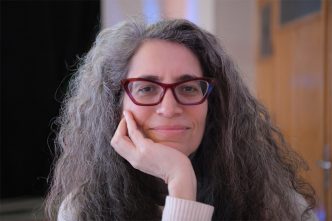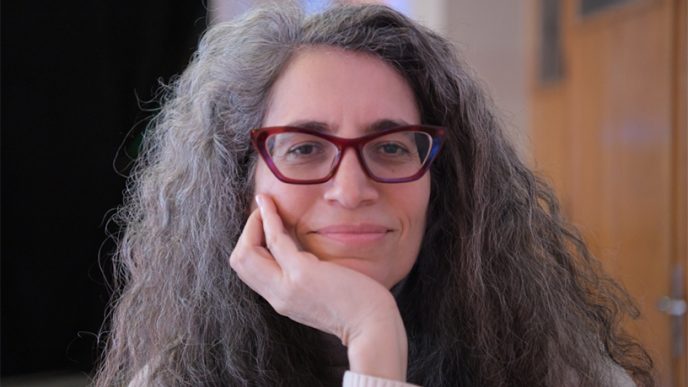
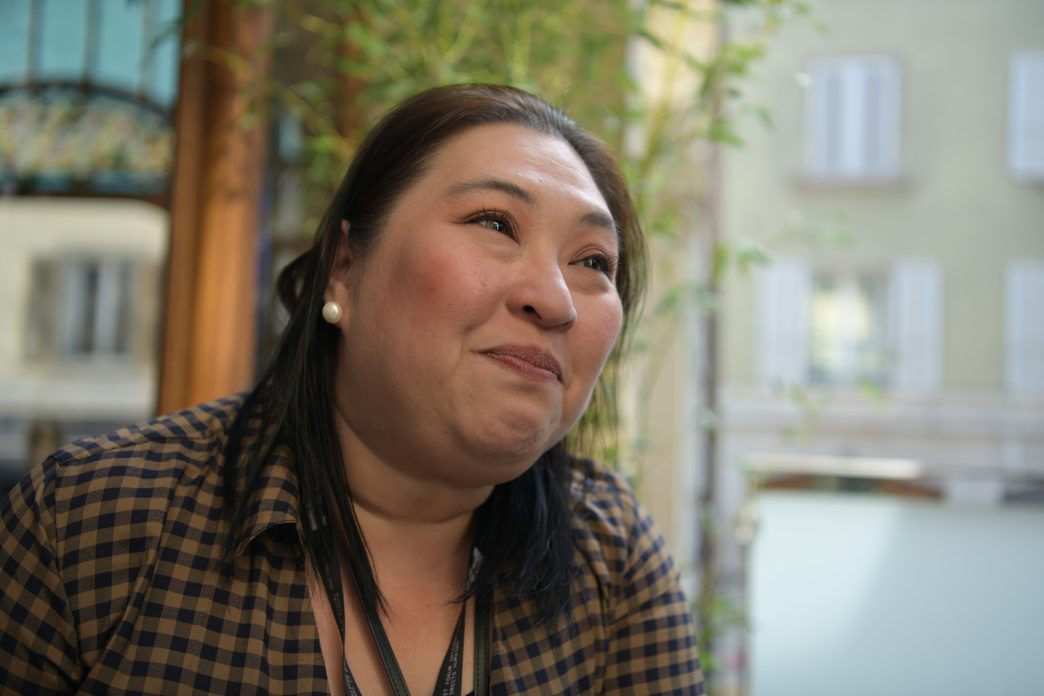
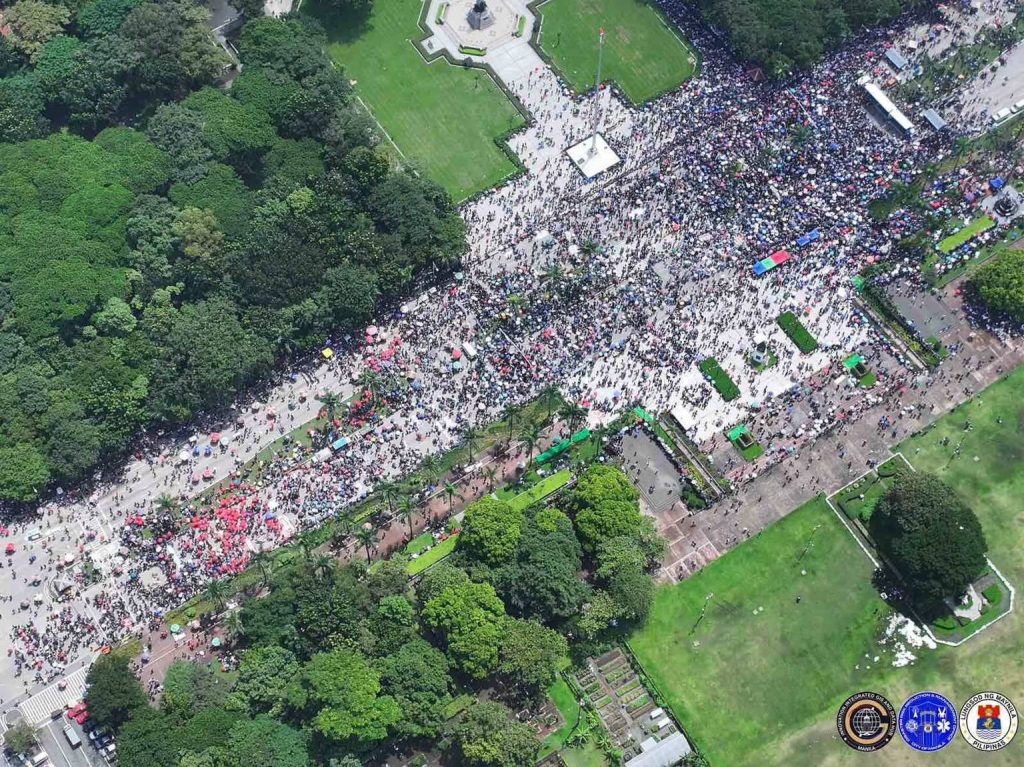
Anti-corruption protests in the Philippines last September exposed divisions within the progressive movement. Filipino activist Leni Velasco warns that rejecting the younger generation’s more militant tactics could split the left — and points out that the anger driving the youth also signals hope.
There is a struggle inside the civil society movement, told Blindspot the co-founder of DAKILA, an artist-activist collective in the Philippines. “How can you avoid suppressing the younger generation’s forms of expression? If you try to deny them agency and dictate how they can protest, you risk alienating a large group of young people who are already angry and frustrated. And as if anger is bad. Hope isn’t just about rainbows and butterflies. Anger is a form of hope.”
In the opinion of the Filipino activist, there is an entire faction within the progressive movement that considers only peaceful protest legitimate. There is a lot of pressure on Filipino civil society not to stray from the mythical model of the 1986 People Power Revolution that ousted dictator Ferdinand Marcos.
“We were known for the peaceful People Power Revolution, labeled and branded as the typical template resistance movement in the Philippines. And that’s being questioned now,” explains Velasco. “We see among the younger generation that they do not agree with this type of revolution, this type of peaceful rallies. In fact, we’re seeing it in the past months, in the anti-corruption issues, a lot of Gen Zs and Gen Y rose and didn’t agree of how civil society actually handled the protests. It felt like they’re being shaped into a kind of expression of their anger in a specific way that doesn’t work with them any more.”
The Catholic Church plays a highly influential role in the management of this model, she notes. “We have a Catholic Church which is very conservative, that doesn’t want people to curse at rallies, at protests. And we would have this template of how to behave in rallies. And this is being resisted by the younger generation.”
Along with this, there has long been a paternalistic attitude from progressive movements in the Global North towards the Filipino social movement. “After Duterte, we’re in the Marcos regime now, and the narrative is that it’s better, quote-unquote,” says Leni Velasco. “When I talk to Global North funders, for example, they would say, so is the situation better now? If you look at it, the same architecture, the same infrastructure of authoritarianism that existed in the Duterte regime are still there. But because it looks more democratic, in the sense that it’s not on your face, like how Duterte did it, from the Global North perspective, it’s better. It’s not better, it’s just that the regime has better ways of co-opting the narrative.”
“Most of the social movements in the Global North now are asking us, how did you survive Duterte? Because that was a bloody regime. And I think that’s one of the challenges of the Global North that’s different from us because back at that time we didn’t have a choice. We had to come together, as social movements, media, academy, everyone else, the stakeholders, because we were being killed left and right.”
Velasco emphasises that when a social movement does not have the privilege of resources, the only option left is to come together. Otherwise, if divided, they can’t survive the regime. “If you compare it with the social movements in the US now, which is still highly individualist in terms of groups, the challenge they face is to choose to come together or being beat by the authoritarian regime. They still have the privilege of resources, of egos, of competing strategies, but they need to find a way to come together.”
After over 30 years of cross-functional leadership experience in social movement building, Velasco warns that “when the left starts acting like the right, when the progressive movement falls into that trap of binary thinking, of othering, of polarisation, we have a bigger problem.” She argues that when progressive movements do this they facilitate the work of division promoted by authoritarian regimes. “Like we’re othering people that don’t sound like us, that don’t have the same beliefs. But it goes against the very essence and core of democracy, right? And it’s also a tool of the authoritarian government to further divide us.”
The Filipino activist believes that it’s not a matter of agreeing in terms of your own ideologies, but the aim of coming together. “Yet, in the US rather than a manifesto of unity, they put up a manifesto of purpose. At this stage, you have to come together. It’s a tactical thing. Otherwise, you’ll be destroyed.”
Nelson Pereira