I. The child who learned resistance too early
Good morning, everyone.
I am deeply honored to be here today. My sincere thanks to the African Students Union and IGLI (Inclusive Global Leadership Initiative) for this invitation. I often begin with a story, because stories carry truth in a way arguments alone sometimes cannot.
Over the past few years, a question has been echoing across African conversations, especially on digital platforms: is democracy needed in Africa, or is it even suited to it? This debate has grown louder in the wake of successive military coups, particularly in countries shaped by the long shadow of French colonial rule. My own country stands within that history.
Let me begin with a statement that may unsettle you. I was, and in some ways remain, among those who applauded certain of these coups. That does not mean I stand for military rule, nor that I believe in its legitimacy as a system of governance. It means that, in specific moments, the collapse of a decaying order is experienced as relief before it is understood as danger. There is a nuance there, and I will return to it.
But before we debate systems, let us return to something more intimate. Let me begin with a life.
I grew up under military rule, though for many years I did not have the language to name it as such. It did not feel abnormal. It felt like life.
Imagine being a child in school, perhaps in seventh grade. One morning, your principal enters the classroom and announces that the president has returned from an official trip. You are told to leave everything behind and walk to the airport to welcome him. As a child, you feel joy. School is dismissed. You walk in long lines, thousands of students converging, forming a human corridor of obedience. You stand for hours under the sun, waiting. When the convoy finally passes, you wave. You cheer. That is what you have been taught to do.
On Wednesdays, you do not rest. You attend rehearsals. You memorize songs, and choreographies designed to praise a man you have never met. On Sundays, instead of being with your family, you walk to the party headquarters to perform again. At that age, you do not yet understand that your body is being trained into submission and loyalty.
Then you grow older.
Your high school stands across from a military camp. Each morning, traffic stops. Life pauses. For long minutes, sometimes close to an hour, an entire city is held still so that one man can pass through it. Women are lined along the road in carefully arranged formations, clapping as the convoy moves. You clap too. Not because you feel admiration, but because stillness, in that moment, is read as defiance.
And then there is the night.
There is always a curfew. Seven in the evening. Silence imposed by fear. One night, you return home to find your mother and your aunt crying. A cousin has been beaten by soldiers for being outside without authorization. He is in a coma. You begin to understand that the rules that govern your life are not there to protect you.
Another day, you come home from school and find your father handcuffed, his face swollen, your home turned inside out by soldiers searching for what they call evidence. You do not yet know of what. You only know that something sacred has been broken.
The television becomes your window to the world. It opens only a few hours a day. A brief cartoon offers a moment of innocence, and then it closes again into endless praise of the president. His image fills the screen. You grow up in a universe where one man occupies all space.
At school, there is a subject called civic and moral education. It exists in the timetable, but not in reality. Teachers refuse to teach it. You later learn why. Words like constitution or democracy are not simply ideas. They are risks. To pronounce them carelessly is to invite disappearance and many teachers have previously disappeared like this.
Even at home, language is policed. You do not say the president’s name. You learn to replace it with metaphors. Years later, when I first read Harry Potter, I was struck by the silence around the name Voldemort. It felt familiar. In my country, too, there was a name that could not be spoken: Eyadema, the name of the man who ruled us mercilessly for four decades. The difference is that ours was not fiction.
Then comes the moment when childhood fractures.
Your father is arrested. You learn that the meetings he attended in secret were political. Before that, you had been a messenger, carrying information to his friends from one house to another about when and where their meeting will take place. After his arrest, you become curious and when he was discharged and resumed, you begin to follow him, to wait outside those meetings.
You are punished. You are told it is dangerous. You return anyway.
At thirteen, danger is an abstraction. What you understand is proximity, and loyalty, and fear.
Eventually, your father stops pushing you away. It becomes safer to let you in than to leave you outside. And so you enter those meetings. And what you discover is a different country.
You hear stories of prisoners tortured and killed. Of women beaten in their own homes. Of children detained for reading newspapers. Of mothers jailed with their infants to punish the dissident fathers. Of a female professor arrested and gang-raped by soldiers inside the compound of the public radio right after her interview in which she discussed women’s rights. She never recovered mentally after that. These meetings were not simply political. They are spaces of mourning, of healing and fragile resistance.
And you are not yet fifteen.
Then one evening, the man at the center of this machinery dies. The television goes blank. His image appears with a cross beside it. The announcement follows. There is a brief silence, and then another voice declares that his son will take power. Continuity replaces rupture.
The lights go out. The phones go dead. The country holds its breath.
You find your father sitting in the dim light of a candle. He is crying. For the first time in your life, you see him cry. You ask him why. You think he mourns the man who had him tortured over a dozen times in the course of thirty years.
He answers quietly that he cries for his friends, the ones who were killed, who will never receive justice.
In that moment, something shifts in you.
You understand that power and oppression can survive death. That systems can reproduce themselves through bloodlines, through fear, through silence. And you make a decision, the kind only a child can make with such clarity. You write in your journal. You imagine a future where this order ends. You name your rebellion, clumsily, defiantly.
That is how my journey began. That is my story. And now, let us begin.
II. The claim on the table: has democracy failed africa?
Let us begin with a claim that is stated with considerable confidence in many quarters, and that deserves to be taken seriously before it is dismantled. The claim, in its most common formulation, runs something like this: democracy has failed in Africa, or alternatively, that democracy as a form of governance is ill-suited to African political cultures, and that the persistent instability, authoritarianism, and state dysfunction observed across the continent since independence is evidence of this fundamental incompatibility.
This argument appears in academic literature, in journalistic analysis, in foreign policy think tanks, and, with especially disheartening frequency, in the mouths of African leaders themselves, who have found in it a useful alibi.
Samuel Huntington gave it intellectual respectability in The Third Wave, where he suggested that certain cultural and religious environments were more hospitable to democratic consolidation than others. Robert Kaplan offered a more visceral version in 1994, arguing in The Atlantic that Africa’s map of endemic poverty, ethnic diversity, and weak institutions made liberal democracy an exotic import, a form of governance produced by a specific historical trajectory that Africa had not traveled.
These arguments have been repeated, refined, and recycled for so many decades, and they carry an enormous political weight precisely because they appear to rest on empirical observation: one can point to failed transitions, stolen elections, military coups, constitutional manipulations, and conclude that the evidence speaks for itself. Before I dismantle this argument, I want to sit with it honestly for a moment, because the worst thing one can do with a seductive falsehood is to dismiss it too quickly.
There is, undeniably, a crisis of democratic governance across much of the African continent. The Ghanaian economist George Ayittey, one of the most unsparing African critics of African governance, spent decades documenting what he called the systematic rape of a continent by its own leaders — men he memorably divided into two categories: the Cheetah generation of young, reform-minded Africans straining toward the future, and the Hippo generation of the political class, immovable, bloated on state resources, allergic to accountability.
Ayittey was not a Western observer projecting failure onto Africa from a comfortable distance. He was an African intellectual consumed by fury at what African leaders had done with the sovereignty that African peoples had bled to obtain. His anger gives this crisis its proper weight, and it deserves to be acknowledged before it is contextualized.
The question is not whether the crisis is real. The question is what the crisis is evidence of.
And here is where the claim begins to collapse under the weight of its own assumptions. The argument that democracy has failed Africa presupposes that Africa has, in fact, tried democracy, that there was a genuine attempt at self-governance after independence that was subsequently undone by some endogenous incapacity. This presupposition is historically false, and the consequences of that falsity are enormous.
Most of Africa, since the formal end of colonialism, has never been permitted, in any sustained way, to practice democracy on its own terms. What it has practiced, instead, are managed versions of political form, shaped from the outside and from above, by the interests of former colonial powers, Cold War superpowers, international financial institutions, and the domestic elites who learned to serve all of them simultaneously. The failure that exists is real, but it is not the failure of African democratic capacity. It is the failure of a system designed to prevent genuine democratic governance from taking root.
III. What Africa never got to try
The formal independence of African states between 1957 and the mid-1970s was, in the overwhelming majority of cases, an incomplete transaction. The flag and the anthem changed. The face at the top of the state changed, from European to African. But the structural architecture of governance, the modes of resource extraction, the legal frameworks, the currency systems, the military relationships, and above all the international political economy in which these new states had to operate: these changed very little, and in some cases not at all.
Frantz Fanon saw this clearly in The Wretched of the Earth, published in 1961, and the incandescent fury of his analysis has not dimmed in the intervening decades. The national bourgeoisie that inherited the colonial state, he argued, was not a revolutionary class but a substitution class: it took the place of the colonial administrator without transforming the logic of administration. It learned to speak the language of freedom while performing the function of control. And it was encouraged, financed, and protected in this performance by the former metropolitan powers, which found in the African comprador state a far more cost-effective instrument of continued domination than direct colonial administration had ever been.
The case of Togo is instructive precisely because it is so undisguised. Sylvanus Olympio, the country’s first democratically elected president, was a figure of genuine democratic seriousness — a London School of Economics-educated economist who understood the structural conditions of Togolese underdevelopment, and who had begun to explore an economic path that would reduce Togo’s dependence on the franc zone and French monetary control.
On January 13, 1963, he was shot dead in front of the American embassy in Lomé, in the first military coup in sub-Saharan Africa’s postcolonial history. The men who killed him had served in the French colonial army. The government of France recognized the new military junta within days. No one was ever tried. Gnassingbé Eyadéma, who would later claim to have fired the fatal shot himself, rose through the ranks of that coup’s beneficiaries to seize total power four years later, and French presidents from de Gaulle to Macron nurtured the relationship.
This pattern, which the scholar François-Xavier Verschave named Françafrique, was not unique to Togo. It operated, with local variations, across the entire swath of France’s former African empire, and its British, Belgian, and American analogues produced structurally identical results across the rest of the continent. The Cold War further distorted any possibility of genuine democratic experiment by forcing African states into a binary of alignment in which ideological identity mattered far less than geopolitical obedience.
A ruler who was reliably anti-communist, or who controlled resources of strategic importance, could imprison his citizens, steal elections, torture dissidents, and rewrite constitutions, and continue to receive diplomatic support, military assistance, and international legitimacy. The architecture of the postcolonial international order was designed, in its fundamental logic, to reward African authoritarianism and punish African democratic autonomy.
And then, in 1989, the Berlin Wall fell, and suddenly the rules changed. No longer protected by the logic of Cold War alignment, African rulers were told, with a briskness that was almost comic in its historical amnesia, to “democratize”. The Bretton Woods institutions attached political conditionalities to their structural adjustment programs. The French government, under Mitterrand, delivered its famous La Baule speech in 1990, linking French aid to democratic progress with a solemnity that took no account of the preceding three decades of French support for African dictatorship.
Elections were organized, multi-party systems were introduced, constitutions were amended. And almost universally, the same elites who had governed through authoritarian means adapted themselves to electoral competition, used their control of state resources to determine electoral outcomes, and continued to govern in the same fundamental logic while wearing new institutional clothing.
This is what the proponents of the “democracy has failed Africa” thesis consistently misread. They see the elections and the constitutions and the formal democratic machinery and they conclude that democracy was tried. But the presence of electoral machinery is not democracy, any more than the presence of a courtroom is justice.
Democracy requires, as its precondition, a distribution of power sufficient to make meaningful political competition possible, an independence of institutions from ruling party capture, a civic society robust enough to hold power accountable, and an economic structure that does not make political loyalty a condition of physical, financial and even intellectual survival. None of these preconditions were created in the transitions of the 1990s, because creating them would have required dismantling the structural arrangements on which both domestic elites and international partners depended.
IV. The memory before the silence: pre-colonial forms of self-governance
Before we go further into the mechanics of how obedience is produced, it is necessary to address a historical erasure that has done enormous damage to the self-conception of African peoples and to the intellectual frameworks through which African political possibilities are imagined. The argument that democracy is alien to Africa is not only wrong about the present. It is also wrong about the past, and wrong in a way that requires deliberate historical reconstruction to correct.
The African continent before European colonization contained an extraordinary diversity of political forms, many of which embodied, in their institutional structures, principles that political theorists in the Western tradition have only recently begun to theorize as constitutive of democracy: the accountability of leaders to those they govern, the dispersal of power across multiple institutions, the existence of mechanisms for removing leaders who abused their mandate, the protection of communal deliberation as a condition of legitimate decision-making.
These were not identical to the liberal democratic forms that emerged from the European Enlightenment, but they were not pre-political either. They were sophisticated, adapted, historically developed systems of collective self-governance.
Consider the Igbo political tradition of southeastern Nigeria, which operated without any centralized monarchical authority in much of its territory. Decision-making was vested in village assemblies, the Oha-na-Eze, in which adult members of the community participated in deliberation on matters of collective concern. Leadership was earned through a combination of age, achievement, wisdom, and demonstrated commitment to community welfare, and it was regularly contested and renegotiated. The Eze, or titled men, held prestige but not absolute power; their authority was bounded by consensus and could be withdrawn. Chinua Achebe, who understood his Igbo heritage with the precision of a great novelist and the rigor of a cultural historian, described this as a highly developed democracy, and while the term may be anachronistic in its strictest sense, it points toward something real.
Further south, the Kgotla system of the Tswana peoples of what is now Botswana operated as a form of direct community governance in which all adult members could speak before the chief and council, and in which decisions were expected to reflect the consensus of the assembly rather than the unilateral will of leadership. The phrase Kgosi ke kgosi ka morafe — which translates as “the chief is chief by the grace of the people” — encapsulates a political philosophy of popular sovereignty that long predates the universal suffrage movements of the nineteenth century. Significantly, post-independence Botswana drew explicitly on this tradition in designing its democratic institutions, and it has sustained one of Africa’s most durable democratic records as a result.
The kingdom of Ashanti in present-day Ghana maintained a constitutional monarchy in which the Asantehene was bound by a council of chiefs representing the different clans, and in which the ultimate symbol of sovereignty (the Golden Stool) was understood to belong not to the king but to the soul of the Ashanti nation. A king who governed in ways that violated communal norms could, through a formal process called destoolment, be removed from power. The British colonial administration found this arrangement so threatening to their model of indirect rule that they systematically worked to undermine the chiefly councils and concentrate power in individual rulers who could be more easily co-opted.
African peoples did not need to be taught democracy. They needed to be protected from those who had every incentive to prevent it.
The colonizers understood, with a clarity that their descendants have been eager to obscure, that African political traditions of accountability and collective deliberation were incompatible with the extraction regimes they intended to install. The project of colonialism was not merely economic. It was political and epistemological: it required the destruction or delegitimization of African governance structures and the installation, in their place, of administrative systems that concentrated power at the top, removed mechanisms of popular accountability, and trained African populations to receive commands rather than issue them.
The educated African that colonial education systems produced was educated precisely into a relationship of intellectual subordination, trained to see European political forms as universal and African political forms as parochial or primitive, and therefore to experience his own political traditions as a source of shame rather than of institutional possibility.
This epistemological violence, as the philosopher Ngugi wa Thiong’o analyzed with devastating clarity in Decolonising the Mind, is one of the most durable legacies of colonialism, because it operates not through external coercion but through internal conviction. The person who has been made to believe that his traditions are inferior does not need to be prevented from drawing on them. He will do so himself, with the best of intentions, in the name of modernity and development and international respectability.
And so the political forms that survived into independence were, with few exceptions, the forms that colonial administration had either installed or permitted, not those that African communities had developed through their own historical experience.
V. The production of obedience: how power disciplines populations
We have arrived at the heart of this address, which is not merely a history of what went wrong in African governance, but an attempt to understand the mechanisms by which populations are trained into political compliance, and to name the cost that resistance to that training has always carried.
The political economy of obedience is, at its most fundamental level, a theory of incentive design. Authoritarian systems endure not primarily because they rule through permanent terror — though terror is one of their instruments — but because they succeed in structuring the relationship between political compliance and material survival in such a way that obedience becomes, for most people most of the time, the rational choice.
In Togo, as in many comparable states, this structure was extraordinarily explicit. Access to public sector employment — the largest formal employment sector in the country — was mediated by political loyalty. Access to educational opportunities, particularly scholarships for study abroad, was distributed through networks of patronage that required, at minimum, the performance of loyalty and, at maximum, active participation in the machinery of repression.
Market licenses, import authorizations, building permits, health clinic access in government facilities: all of these were goods that the state controlled and could distribute or withhold, and their distribution was never politically neutral. The scholar Jean-François Bayart, in his concept of the politics of the belly, captured something important about this system, though his framing risked naturalizing what is in fact a constructed political arrangement. People in these systems do not collaborate with power because they are morally deficient. They collaborate because the architecture of their daily lives has been designed to make non-collaboration economically catastrophic.
The family is perhaps the most undertheorized site of political obedience production. In conditions of economic precarity, where the failure of one member of an extended family can have cascading consequences for dozens of others, the individual who considers a dissident act must calculate not only her own risk but the risk she imposes on her parents, her siblings, her children, her cousins.
I have watched people I know, people of intelligence and moral clarity, retreat from political engagement not because they were afraid for themselves but because they could not justify the devastating exposure their activism would bring to their families. The authoritarian state does not need to threaten everyone. It only needs to ensure that the threat to one is visible and comprehensible to all.
The schoolroom is another site of production, and its operations begin early. In postcolonial African states that inherited the French or British educational model, the curriculum was structured to produce a particular kind of political subject: one who understood history as a narrative of European progress and African backwardness, one who understood authority as something to be respected rather than questioned, one who understood her own political traditions as insufficiently developed to be institutionally useful.
The Togolese school I attended taught us the genealogy of French kings with more precision than the history of the governance systems that predated the French colonial presence on our territory. We learned to recite the values of the Republic. We were not taught to ask who had built the republic, on whose land, at whose expense, and for whose primary benefit.
The most effective political prisons are not made of concrete. They are made of curriculum.
Add to this the role of religion, which in many parts of Africa has been deployed, not by its most honest practitioners, but by its most politically convenient ones, to transmit a theology of earthly resignation and otherworldly reward that discourages political engagement. The pastoral instruction to render unto Caesar what is Caesar’s sits very comfortably with the interests of Caesars who have no intention of rendering anything to anyone.
Liberation theology, which in Latin America produced an extraordinary tradition of religiously grounded political resistance, has had a far more contested reception in much of African Christianity and Islam, partly because of the direct entanglement of many religious institutions with state power, which has made spiritual authority and political compliance structurally allied.
The media, in states where it has not been made independent, completes the architecture. State broadcasting in authoritarian African contexts does not typically practice crude propaganda. More commonly, it practices a subtler discipline: the selection of what is visible and what is invisible, the framing of social problems as natural phenomena rather than political choices, the personalization of politics around the figure of the leader in ways that crowd out structural analysis, and the treatment of opposition voices as marginal, extremist, or foreign-funded. The cumulative effect of consuming news through this frame, over decades, is not brainwashing in the Hollywood sense. It is more prosaic and more durable: it produces a population whose political imagination has been narrowed to the point where alternatives are genuinely difficult to conceive.
VI. The price of courage: what resistance actually costs
Against all of this, there are people who resist. This is the part of the address I want to treat with the greatest care, because resistance in the abstract is easy to celebrate and very hard to sustain, and the gap between celebration and sustained support for those who resist is one of the great moral failures of both academic scholarship and international civil society.
The price of courage in authoritarian systems is not merely symbolic. It is material, social, familial, and often bodily. In Togo, I have watched colleagues, friends, and comrades who chose active opposition to the Gnassingbé dynasty pay costs that are difficult to fully enumerate: arrest and detention without charge, torture in cells that have no official existence in any government record, the revocation of passports and the consequent impossibility of international travel for livelihood or medical care, the termination of employment and the unofficial blacklisting that follows from every employer connected to the patronage network of the state, the harassment and occasional detention of family members as a more intimate form of pressure, exile, and the particular grief of exile, which is not only the grief of being away from home but the grief of watching home recede into a place you are no longer sure you recognize.
What this means, practically, is that the production of a resistant political subject is not a spontaneous process. It requires deliberate cultivation, the creation of counter-institutions and counter-narratives that can sustain people through the long stretches of demoralization that characterize any serious engagement with entrenched power.
The civil rights movement in the American South understood this, and the Black church functioned as both a spiritual and a logistical infrastructure for a movement whose participants knew they faced economic reprisal, legal persecution, and lethal violence.
In Africa, the construction of these counter-institutions has been systematically complicated by the international aid architecture, which has tended to channel civil society funding through processes that make African organizations dependent on foreign approval, that require the translation of local political struggles into the policy languages legible to Northern funders, and that create a professionalization of civil society that gradually separates the organizations from the communities whose interests they nominally represent.
The NGO-ization of African activism has been one of the subtler mechanisms through which genuine resistance has been domesticated into service delivery. The radical possibility of structural transformation gradually replaced by the more manageable project of ameliorating the symptoms of structures that are not challenged.
Courage without infrastructure is martyrdom. And martyrdom, however admirable, does not build republics.
I want to pause here and name something that is rarely acknowledged in academic discussions of African political resistance, which is the particular burden that women carry in the economy of courage.
In patriarchal social structures, which characterize most of the societies in which authoritarian African states operate, women who engage in public political resistance pay costs that are layered on top of the standard costs of opposition: they face the presumption that their political engagement is illegitimate or derivative, they face sexual violence and the threat of sexual violence as a specific instrument of political terror, they face the expectation that their political commitments are secondary to their domestic obligations, and they face, within their own movements, the reproduction of the hierarchies they are ostensibly fighting to dismantle.
The African women who have led and sustained resistance movements across the continent — from Winnie Mandela to Aminata Traoré to the young women who anchor the protest movements of the current decade — have done so at costs that include dimensions of sacrifice that their male counterparts have not had to bear.
VII. The international architecture of managed compliance
The argument of this address would be incomplete if it remained at the level of domestic political analysis, because the production of obedience in African states is not only a local project. It is entangled, in its architecture and its sustenance, with international political and economic structures that have a stake in the continuation of managed African populations. This is not a conspiracy theory. Far from that: it is a political economy.
The International Monetary Fund and the World Bank, through their structural adjustment programs of the 1980s and 1990s, imposed conditionalities on African states that required the reduction of public expenditure, the privatization of state enterprises, the liberalization of trade, and the reorientation of economic production toward export. The immediate human consequences of these programs — the removal of food subsidies, the introduction of school fees, the reduction of health spending, the collapse of domestic manufacturing — were extensively documented by African scholars.
But the political consequences have received less systematic attention. When a government dismantles its capacity to provide public goods, it does not simply reduce the scope of the state. It transforms the logic of political loyalty, because the state’s capacity to reward compliance is diminished at the same time as the economic vulnerability of the population is increased. The consequence is often not democratization but predatory politics: a narrowing of the coalition that the state can sustain through patronage, an intensification of competition for the remaining resources of the state, and an increase in the authoritarianism required to manage the contradictions thus produced.
Meanwhile, the arms trade, which connects Western defense industries to African military establishments, has sustained the coercive infrastructure of authoritarian states with a consistency that bears no relationship to the democratic rhetoric of the governments that profit from it. France, the United Kingdom, the United States, Israel, Russia, and China have all maintained arms relationships with African governments whose human rights records were, at the moment of the transactions, a matter of public knowledge.
The logic is not ideological but commercial and strategic: African military markets are significant, and the political relationships sustained through arms transfers create dependable allies in international forums. Israel’s contribution to this architecture deserves particular mention: through companies such as NSO Group, whose Pegasus spyware has been documented in use across multiple African states, it has exported not merely weapons but the infrastructure of surveillance itself — the capacity to monitor phones, track dissidents across borders, and map opposition networks with a precision that older instruments of repression could never achieve.
The soldier who uses a French-manufactured weapon to disperse an African demonstration is a data point in an arms export ledger as well as a participant in a human rights violation. The engineer whose code reads a dissident’s private messages from a server in Tel Aviv is equally a participant, and considerably harder to photograph.
The Bretton Woods institutions, the Western bilateral donors, and the major international NGOs have, for three decades, promoted good governance as the solution to African political dysfunction. Good governance, as typically operationalized, means transparency in budget management, rule of law as understood through property rights and contract enforcement, and electoral accountability through periodic multi-party elections. These are not bad things in themselves, but the good governance framework consistently fails to address the structural international conditions that produce bad governance: the debt relationships that give international creditors effective veto power over national economic policy, the tax avoidance and capital flight that deprive African states of the fiscal resources that would make genuine public provision possible, the trade rules that systematically disadvantage African producers, and the political protection that Western governments extend to African client regimes regardless of their governance record. To prescribe good governance to African states without addressing these structural conditions is to hand a drowning man a swimming manual.
VIII. Toward a political economy of courage: what building looks like
Having traced the architecture of managed compliance with some care, I want to spend the remaining portion of this address not in despair but in a rigorous hopefulness, which is different from optimism. Optimism is a sentiment. Rigorous hopefulness, however, is a practice grounded in the analysis of what has actually worked, and in the honest assessment of what structural conditions need to change for democratic possibility to expand.
The first thing that has worked, and continues to work despite every attempt to prevent it, is the maintenance of a counter-public: the construction of spaces, physical and digital, in which political truths that cannot be spoken in the official public sphere can be articulated, preserved, shared, and eventually amplified. The construction and maintenance of counter-publics is not merely strategic. It is, I would argue, constitutive of democratic subjectivity, because it is in these spaces that people practice, in the face of structures designed to prevent it, the basic democratic acts: speaking, listening, arguing, revising, building shared understanding across difference.
The second thing that works is the creation of economic alternatives to state patronage, because as long as political compliance is the price of physical survival, the majority of people will pay it. This is why I am deeply invested in the potential of decentralized financial infrastructure in the African context, not as a technological panacea, but as one component of a broader project of building economic autonomy outside the patronage networks of authoritarian states. A farmer who can receive payment for her produce through a system that no government official can freeze or redirect has a marginally greater degree of political freedom than a farmer whose economic survival depends on access to state-controlled markets and credit. The aggregate of these marginal freedoms, across millions of people, is, over time, a change in the structure of political risk.
The third thing that works — and this is perhaps the most important and the most neglected — is the recovery and revitalization of African intellectual and institutional traditions as resources for the construction of democratic alternatives. Not as nostalgia, not as the romantic projection of a golden pre-colonial past that never existed in the form imagined, but as serious engagement with the question of what forms of collective self-governance have actually worked, in African contexts, under African conditions, and what can be learned from them that might be applicable to the design of contemporary institutions.
The fourth thing that works is international solidarity of a specific and demanding kind: not the charity model, in which African political struggles are objects of Northern sympathy and financial assistance, but the structural solidarity model, in which people in the global North recognize that the conditions producing African political dysfunction are entangled with decisions made in Paris, Washington, Tel Aviv and Beijing and London, and that changing those conditions requires political work in those capitals as well as in Lomé and Kinshasa and Nairobi. Solidarity means showing up in the spaces where these decisions are made.
IX. Home, or: what we are building toward
I want to end here, where I always end, which is at home. Not at home as I left it, though I carry that home inside me with a faithfulness that surprises even me. But at home as I believe it can become, and must become, if the analysis this address has attempted is to be worth anything at all.
Togo is a small country, as countries go. Its coastline runs for fifty-six kilometers along the Gulf of Guinea. Its population, roughly nine million people, is distributed across a geography that moves from the humid Atlantic littoral through savannah and forested highlands to the semi-arid north, carrying with it a cultural diversity that colonial cartography compressed into a single administrative unit without asking anyone’s permission.
It is a country that has produced extraordinary human beings under conditions that were designed to prevent them from flourishing: scholars and artists and engineers and entrepreneurs and farmers and activists who have built lives of dignity and creativity against an institutional architecture that rewarded compliance and punished excellence that could not be co-opted.
The Gnassingbé family has governed Togo since 1967, when an illiterate man with a gun and French diplomatic backing killed a man fluent in six languages, holding an economics degree and a democratic mandate, and installed himself in power. The son has governed since 2005, when the father died and the army transferred the family franchise without the inconvenience of a meaningful electoral process. The constitutional revisions, the falsified elections, the disappeared activists, the prisons filled with people arrested for posting on social media what the government did not like: these are the daily textures of political life in a country formally classified as a republic and substantively operating as a dynasty.
And yet I have spent nearly twenty years inside a struggle for freedom, alongside thousands of people who chose to defy this order knowing its history, knowing what it had done to those who came before them. A countryman once asked me, at the very beginning of that journey, whether I truly understood how dangerous this regime was before committing myself to a movement that sought to bring it down. He thought I was naive. He meant well. I responded by citing cases, one after another, of the most cruel, inhumane, and deliberate forms of torture, disappearance, and killing this regime had practiced across decades. And when I finished, I told him: it is precisely because I know too much, and learned it too early, that I am in this struggle. It is not my ignorance that brought me here. It is the pain of knowing.
Here is what that knowledge has taught me, distilled from growing up in a country that tried to impose silence and did not fully succeed: obedience is not a permanent condition. It is a produced condition, which means it can be unproduced. Whatever social behavior power has constructed, power can also lose the capacity to maintain. The architecture of compliance is sustained at a cost, and that cost compounds over time, until eventually the system that enforces it becomes more expensive to preserve than the system that might replace it. This is not historical determinism. Democratic transitions are not inevitable. They are possible. And the difference between possible and actual is always, in the end, the people who decided, at some specific moment, to pay the price of courage.
My grandfather was jailed multiple times for his anticolonial activism. When the colonial administration banned activists from using any public service — transportation, hospitals, schools for their children — he walked over four hundred kilometers from his village to the capital on foot to attend independence meetings, because the cause demanded his presence and the colonialists had made every other form of arrival impossible. He died carrying the hope of a free Togo, without seeing it realized. But he raised children who continued fighting. Who raised children who asked questions and the questions have not stopped.
The work of building a just society is the work of taking what was taken from you and refusing to pretend you never had it.
That is what democracy in Africa is, at its most fundamental level: not a set of institutions imported from Europe, but the reclamation of something that was always ours — the participatory traditions, the accountability structures, the political memory that colonialism targeted for destruction precisely because it was incompatible with domination.
The price of courage is real. But the price of its absence is higher, and we are all paying it, in different currencies and different forms, every day that the systems remain intact.
Thank you.
Farida Bemba Nabourema
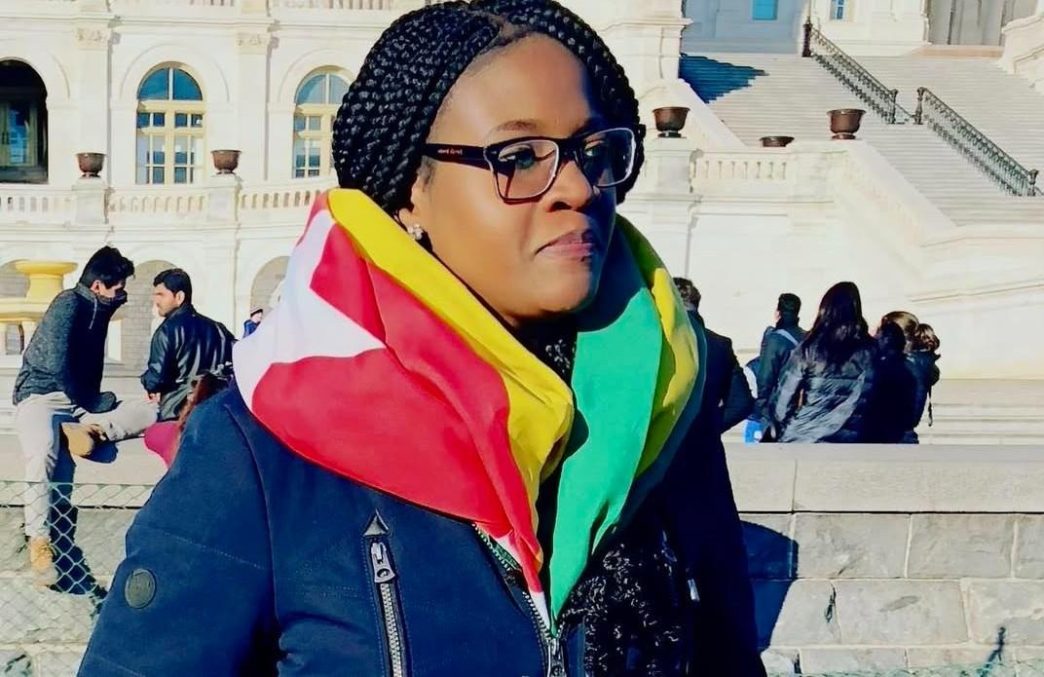
This address was delivered on April 17 by Togolese human rights activist and writer Farida Bemba Nabourema at the Josef Korbel School of Global Affairs at the University of Denver, USA. First published on https://nabourema.info/