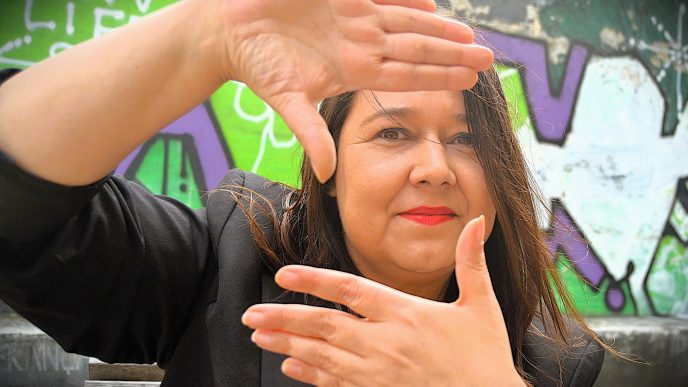
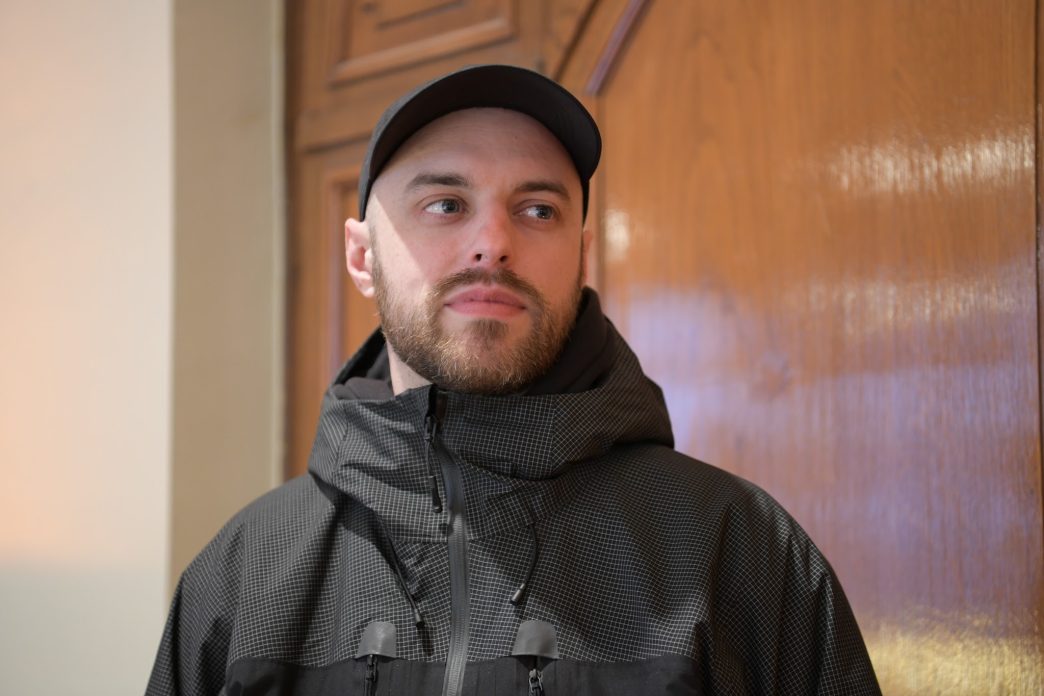
French reporter and YouTuber Charles Villa stopped harboring illusions about the big media. After covering international news for more than 10 years, he says the war in Gaza has definitively exposed the failure of legacy media. “Traditional media failed, we would never have had access to images of the genocide in Gaza if it hadn’t been for social networks and independent media.”
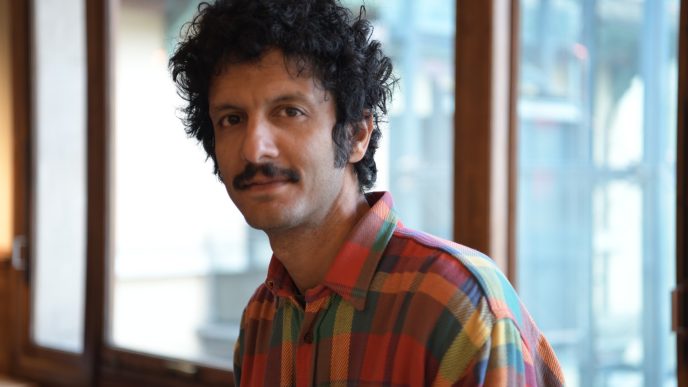
Charles Villa was the co-director, with Suhail Nassar, of the crowdfunded documentary From GAZA with LOVE, which has just been uploaded to YouTube. The film, which can be viewed for free on Villa’s channel, gives a voice to the children of Gaza, the first victims of Israel’s genocidal campaign.
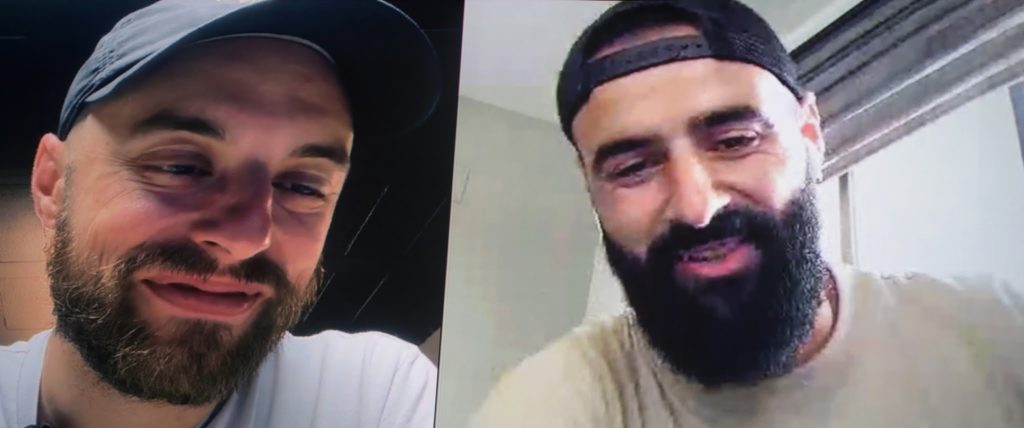
“In recent history, there is no conflict where so many children have been massacred on this scale without any possibility of assistance, of humanitarian aid. The images of children in hospitals, in emergency rooms, lying on the floor because there weren’t enough beds, having to undergo amputations without anesthesia, have deeply affected me,” Charles Villa told Blindspot at Geneva’s International Film Festival and Forum on Human Rights.
He didn’t mince words, denouncing what he pointed out as clear signs of genocidal intent. “The Israeli army, the Israeli state, has created an entire generation of children who are physically and psychologically scarred. These children will live with this for the rest of their lives. This is also what characterizes genocide and ethnic cleansing. It makes life impossible, but it also creates an entire generation of injured children who will grow up in a devastated place, where there is no healthcare infrastructure, with amputations, missing arms or legs, and lasting injuries from gunshot wounds that will leave them disabled for life. This is unprecedented. And yet, I have seen many injured children in conflict zones.”
With images of massacred children leaking daily from social media while the mainstream media looked the other way and Israel blocked foreign reporters from accessing Gaza, Villa felt the imperative to give the Palestinians a voice. He went looking for a Palestinian who in Gaza could make known the day-to-day life of children under a merciless war in a closed enclave. Finding Suhail Nassar, a young Palestinian trapped in the Gaza Strip, was gaining eyes inside that hell. And that’s how this film was born.
For over a year, Charles worked remotely on this documentary with Suhail. Camera in hand, the Gazan filmed himself, taking us into neighborhoods devastated by the indiscriminate and systematic bombing of the Israeli army, and introducing us to civilians struggling for survival amidst the rubble. The images he films bring to light children whose daily lives are structured around helping their families and playing with each other. All of this unfolds under the constant threat of bombing and the incessant drone patrols of Israel.
From the very beginning of the genocide, Villa had documented many Israeli war crimes, including bombings of civilians, hospitals, and displaced persons camps. He had also collected a huge amount of footage of wounded children—hundreds of videos that had allowed him to document hundreds of children’s injuries.
By early 2025, he began filming with Palestinian children who had been evacuated from Gaza and were in Doha, living as refugees in the prefabricated World Cup shelters. While filming in Doha, he collected such rich material and so many testimonies that he realized he would need support to produce a documentary. But he didn’t want to do it with mainstream media.
“Most media outlets didn’t cover the genocide the way they should have, particularly in late 2023 and from 2024 onwards. They didn’t document enough the war crimes committed by Israeli weapons, didn’t denounce them enough. And they haven’t given enough of a voice to the Palestinians either, so I didn’t want to go through a media outlet to try and do it,” he explained. “I didn’t have the resources needed to make the film, so I did a crowdfunding campaign, where a lot of people gave me money to make the film. And then I thought, okay, now we have the means to try and finance the work of a Palestinian reporter in the Gaza Strip, since the Israeli army does not allow foreign journalists to enter the enclave.”
Charles was in contact with Motaz Azaiza, a Palestinian journalist who had been evacuated from Gaza, and asked him if he could recommend someone in Gaza with the sensitivity to film children. Azaiza put him in contact with his friend Suhail, a graphic designer passionate about photography, and Charles asked Suhail to interview children in the Gaza Strip.
And then the concept for the film changed. “The images he sent me of himself recounting life in Gaza were so powerful and human that I realized, very quickly, that he was the narrator of the film. Because it’s through his eyes that we encounter the children, it’s the relationship he’s building with them that allows us to get these testimonies, and on top of that, he’s frankly an incredible guy and a very good reporter.”
During their year and a half of collaboration on this project, they forged a strong friendship and camaraderie that shines through in the film. “Western media dehumanized the Palestinians, refusing to show human beings undergoing genocide, so I wanted to give them voice, let them tell their story. Suhail brought to this project precisely the Palestinian perspective,” he stressed.
The documentary fills a serious information gap and corrects a wave of misinformation, Charles Villa emphasized. “The mainstream media chose to give a platform to the genocidal Israeli and American governments, who said that Palestinians were animals, that they were all terrorists. For them, it was okay to kill 200 people to perhaps kill a Hamas leader. And we saw the number of children and civilians massacred, increasing day by day. There is no precedent in recent history where so many civilians have been massacred, where so many bombs have been dropped on a single location, and where humanitarian workers have been targeted so extensively.”
Faced with this distortion of reality, the French reporter realized that it was urgently necessary to show who these Palestinians suffering these massacres and this genocide really were. “I wanted to show their daily lives, the love that exists there, the humanity, the mutual support, the solidarity among them, their resilience.”
From GAZA with LOVE is also a cry of anger. “While all those horrors were happening every day, the international community did nothing, imposed no sanctions, no arms embargo on the Israeli state. So this film is also a cry of anger, a cry of despair that this could have been allowed to happen,” Charles underscored.
“The film was financed by people who were fed up with the media, which for over two years had failed to report on the situation,” he insisted. “If it hadn’t been for social media, if it hadn’t been for Palestinians sharing their stories on social media, which were then amplified by tens of millions of people worldwide, no one would have known what was happening.”
Crimes of this magnitude have happened before, but one thing changed. “Today there are so many cameras on phones that it’s practically impossible to hide it. It happened in the wars in Iraq and Afghanistan, where the Americans massacred hundreds of thousands of people and razed entire villages, but we didn’t have those images because we didn’t have access to those places, or there were no cameras.”
While that changed, the mainstream media fell behind, unable to fulfill journalism’s mission. “The entire profession should have spoken out; we shouldn’t have continued to talk about Israel as a democracy, since they don’t respect freedom of the press, human rights, or international law. The independent media did excellent work, but the majority of major media outlets, often owned by billionaires, clearly didn’t.”
One would expect something different from public media, but “they are too much at the service of political agendas. In France, France Info did a terrible job of reporting on what happened in the Gaza Strip. They were mouthpieces for genocidal propaganda,” Villa pointed out, adding that “at the same time, the public broadcaster also produced investigative programs that did some good work and exposed certain things, but an investigative program only airs once every two or three months, that’s not enough to keep people informed on a daily basis.”
The lesson people have learned, according to Charles Villa, is that they cannot trust the mainstream media; the future of responsible journalism belongs to independent media.
Independent media will have an increasingly prominent role in the news, because mainstream media outlets today are controlled by billionaires. Public service media, with a few rare exceptions, have also not done a good job of informing the public.
Charles is convinced that in the coming years people will relearn how to consume information and will fund independent media because they have understood that it is crucial. He also believes that “there will be a real struggle between media outlets funded by billionaires and independent news outlets that represent the essence of journalism, namely journalistic values, humanism, and antifascism.”
Regarding public media, a positive shift can only happen with political changes. “I hope that investigative reporters and those constantly in the field will be given more airtime, that long-form investigations, on-the-ground reporting, and extended features will be put back at the heart of these public service channels, moving away from the breaking news model which is truly problematic for information, and that we’ll have more time and more perspective. But for that to happen, I think a change of government will be necessary to ensure greater freedom within public broadcasting.”
Nelson Pereira