After more than two years of US-backed Israeli genocide in Gaza, plus bombing in Lebanon and war on Iran, few still harbour illusions about the United States’ aims. But some believe all this started with Donald Trump. Ask Native Americans. They’ve seen it before.
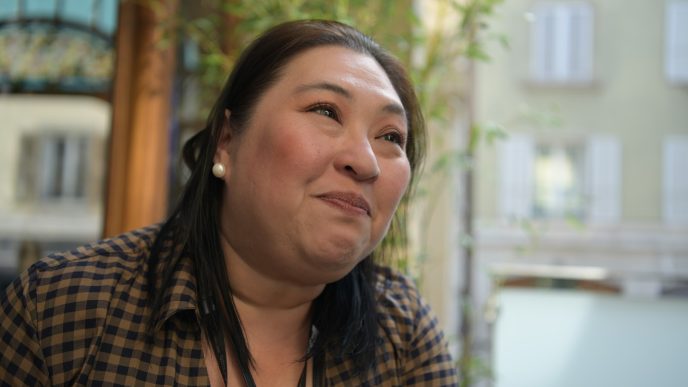
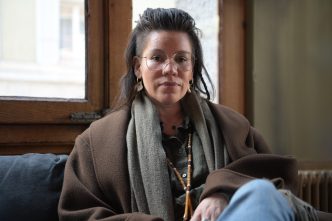
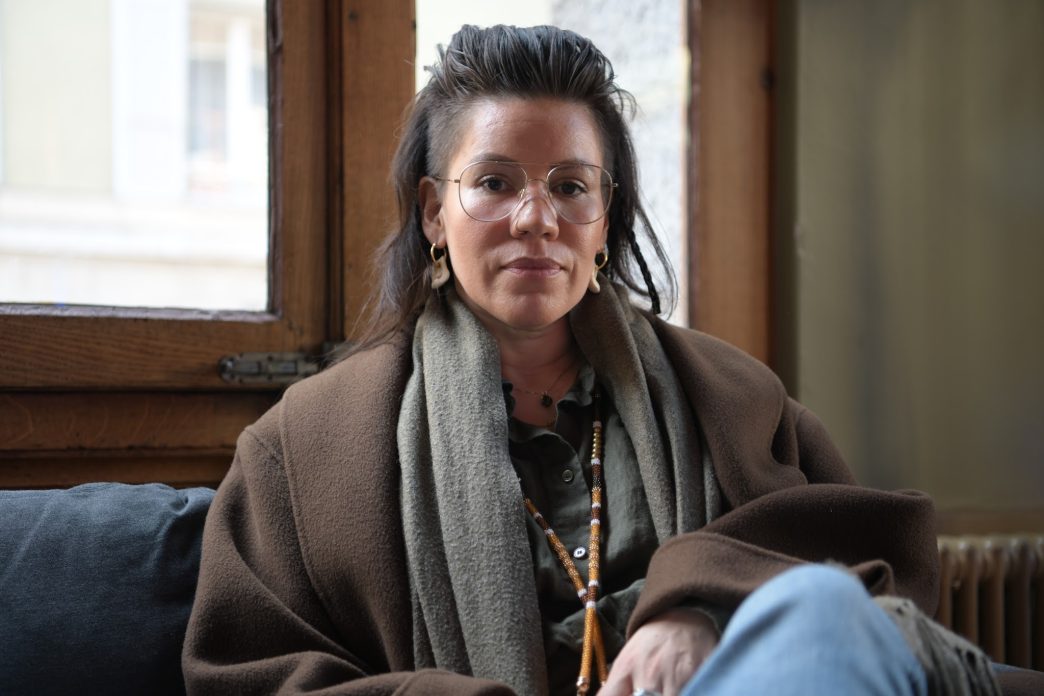
“When I hear the narrative that Trump is the absolute worst president the United States has ever seen, or the world has ever seen, I have to laugh because my people survived Andrew Jackson (*),” told Blindspot Indigenous Impact producer Amber Morning Star Byars, member of the Choctaw Nation of Oklahoma, the third-largest Indigenous Tribe in the United States.
“The founding fathers of the United States, that we are taught in school as children to revere, to hold in very high regard, were presented to us as heroes, but we as Indigenous people, we know what they really were: slave owners, genocide perpetrators, murderers, rapists, and thieves,” she pointed out.
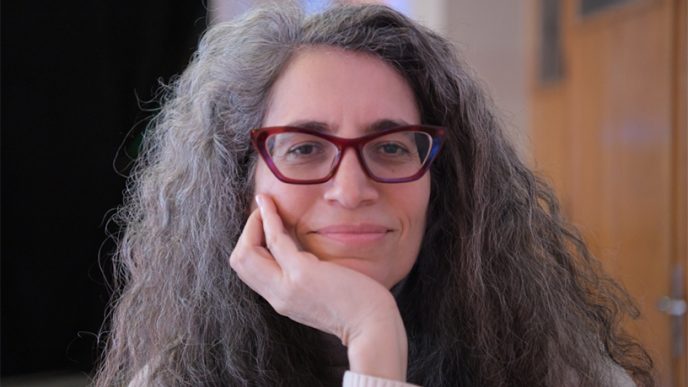
Amber Morning Star is an award-winning multidisciplinary artist, lawyer, impact producer, and Indigenous rights advocate. In 2023, she founded Good Trade Productions, a boutique media firm dedicated to supporting the art of Indigenous storytelling. Amber has contributed to the impact campaigns of acclaimed films including the two-time Emmy winning documentary Lakota Nation vs United States and the Academy Award nominated, Sugarcane.
After centuries of a history told by invaders and occupiers, access to information today has altered perceptions. “We’re seeing it on our phones every day when we wake up. We’re not learning about it in some big, fat textbook in a classroom that makes the history feel very far off. We’re seeing current colonisation and genocide live and in the flesh,” she stressed.
However, there is still a great chasm between the myths instilled over generations and historical facts. Art, culture, and storytelling have the power to fill that void. “This is why storytelling is so important,” Amber emphasised. “At the end of a war, the people may not have survived, but the art has. It’s the story, it’s the film, it’s the dance, the song, the regalia. It’s the culture that will survive. And this is what makes film so incredibly important, because we remember.”
In Indigenous communities memory has always been passed down from generation to generation. According to Amber, storytelling is key to survival. Unfortunately, history, art, and documentaries are still largely absent from schools, despite having an essential role to play in the education of younger generations. “It should be in school, but unfortunately, especially in the United States, they don’t want us to learn the history. That’s why we have these history books that tell us false narratives. We don’t have the truth, we don’t have all the perspective. We have what they want us to know. We have the perspective of the coloniser, because that’s the one who writes the textbooks. Now, this is exactly why it’s so important for us to continue to tell our stories, because that’s the other perspective, the other side of the coin.”
The Indigenous rights advocate has no doubt that one of the biggest callings of our generation is to fight against the erasure of narrative. “We need to keep our history alive at a time like this. Over the past few centuries, they’ve tried to erase us as people. They’ve tried to take our stories so that the future generations will not know what happened. And there’s a huge initiative right now, around the world, to erase stories, erase the truth. We cannot allow that.”
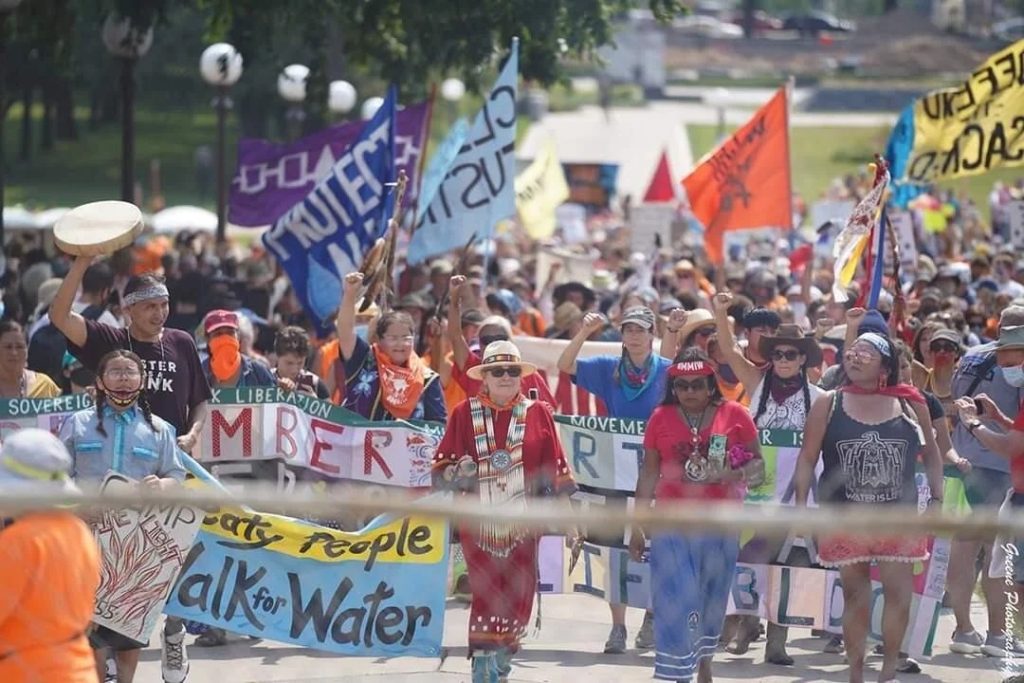
In February, the United States and Israel attacked Iran in the middle of negotiations about a possible nuclear deal. The use of peace negotiations and ceasefires as instruments of deception is nothing new in US history. The European colonisation, and later the US government, routinely violated hundreds of treaties with Native American nations. Peace treaties were systematically used as tools of deception to gain land, resources, and control over the Tribal nations. By using military violence during negotiations and the systematic breaking of treaties ratified with Indigenous Communities, the colonisers set in motion the forced removal of Indigenous Peoples from their lands, which thus allowed for the rapid expansion of the United States.
Each time these deceptive strategies are replicated, the Native Peoples see history repeating itself. “A history we know well,” noted Amber Morning Star. “They went to incredible lengths to bamboozle us, to make us sign those treaties, they did everything from starving us to taking our land to eventually taking our children, thieving anything and everything that they could to weaken us, to try to weaken our spirit. And they tried for centuries. They’re still trying.”
One of the pernicious tactics used by colonialism was to instil inferiority complexes in Native populations. The Natives were portrayed as having no culture, being incapable of governing themselves, liars, violent, rapists, and thieves. Such racist libels were often integrated and believed by the Natives. The impact of those tropes persist to this day. “Assimilation is a hell of a thing. Assimilation is a very effective tactic of war to try to make a People believe what you want them to believe and act in a way that you want them to act and appear how you want them to appear. They have been successful with it to some extent. I am sitting here speaking English to you. English is not my Native language. But they have made sure that I will speak it. That is assimilation,” Amber acknowledged.
“They tried very, very hard to erase us as People and to take our culture. They were not successful. They were, in some areas. They took a lot of our land, the majority of our land. They took our children,” she added. “They brainwashed them into thinking they were savage, their culture was bad. We were dirty Indians. We were no good, not smart, unworthy, unlovable.”
Yet, all that was precisely something that goes against all of Indigenous teachings. “We know as Native People that we are sacred and that we are born of creation. We have that sacred value from the moment we are born. We have that umbilical connection to the land. That is what makes us strong. They tried so hard to take all that from us. They succeeded on some fronts, but not all. I am still here. We are still here. We are still fighting. We are fighting for our land. We are fighting for our culture. We are fighting for our futures.”
“We have survived this long and thus far. We are going to keep going as long as it takes,” assured Amber Morning Star. “The Native Communities speak the language. We try to return to our language.”
The fight is hard, as it is fought on multiple fronts. “A lot of us have had to unlearn what our parents were forced to learn. We have had to try to relearn what was taken from our parents, the knowledge they were stripped of. It is hard. It is not easy. My generation and the younger one, we have to straddle two worlds, the Native world and the non-Native world. We live in both. It is not easy, but we do our best to fight for our futures,” Amber admitted. “But you are not going to see the Indigenous people ever stop fighting because that is not who we are,” vowed the Choctaw activist.
Nelson Pereira
* Andrew Jackson was the seventh president of the United States, from 1829 to 1837. Jackson’s policy toward Native Americans was defined by forced removal, resulting in the relocation of roughly 50,000 Indigenous People and the death of thousands, notably on the Trail of Tears. Jackson signed the Indian Removal Act of 1830, which compelled the five major tribes in the Southeast, the Cherokee, Choctaw, Chickasaw, Creek, and Seminoles, to abandon their lands for territory in present-day Oklahoma. This forced, brutal migration resulted in over 4,000 deaths.