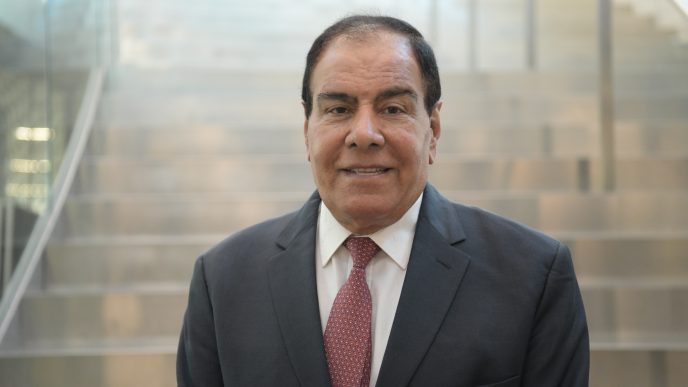
Sixteen months after Lebanon extradited Abdulrahman Yusuf al-Qaradawi to the UAE, the Egyptian-Turkish poet and political dissident remains arbitrarily detained in near-incommunicado conditions. Qaradawi case shows that no Arab League state is safe for dissidents, warns MENA Rights Group (MRG), a Geneva-based legal advocacy NGO.
MRG documents violations of civil and political rights in the Middle East and North Africa (MENA), providing legal assistance to victims of abuse.
According to MRG’s Senior Legal Officer & Research Lead, Tanya Boulakovski, Qaradawi’s detention is “a textbook case of transnational repression,” when a state targets dissidents outside its borders through extradition requests, threats, kidnapping, or assassinations, among other tactics.
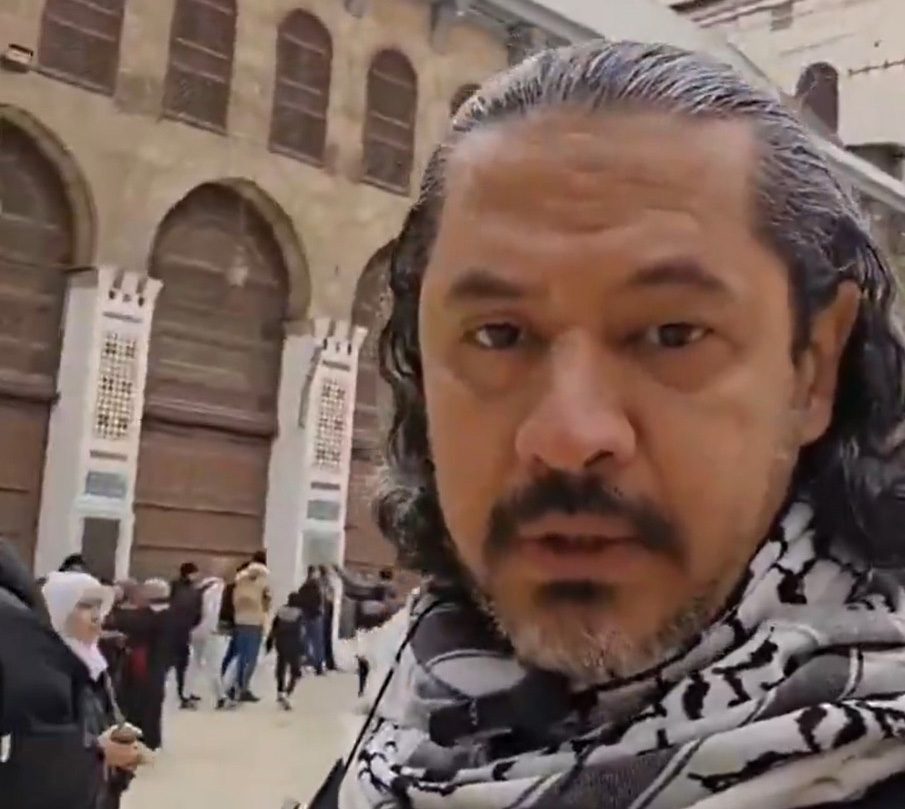
Qaradawi was arrested by Lebanese authorities after he returned from Syria in December 2024, where he went to celebrate the collapse of Syrian president Bashar al-Assad.
While in Damascus, he posted a video on social media criticising the Emirati, Egyptian and Saudi authorities and predicting they “won’t be able to do anything in the face of the flood of change, which began on October 7, 2023 in Gaza”.
On December 28, on his way to Beirut, Qaradawi was detained by Lebanese security forces, as an extradition request had been issued at the behest of Emirati authorities by the Arab Interior Ministers Council (AIMC), a regional security body of the League of Arab States (LAS).
Even though he is not Emirati, was not in the UAE at the time he was seized, and had no criminal record in the UAE, Qaradwi was extradited to Abu Dhabi on January 8, under charges of “disturbing public security”. Lebanon sent him despite well-founded risks of torture and enforced disappearance.
“One of the main forms of transnational repression we have been documenting is the trend of politically motivated extraditions of human rights defenders and political dissidents who are extradited from one Arab League country to another on the basis of their exercise of their freedom of expression, of their political dissent. And the case of al-Qaradawi was one of those cases,” Tanya Boulakovski told Blindspot.
MRG has been observing a pattern of dissidents potentially being at risk of extradition in whatever Arab League country they are. “It means that they can no longer flee their country and find refuge in another. They are at danger within the whole region, if they can be extradited,” said Boulakovski.
Qaradawi’s extradition was a clear breach of the non-refoulement principle, a cornerstone of asylum and of international refugee law that prohibits transferring individuals to countries where they risk torture, MRG’s legal advisor pointed out.
LAS security body, the AIMC, has played an increasing role in the arbitrary arrests and extraditions of dissidents in recent years. Individuals targeted by the AIMC cannot check if they are listed, request access to their files nor demand the removal of warrants.
“Governments that seem to allow for more freedom of speech, or are perceived as less risky depending on the dissident’s profile, are still likely to execute the AIMC warrant, especially when the requesting state is powerful and influential within the Arab League,” stressed, after Qaradawi’s extradition, MRG’s co-founder and executive director, Inès Osman. “As long as AIMC is not reformed, nowhere in the 22 countries of the Arab League can be deemed safe for peaceful dissidents or human rights activists.”
When at the domestic level there aren’t independent courts, MENA Rights Group uses the international route of UN mechanisms, international human rights protection mechanisms, to build international pressure to advocate for the cases it works on.
MRG has been working a lot on Algeria and Saudi Arabia as well, said Tanya Boulakovski, adding that “in Algeria, there’s been an increasing repression of dissenting voices, including also using Algeria’s counterterrorism provisions in the penal code. There have been journalists, trade unionists who have been wrongfully imprisoned, with prison sentences going up to 10 years.”
The legal advocacy NGO is closely following the case of Mohamed Tadjadit, an Algerian poet and human rights defender that has been subjected to judicial harassment since November 2019. Last arrested on January 16, 2025, Tadjadit was convicted on November 11, 2025, for “apology for terrorism.” He also remains awaiting trial in another case in which he faces the death penalty. All the proceedings against him concern the exercise of his freedom of expression and peaceful assembly, MRG emphasizes.
In Saudi Arabia, there has been a rise in executions of many people, including foreigners, including religious minorities belonging to the Shia religious minority who have been executed, according to Boulakovski. “We support these individuals before the relevant UN mechanisms. And it’s been very unfortunate to see that in many of the cases that we’ve been working on in Saudi Arabia the individuals have been executed.”
Nelson Pereira